Russia is committing cultural genocide. More than 1,700 monuments have been destroyed or damaged – Deputy Minister of Culture Ivan Verbytskyi

April 18 is celebrated around the world as Monuments Day. Over the years of the war in Ukraine, three UNESCO World Heritage sites have suffered – the historical centers of Lviv and Odesa, as well as the ensembles of Saint Sophia Cathedral and the Kyiv-Pechersk Lavra in Kyiv.
The total number of Ukrainian cultural heritage sites destroyed or damaged by Russia stands at 1,723. In addition, there are 2,524 cultural infrastructure sites, 513 of which have been completely destroyed.
In total, monuments in 18 regions have suffered, and among them – libraries the most.
The top 5 regions that have suffered destruction or damage to monuments are: Kharkiv region (349 sites), Kherson region (302), Odesa region (200 monuments), Donetsk region (195), Kyiv region and Kyiv (173). In order to preserve the monuments, the Ministry of Culture cooperates with the Armed Forces of Ukraine.
In essence, cultural genocide is taking place. This concept was introduced back in the middle of the last century by a graduate of Lviv University, the Polish lawyer Raphael Lemkin, but this term has still not appeared in Ukrainian legislation. If the Verkhovna Rada were to introduce it, protecting cultural heritage and archaeological sites could be done more effectively.
On the occasion of Monuments Day, the “Holka” public initiative spoke with Deputy Minister of Culture Ivan Verbytskyi about the state of Ukraine’s cultural heritage during the war, its losses and protection, as well as the challenges of state policy in the field of monument protection and management.

 Destroyed Shukhevych Museum in Lviv. Photo from Andrii Sadovyi’s Telegram

In Odesa, entire quarters of historical buildings were damaged—29 monuments of national significance were affected, including such prominent landmarks as the Vorontsov Palace, the Potocki Palace, the Abaza Palace, the Ashkinazi House, and the buildings of the Maritime and Archaeological Museums, among others.
In Kharkiv, the "Slovo" House, the Derzhprom building, and the building complex of the Kharkiv University were damaged. Furthermore, the H. S. Skovoroda National Literary Memorial Museum in the Kharkiv region was destroyed.
In total, among cultural institutions, 872 libraries, 139 museums, and 191 art education institutions sustained damage.
The targeted destruction of Ukraine's cultural heritage is a serious violation of international humanitarian law, particularly the 1954 Hague Convention for the Protection of Cultural Property in the Event of Armed Conflict and Article 8 of the Rome Statute of the International Criminal Court, which defines direct attacks on buildings dedicated to religion, education, art, science, or charitable purposes, as well as historic monuments, as war crimes.

Russian “archaeologists” working on the territory of temporarily occupied Crimea carry out activities without the permission of the state authorities of Ukraine. According to the Law “On the Protection of Cultural Heritage” (Article 35), such works are illegal, and their actions fall under criminal liability (Article 298 of the Criminal Code).
This is already bringing concrete consequences – in 2024, one of these archaeologists, Aleksandr Butyagin, was served a notice of suspicion, and at the end of 2025, he was detained in the European Union. The extradition process is currently underway.
The Ministry of Culture is working systematically to ensure that every such crime is documented and that accountability is faced. We cooperate with law enforcement agencies, international partners, and expert institutions to record facts of illegal excavations, relocation, and misappropriation of cultural valuables. Together with the Institute of Archaeology of the National Academy of Sciences of Ukraine and other state authorities, we provide the evidentiary base for criminal proceedings and international processes.
In parallel, a sanctions policy is being formed. On the initiative of the Ministry of Culture and by the decision of the NSDC, personal sanctions have already been introduced against individuals involved in such actions.
 In the photo, “archaeologist” Butyagin is heading to a court hearing in Warsaw. Photo: Olena Babakova, “Graty”
The task is to guarantee that monuments of national significance remain under the protection of the state, are used in accordance with legislation, and cannot be an instrument of abuse or external influence.
As for resolving the issues of strengthening the protection of 19th-20th-century buildings that are currently not registered by the state—one of the mechanisms is Draft Law No. 11481 on the preservation of valuable historical buildings in settlements. The Ministry of Culture is involved in the development of this draft law. Thanks to this decision, a significant number of structures that possess architectural or historical value can be preserved by being included in the lists of valuable historical buildings and by establishing appropriate control measures.
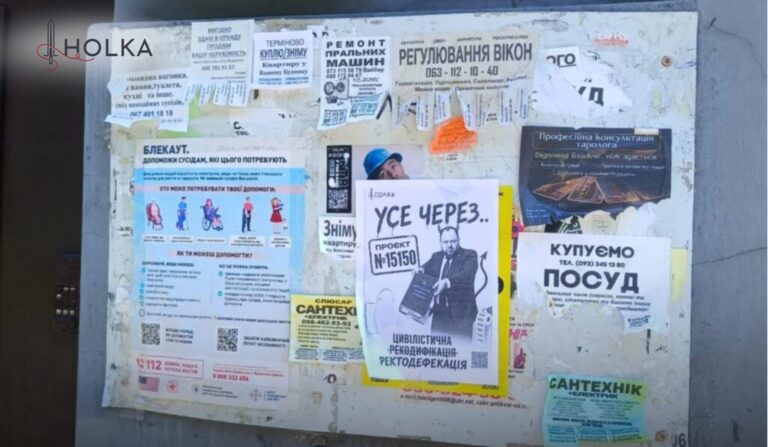
(This refers to the draft law by People's Deputies Hanna Bondar, Roman Hryshchuk, Vitaliy Bezghin, Oleksandr Aliksiichuk, and other parliamentarians, which the public sector supports as beneficial and is monitoring to ensure it is not ruined by amendments between the first and second readings in the Verkhovna Rada—more details on this legislative initiative can be found in the tool "Recharging the Country Is Up to You"—Author's Note).
At the same time, the Ministry ensures the coordination of this system and is working to make the processes of identifying and entering objects into the register faster, more transparent, and more efficient. In particular, solutions are currently being developed that will allow for the acceleration of entering objects and the strengthening of accountability at the local level.
The issue of granting newly discovered status to cultural heritage sites falls within the competence of the cultural heritage protection bodies of the Regional Military Administrations and the Kyiv City State Administration (KMDAs). Specifically, this distribution is anchored both at the legislative level (Articles 5 and 6 of the Law of Ukraine "On the Protection of Cultural Heritage") and in the Procedure for the Accounting of Cultural Heritage Sites.
In many European countries, this culture of responsibility has been built over generations. Ukraine has a different historical experience. We have passed through periods when private property was destroyed, when the tradition of passing down heritage was not supported, and often—deliberately eradicated. Today, we are effectively rebuilding this culture both at the state level and at the community level.
A careful attitude toward monuments means, first and foremost, taking measures to maintain the monument in proper condition in compliance with legislation in the field of cultural heritage protection. In particular, such conditions regarding the maintenance of a monument are usually specified in a protection contract.
A separate challenge is resources. In the context of a full-scale war, maintaining and restoring monuments becomes a difficult financial task for most owners. Therefore, securing international support and partnerships becomes an important element.
There are many international support programs in operation, such as Polonika, which facilitate the restoration of cultural heritage sites. At the same time, Ukraine already has strong examples of a responsible attitude toward cultural heritage. The church in Pidhaitsi is one of them. The local religious community spent a long time looking for opportunities to restore the church and was ultimately able to win a competition from the Polonika Institute.
 Church of the Holy Trinity in Pidhaitsi
The key instrument in this effort is the Ukrainian Cultural Heritage Fund. This is a multi-donor platform that consolidates international support for the protection, restoration, and development of Ukrainian cultural heritage, the rehabilitation and reconstruction of destroyed sites, as well as the construction and equipping of storage facilities for museum collections.
The Fund is built according to international standards: strategic management is carried out by a board of directors with the participation of Ukrainian state authorities and international partners, an independent evaluation of applications will be ensured by an expert committee, and the organization itself is registered in Belgium as an international non-profit structure, which significantly enhances donor trust. Following the signing of a Memorandum with ALIPH and the official launch at the end of 2025, the Fund has already transitioned into practical operations. Currently, the Board of Directors has been formed, the strategy for 2026–2027 has been adopted, and an account has been opened to receive contributions. The Executive Director of the Fund will be announced in the near future.
The first international partners—the Netherlands, Poland, the United Kingdom, Denmark, Spain, Estonia, and Luxembourg—have already confirmed their support. The total amount of mobilized resources currently stands at approximately €4.2 million.
Through the Fund, a direct access mechanism to funding will be established for local government authorities—both for urgent measures (conservation, emergency stabilization works, protection, and evacuation of cultural property) and for full-scale restoration and development projects.
The Fund establishes a long-term infrastructure for the reconstruction of cultural heritage, reducing the burden on the state budget and providing communities with tangible tools for recovery.
Specially for “Glavcom”.