
3 Weeks Is Not Enough to Review the Draft Civil Code. Public Discussion Requires Years — Supreme Court Judge and Spokesperson Prorok

A petition urging President Volodymyr Zelenskyy to intervene and prevent Parliament Speaker Ruslan Stefanchuk from advancing a draft Civil Code reform (Bill No. 15150) gathered more than 25,000 signatures in less than 24 hours — the threshold required for formal presidential consideration.
The petition followed a series of public protests held during wartime across different regions of Ukraine. Critics of the draft legislation argue that it would not only introduce controversial legal concepts, including the notion of “good customs” as a source of law, but could also create mechanisms for legitimizing property that was unlawfully transferred from the state or local communities.
Stefanchuk has dismissed these concerns as misconceptions and has publicly defended the draft through explanatory statements and video addresses. At the same time, some of the bill’s authors have argued that many of its critics lack the legal expertise necessary to properly assess such a complex legislative initiative.
Given the significance of a reform that would affect virtually every citizen, Holka Initiative spoke with Viktor Prorok, Judge and Spokesperson of the Civil Cassation Court within the Supreme Court of Ukraine.
Prorok is known not only for his judicial work but also for his role in challenging former Commercial Cassation Court Chairman Bohdan Lvov after evidence emerged that Lvov held a Russian passport. He has also been among the Supreme Court judges targeted by Kremlin-linked Telegram networks.
Civil Code Reform or Legal Chaos?

When a new law is adopted, it takes time before it begins to influence relations between people. Gradually, it becomes clear where disputes arise and how the law should be applied. These issues are then examined by the courts. As for the current Civil Code, after its adoption the judicial system needed around 5–6 years to develop a coherent interpretative approach.
Over several decades, judges have “brought to life” the provisions of the current Civil Code, making them more understandable for citizens.
However, there are still areas where judges have not reached consensus, and this work is still ongoing.
If we now enter a new legal framework, everyone can draw their own conclusions as to how long it will take to establish stable case law.
The adoption of a new Civil Code poses serious challenges to the stability of the judiciary. A complete replacement of the foundations of private law automatically calls into question the relevance of the existing body of case law.
Of course, for the application of certain legal institutions that are well-established and do not give rise to significant controversy, this process may not take long.
However, there are a considerable number of controversial innovations. If they are adopted, it will again take decades.
For institutional changes, a better approach would be to introduce systematic amendments to the current Civil Code through the adoption of separate legislative blocks required by our European integration commitments.
European experience shows that successful civil law reforms have taken years, with extensive discussion involving the academic community, business sector, civil society, and the judiciary.
For European integration, it is important not simply to “update” the legal framework, but to implement the common legal acquis of the European Union in areas such as consumer protection, e-commerce, intellectual property, and contract law, while preserving the national legal tradition.
For example, France has a Civil Code that dates back to Napoleon. Since then, it has never been completely replaced. It has only been amended.
We fully understand that some academics would very much like to go down in history.
What, in your view, would happen to French society if, in just three weeks, the Napoleonic Code were effectively reset and entirely recodified?
A full “recodification within three weeks” would indeed appear extraordinary. In my view, it could lead to legal chaos and a loss of orientation for both judges and society.
Incidentally, the Civil Code of the state of Louisiana — the only U.S. state with a civil law (Romano-Germanic) legal system — is often associated with the Napoleonic Code. It was adopted in 1808 and has been revised only twice, in 1825 and 1870, after which only amendments were introduced.
In Ukraine’s case, the period allocated for discussing a 803-page draft was three weeks. This is why society has questions regarding the quality of the legislative process and the level of stakeholder involvement. Such substantial changes to civil legislation require a much broader and longer public discussion.
Risks for State-Owned Property and Community-Owned Assets
The Supreme Court has developed positive case law in this area, which this law seeks to undermine. However, Book Nine of the draft Civil Code would significantly worsen the situation, and both the state and local communities risk losing highly valuable assets. The Ministry of Justice has, in fact, recommended that this book be removed entirely.
What is your position regarding this book?
Indeed, Book Nine raises concerns, as it contains provisions that could significantly weaken the protection of public interests. There is a real risk that, due to controversial norms, the state and local communities may lose control over strategic resources — forests, coastal areas, water bodies, cultural heritage sites, and other highly valuable assets.
We have already seen similar risks with the law you mentioned. Although the Supreme Court has already developed important case law on the protection of public interests in land and property relations concerning bad-faith acquirers, it is still working to build a coherent and consistent jurisprudence aimed at correcting the situation as a whole. The new draft in its current form only deepens the imbalance. The risks are real: potential “laundering” of previously alienated property, difficulties in protecting public ownership, and conflicts with other legal provisions.
A separate risk is the shifting of responsibility onto the state, meaning that taxpayers may ultimately have to pay for unlawful actions in property registries.
At the same time, there is agricultural land, for example. It can be transferred into private ownership. If state authorities have evidence that such property was registered unlawfully, they go to court. This type of legal remedy is called vindication, and in this case limitation periods do apply.
How, under the current draft Civil Code, is the protection of property addressed that should never have left state or communal ownership in the first place?
At present, the Grand Chamber of the Supreme Court maintains the position that land of certain categories — water fund areas, coastal protection zones, and environmental protection sites — cannot, in principle, be transferred out of the ownership of the people or the state. However, the draft Civil Code in fact recognizes the possibility of such property “leaving” state ownership.
What does this mean in practice? It means that a statute of limitations mechanism would automatically be triggered. As a result, such property would no longer be protected through negatory claims. For the state, this is quite critical: it cannot always ensure compliance with its obligations as an effective owner and will often miss such limitation periods, thereby losing property.
If the draft is adopted without amendments and without taking into account the case law of the Supreme Court, there would be a serious challenge — the Supreme Court would have to depart from its own established position on this issue.
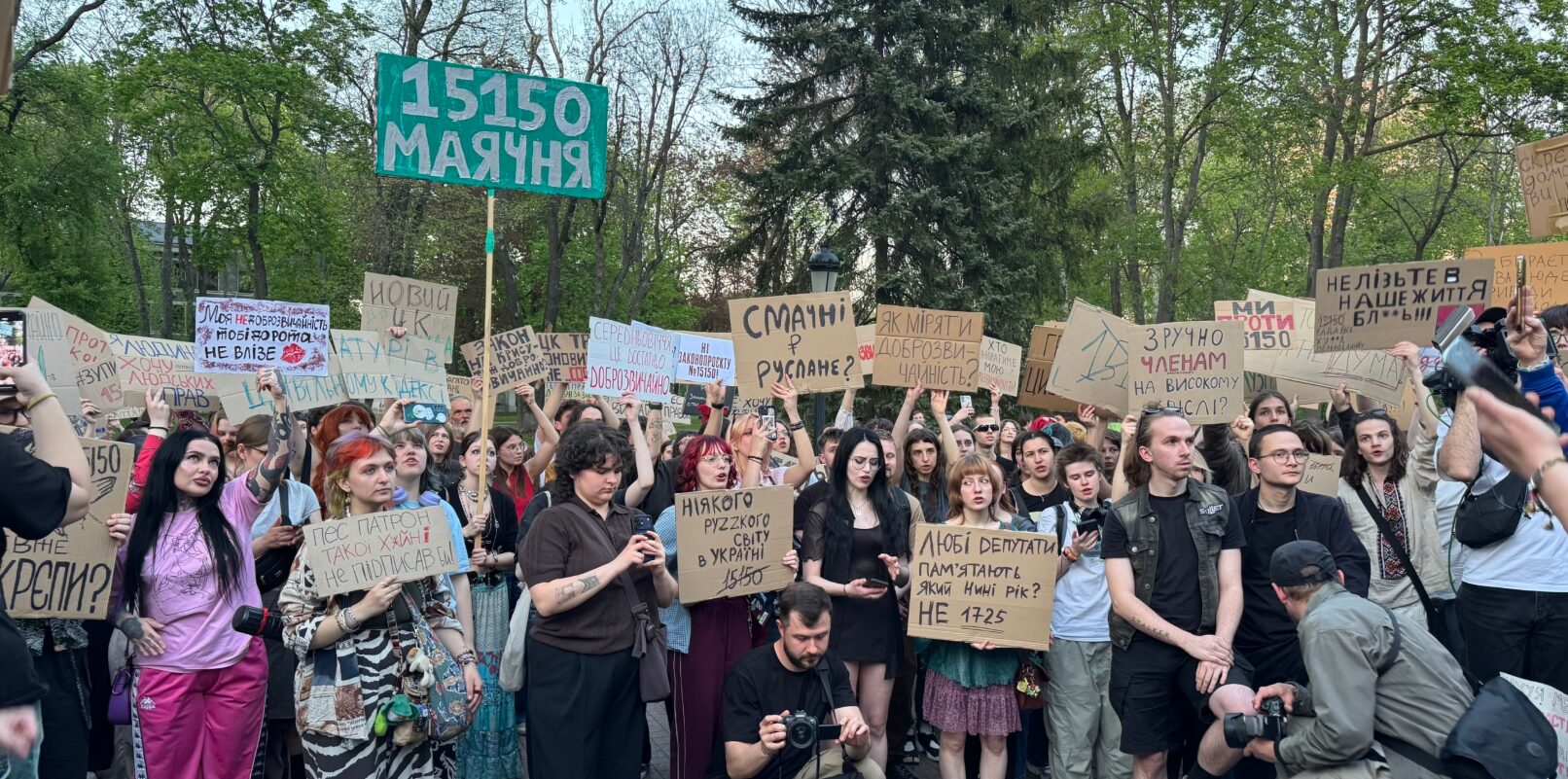
Photo by Liudmyla Tyahnyriadno
As mentioned earlier, the Supreme Court is currently addressing this issue by qualifying such claims as negatory claims, to which limitation periods do not apply. In effect, the Supreme Court is saying: “If the property could not have been alienated in the first place, then the owner never lost it, and therefore may seek its return at any time.”
However, if in the draft of the new Civil Code these claims are reclassified as vindicatory actions, a statute of limitations would begin to apply to them. As a result, it would become more difficult to recover forests, coastlines, and subsoil resources.
The European standard requires a fair balance. What is needed are well-considered norms that do not allow the legalization of corrupt schemes, but also do not create chaos in the real estate market.
Freedom of Expression and the Distortion of the Institution of Marriage
The main concern relates to the revision of provisions governing the protection of honour, dignity, and business reputation. First, the presumption of falsity: if the new draft strengthens mechanisms for correcting information without a clear distinction between facts and value judgments, it could create a basis for so-called strategic lawsuits against public participation (SLAPPs).
Second, the right to be forgotten: introducing this principle (the removal of information from search engines or media archives) is a double-edged sword. On the one hand, it protects privacy; on the other, it may become a tool for politicians and public officials to “cleanse” their biographies of references to corruption scandals or past offences.
Third, damages for non-pecuniary harm: if the draft simplifies procedures for awarding substantial compensation in defamation cases, it may lead to self-censorship among investigative journalists. The critical risk here is the absence of safeguards against abuse of rights — the Code does not contain provisions preventing the use of reputational protection to suppress criticism.
As for the alleged distortion of the institution of marriage, the issue is far more complex. The discussion revolves around the modernisation of family law, which remains a highly sensitive topic in Ukrainian society. This is not only about civil partnerships or de facto marital relations, but also about the issue of women’s autonomy within family relations.
These matters require years and years of public debate. Abrupt changes in this area could lead to unpredictable social consequences.
At the same time, it should be understood that thorough examination of such a substantive document as the Civil Code requires not weeks or months, but years.