“Judicial independence became a license to print money”: a conversation with Tilman Hoppe

For years, the participation of international experts in judicial selection commissions has been regarded as one of the key guarantees of successful judicial and anti-corruption reforms in Ukraine. Yet the law is already beginning to shift the decisive vote back to national members. Civil society organizations warn that this could undermine the integrity of future appointments. At the same time, another reality is becoming increasingly clear: Ukraine cannot rely on international experts forever.
Tilman Hoppe is a German lawyer, former judge, and one of Europe’s leading experts on integrity, anti-corruption, and judicial reform. Over the past two decades, he has advised governments and international organizations, worked extensively on judicial appointment and integrity assessment mechanisms, and closely followed Ukraine’s reform process from the inside.
We spoke about why, despite more than a decade of experience with international experts in Ukraine and beyond, this experience has never been systematically analyzed. What actually works in the model — and what doesn’t. Why the secretariat, despite operating largely outside the legal framework, may be one of the most decisive factors in the success of a vetting commission. How the international technical assistance industry shapes anti-corruption reforms. And what would have to change for Ukraine to eventually replace international experts with national ones without losing public trust in the outcome.
This interview was conducted as part of the Reasonable Doubt project, in partnership with the Holka civic initiative.

Halyna Chyzhyk
Author of the "Reasonable Doubt" project
Is the model of vetting commissions with international members a Ukrainian invention?
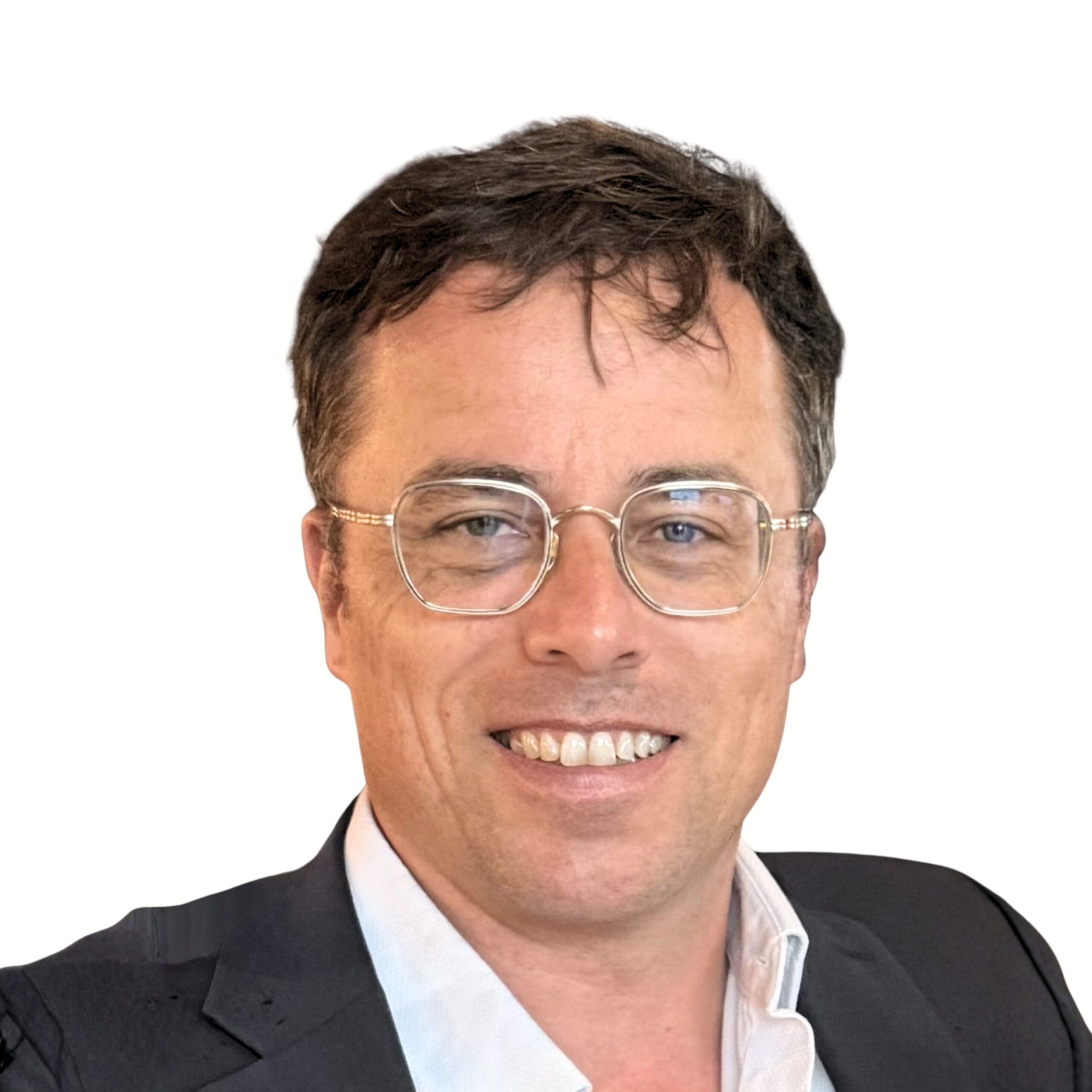
Tilman Hoppe
German lawyer, former judge
I would still say yes. Albania was the first step, but there the involvement of internationals was limited to monitoring the process and overseeing the nomination of national members. The second – and probably the most impactful – step was the one Ukraine took by bringing internationals in as members with a decisive vote.
Then came the third step – Moldova. There, international experts became involved in vetting sitting judges and prosecutors, including Supreme Court judges, and the model is now being extended to first-instance judges. The final decision is still taken by the judicial self-governance bodies, not by the International Vetting Commissions. So, we now see three stages of evolution: Albania, Ukraine and Moldova.
Then came the third step – Moldova. There, international experts became involved in vetting sitting judges and prosecutors, including Supreme Court judges, and the model is now being extended to first-instance judges. The final decision is still taken by the judicial self-governance bodies, not by the International Vetting Commissions. So, we now see three stages of evolution: Albania, Ukraine and Moldova.
Halyna Chyzhyk
Author of the "Reasonable Doubt" project
So, there's a model of involving internationals in commissions, for both candidates and top judicial positions. What are its advantages and limitations?
Tilman Hoppe
German lawyer, former judge
I think there are three advantages. The main one I'd label as independence. Any democratic system has this dilemma – how to select and appoint members to a state body without politics and networks influencing it. Having international members from outside the state and the local networks is a great invention – a quantum leap toward independence, and I'm talking about any democratic system here.
The second advantage is a fresh perspective on integrity, replacing the formalistic views domestic lawyers sometimes fall into. Too often, they have already internalised the misuse of concepts like fair trial, privacy, or judicial independence.
The third advantage is a fresh perspective on procedure – domestic systems often become overly formalistic, while international members bring practical solutions. At the Public Council of International Experts (the PCIE, an independent body consisting of six international experts that was established in 2018 to assess the integrity of candidates for the High Anti-Corruption Court – H.C.) Sir Anthony Hooper always pushed for vetted candidates having to present evidence at the earliest stage, which is probably a real cultural shock for lawyers obsessed with defendants' rights as if we were in a criminal trial.
The second advantage is a fresh perspective on integrity, replacing the formalistic views domestic lawyers sometimes fall into. Too often, they have already internalised the misuse of concepts like fair trial, privacy, or judicial independence.
The third advantage is a fresh perspective on procedure – domestic systems often become overly formalistic, while international members bring practical solutions. At the Public Council of International Experts (the PCIE, an independent body consisting of six international experts that was established in 2018 to assess the integrity of candidates for the High Anti-Corruption Court – H.C.) Sir Anthony Hooper always pushed for vetted candidates having to present evidence at the earliest stage, which is probably a real cultural shock for lawyers obsessed with defendants' rights as if we were in a criminal trial.
Halyna Chyzhyk
Author of the "Reasonable Doubt" project
And what about the limitation of this model?
Tilman Hoppe
German lawyer, former judge
Vetting is a great invention and tool. And like any invention, it can have limitations in practice. One that's discussed a lot is the cost argument – there's a prejudice that international members are the expensive part, but at least the only data we have from donors shows international members are only about 20% of the costs – the rest is expenditure on the secretariat and on the vetting operations.
The second limitation: “international” doesn't automatically mean you get the most ideal expert. Are the best experts always available on short notice? The nomination process is often rather absurd – an urgent call asking whether you're available within weeks, having to send your CV by the next day, then silence for months until suddenly everything is urgent again.
Are all the international experts ideal? I think it's important not to idolize international vetting commissions just because they have international members. It doesn't mean unusual professional excellence you couldn't find within the country. Again, the main point for internationals is about independence.
The second limitation: “international” doesn't automatically mean you get the most ideal expert. Are the best experts always available on short notice? The nomination process is often rather absurd – an urgent call asking whether you're available within weeks, having to send your CV by the next day, then silence for months until suddenly everything is urgent again.
Are all the international experts ideal? I think it's important not to idolize international vetting commissions just because they have international members. It doesn't mean unusual professional excellence you couldn't find within the country. Again, the main point for internationals is about independence.
Halyna Chyzhyk
Author of the "Reasonable Doubt" project
With regard to independence – how do we define it? Isn't it really about the guarantees and safeguards built into the process itself – meaning nationals with the same safeguards could be just as effective?
Tilman Hoppe
German lawyer, former judge
Safeguards are important, and they're maybe even a bit of a blind spot.
There is one key word for a possible limitation: the secretariat. If you're lucky – like in Ukraine, in many cases – you don't need to worry much about the secretariat, about members having independent support. But it's not really regulated in the laws, as far as I've seen.
Sometimes these issues are addressed in the rules of procedure rather than in the law: who runs the secretariat, do members have their own assistants, and who supervises their work? These may sound like technical details, but they determine on what information commission members will actually base their decisions on.
It sounds technical and minor, but it can have a huge influence if somebody in that commission manages to bottleneck and streamline the input from the secretariat.
And it's especially relevant for international members, because most of them are “blind”: they don't speak the local language, so they have to trust the local assistant they've got.
For independence, there must be safeguards. There are, prima facie, good safeguards in the laws – statements about members' independence and so on. But we all know from anti-corruption bodies that it also matters whom you actually put in the driver’s seat. And it's a strong, tempting selling point that somebody coming from Paris, London, or Helsinki is much less entangled in local networks and dependencies. So, I still think it's a quantum leap in that sense.
And independence has its own downside, applying to both internationals and nationals: performance issues. It's something relevant for any independent position, whether anti-corruption agency or judiciary – how do you make sure members continue to work fast and with high quality ?
I've seen highly respected members disappear for days during critical stages of the process.
But this isn't specific to international vetting – I can think of similar issues with some national members too.
There is one key word for a possible limitation: the secretariat. If you're lucky – like in Ukraine, in many cases – you don't need to worry much about the secretariat, about members having independent support. But it's not really regulated in the laws, as far as I've seen.
Sometimes these issues are addressed in the rules of procedure rather than in the law: who runs the secretariat, do members have their own assistants, and who supervises their work? These may sound like technical details, but they determine on what information commission members will actually base their decisions on.
It sounds technical and minor, but it can have a huge influence if somebody in that commission manages to bottleneck and streamline the input from the secretariat.
And it's especially relevant for international members, because most of them are “blind”: they don't speak the local language, so they have to trust the local assistant they've got.
For independence, there must be safeguards. There are, prima facie, good safeguards in the laws – statements about members' independence and so on. But we all know from anti-corruption bodies that it also matters whom you actually put in the driver’s seat. And it's a strong, tempting selling point that somebody coming from Paris, London, or Helsinki is much less entangled in local networks and dependencies. So, I still think it's a quantum leap in that sense.
And independence has its own downside, applying to both internationals and nationals: performance issues. It's something relevant for any independent position, whether anti-corruption agency or judiciary – how do you make sure members continue to work fast and with high quality ?
I've seen highly respected members disappear for days during critical stages of the process.
But this isn't specific to international vetting – I can think of similar issues with some national members too.
Halyna Chyzhyk
Author of the "Reasonable Doubt" project
When it comes to motivation, though, I do believe there's a real difference between foreigners and national members.
Tilman Hoppe
German lawyer, former judge
I'd argue with you on that. It's true that some international members clearly don't seem to feel the passion. But frankly, most of the ones I've seen really do – maybe not so much for the country itself, but for the cause of integrity. Most members really see the impact they can do.
There are moments in my training courses where I think: this is going to be a long road before any real result comes out of it. Then, when the vetting is almost done, at a small social event with the members, I hear their stories from the vetting process and see how passionate they genuinely are.
That's different from national members. Their motivation often comes from something much more personal – the satisfaction of making a difference in their own country.
To me, one of the most touching experiences in international vetting has been watching the patriotism of the secretariat staff. I've told staff of several secretariats: there should be a monument for the unknown integrity fighter – it will probably never be built, but it should be bigger than any monument we have in this world, and it's because of them. It's genuinely touching to watch how secretariats make the difference for the entire vetting.
There's another limitation worth mentioning – soft skills. One troublesome member can affect the whole commission: I've seen more than one commission dominated, directly or indirectly, by the loudest or most troublesome voice. That member leaves a mark on the speed and even the results.
Another limitation: we have some vetting commissions with a great public reputation – take the PCIE, the first one. But PCIE didn't have access to banking data. In Moldova, by contrast, the vetting commissions do have access to all the banking data. So, the question is – what did we miss with PCIE? Nobody really measured whether there was a difference in impact.
There are moments in my training courses where I think: this is going to be a long road before any real result comes out of it. Then, when the vetting is almost done, at a small social event with the members, I hear their stories from the vetting process and see how passionate they genuinely are.
That's different from national members. Their motivation often comes from something much more personal – the satisfaction of making a difference in their own country.
To me, one of the most touching experiences in international vetting has been watching the patriotism of the secretariat staff. I've told staff of several secretariats: there should be a monument for the unknown integrity fighter – it will probably never be built, but it should be bigger than any monument we have in this world, and it's because of them. It's genuinely touching to watch how secretariats make the difference for the entire vetting.
There's another limitation worth mentioning – soft skills. One troublesome member can affect the whole commission: I've seen more than one commission dominated, directly or indirectly, by the loudest or most troublesome voice. That member leaves a mark on the speed and even the results.
Another limitation: we have some vetting commissions with a great public reputation – take the PCIE, the first one. But PCIE didn't have access to banking data. In Moldova, by contrast, the vetting commissions do have access to all the banking data. So, the question is – what did we miss with PCIE? Nobody really measured whether there was a difference in impact.
Halyna Chyzhyk
Author of the "Reasonable Doubt" project
Do you think commission members should have access to banking data even if it extends the process significantly?
Tilman Hoppe
German lawyer, former judge
If you're vetting sitting officials, yes, you must.
But here's my real point, more important than banking data: the missing international data. To me, it's unbelievable. In this regard, the term “international vetting” is misleading. The members are international, but the integrity review itself is purely domestic. It's Stone Age – we're fighting 21st-century corruption, which by definition is international, with the tools of the 20th, maybe 19th century – the concept of the isolated national state.
The European Union is pouring millions into so-called international vetting but has done nothing I can see toward creating or facilitating cross-border access to data for verifying asset declarations in the context of vetting. To me that's outrageous. As a European taxpayer, I feel I'm getting only half the impact I'm paying for.
But here's my real point, more important than banking data: the missing international data. To me, it's unbelievable. In this regard, the term “international vetting” is misleading. The members are international, but the integrity review itself is purely domestic. It's Stone Age – we're fighting 21st-century corruption, which by definition is international, with the tools of the 20th, maybe 19th century – the concept of the isolated national state.
The European Union is pouring millions into so-called international vetting but has done nothing I can see toward creating or facilitating cross-border access to data for verifying asset declarations in the context of vetting. To me that's outrageous. As a European taxpayer, I feel I'm getting only half the impact I'm paying for.
Halyna Chyzhyk
Author of the "Reasonable Doubt" project
You mean we have no way to track illegal property obtained abroad – say, luxury goods bought in Spain or Italy?
Tilman Hoppe
German lawyer, former judge
Exactly that. Sometimes, there is a workaround, like through open sources. But in most cases there comes a moment where you have indications of property in Germany, a bank account in London, a luxury car owned through a shell company in Luxembourg, a private school in Switzerland, expensive medical treatment in France – and there is no legal means even to contact the foreign entities. The vetting bodies have no legal means to ask, and the foreign body has no legal means to hand over the data.
Don't sell this to me as a success. In terms of foreign data, it's a drop in the bottle, and you're selling it as half full.
Don't sell this to me as a success. In terms of foreign data, it's a drop in the bottle, and you're selling it as half full.
Halyna Chyzhyk
Author of the "Reasonable Doubt" project
Talking about cryptocurrency and blockchain – as these technologies matured, have corrupt judges found new ways to hide what they own?
Tilman Hoppe
German lawyer, former judge
They don't need crypto. They have the European Union – a safe haven for their investments, where information is effectively beyond the reach of vetting bodies in Ukraine, Moldova, or Albania. So why bother with crypto?
In fact, crypto is often easier to trace than traditional banking, because blockchain transactions are public – once you link a person to a wallet, you can reconstruct the entire transaction history. That's why requiring officials to declare crypto assets matters, and Ukraine has been ahead of many countries in this regard. In many ways, Ukraine has become the world's anti-corruption laboratory.
But the short answer is: you can always cheat the system, one way or another.
In fact, crypto is often easier to trace than traditional banking, because blockchain transactions are public – once you link a person to a wallet, you can reconstruct the entire transaction history. That's why requiring officials to declare crypto assets matters, and Ukraine has been ahead of many countries in this regard. In many ways, Ukraine has become the world's anti-corruption laboratory.
But the short answer is: you can always cheat the system, one way or another.
Halyna Chyzhyk
Author of the "Reasonable Doubt" project
Do you agree that commission members focus more on financial indicators than on integrity or past conduct? And if so – is it just harder to evaluate, or is something else going on?
Tilman Hoppe
German lawyer, former judge
One last point on the limitations of vetting: internationals have done very little to consolidate and compare data and experience across countries. There's zero publicly available data on cost-controlling – how much does it cost per candidate to run a vetting process? I don't know of anyone in the donor community who has data on that. Everything seems improvised, one fire extinguished after another, with no model law on vetting, no model bylaws, no model declaration format. Despite all this experience with such an important tool, there's no systematic case collection on unexplained wealth or on ethics violations, how these schemes were successfully uncovered.
The scope of vetting depends on the law. In Albania they also look at links to organized crime; in Moldova, tax issues and ethics are much more clearly defined than in Ukraine: serious violations, contradictions with European human-rights case law. All three countries share financial integrity as a common core, with a universal logic of unexplained wealth – but the laws create different thresholds, evidence standards, and procedures, so it becomes very particular in each country. Ethics is universal in principle too, but again with thresholds: what counts as a serious or continuous violation, how far back in time it reaches, what evidence is enough.
So – is there really a fixation, a misbalanced focus on financial integrity? Is it the fetish of international vetting? I agree that most cases of negative vetting probably rely on financial integrity – in Ukraine, at least.
Financial integrity is tempting, of course – I always tell trainees I want them to be able to calculate unexplained wealth down to the last hryvnia. That precision is seductive: you can have a method, you can be very precise, and financial data supposedly doesn't lie.
The real problem with ethics cases is that there's no methodology. Try it yourself: google it, and try to find a scheme for the logic of establishing an ethical violation. With criminal violations, it is different: If you went to law school in Ukraine, you have a certain logic – objective facts, state of mind – and it is quite similar in other countries. The differences are in terminology mostly. I remember one commission where I got into a real fight with a member because we came from different legal traditions – “guilt” as a term meant something very different to them than it did to me, coming from a German, continental background.
For ethics, the only truly universal thing is the definition of the values themselves, like in the Bangalore Principles. But what is the logic of establishing a relevant violation? Take a hypothetical example. A prosecutor is driving slightly over the speed limit and hits someone who dies. We don't even know whether the accident was caused by the speeding. Minor speeding is probably not a significant ethical issue. So, should the grave consequence alone disqualify the prosecutor from public office? If vetting commissions look for answers, they do not find an established logic for such ethical cases as there is for criminal cases.
The scope of vetting depends on the law. In Albania they also look at links to organized crime; in Moldova, tax issues and ethics are much more clearly defined than in Ukraine: serious violations, contradictions with European human-rights case law. All three countries share financial integrity as a common core, with a universal logic of unexplained wealth – but the laws create different thresholds, evidence standards, and procedures, so it becomes very particular in each country. Ethics is universal in principle too, but again with thresholds: what counts as a serious or continuous violation, how far back in time it reaches, what evidence is enough.
So – is there really a fixation, a misbalanced focus on financial integrity? Is it the fetish of international vetting? I agree that most cases of negative vetting probably rely on financial integrity – in Ukraine, at least.
Financial integrity is tempting, of course – I always tell trainees I want them to be able to calculate unexplained wealth down to the last hryvnia. That precision is seductive: you can have a method, you can be very precise, and financial data supposedly doesn't lie.
The real problem with ethics cases is that there's no methodology. Try it yourself: google it, and try to find a scheme for the logic of establishing an ethical violation. With criminal violations, it is different: If you went to law school in Ukraine, you have a certain logic – objective facts, state of mind – and it is quite similar in other countries. The differences are in terminology mostly. I remember one commission where I got into a real fight with a member because we came from different legal traditions – “guilt” as a term meant something very different to them than it did to me, coming from a German, continental background.
For ethics, the only truly universal thing is the definition of the values themselves, like in the Bangalore Principles. But what is the logic of establishing a relevant violation? Take a hypothetical example. A prosecutor is driving slightly over the speed limit and hits someone who dies. We don't even know whether the accident was caused by the speeding. Minor speeding is probably not a significant ethical issue. So, should the grave consequence alone disqualify the prosecutor from public office? If vetting commissions look for answers, they do not find an established logic for such ethical cases as there is for criminal cases.
Halyna Chyzhyk
Author of the "Reasonable Doubt" project
But we have plenty of easier cases – how people were appointed, their political affiliations, their conduct as a judge.
Tilman Hoppe
German lawyer, former judge
In Ukraine, roughly 90% of vetting cases were about financial integrity. It raises an obvious question: did we miss something? In Moldova, ethics makes up maybe up to 50% of the cases, versus about 10% in Ukraine. One likely reason is that Moldova's law is far more explicit about ethics – members clearly feel more obliged to dig into it. But even the cases that look easy at first – "Why did the prosecutor dismiss this case? It must have been a bribe!" – turn out not to be simple at all.
Do the math: the European Court of Human Rights, with all its institutional capacity, can spend weeks examining a single case of an ethics-related human rights issue. A vetting commission would have to do even more – establish not only what happened but also the state of mind and the degree of responsibility.
Bureaucrats in ministries of justice or international organizations can easily write integrity benchmarks into a law and then say, "we expect vetting to be finished by December 2026". But what does it mean to actually investigate one ethics case, or one financial case, from A to Z? And meanwhile society – including civil society organizations – is crying out for results as soon as possible.
At the same time, I believe the real ethical violations are often the quiet ones – the cases that never had an activist group fighting for, and that just hide somewhere in the files of a judge or prosecutor.
Do the math: the European Court of Human Rights, with all its institutional capacity, can spend weeks examining a single case of an ethics-related human rights issue. A vetting commission would have to do even more – establish not only what happened but also the state of mind and the degree of responsibility.
Bureaucrats in ministries of justice or international organizations can easily write integrity benchmarks into a law and then say, "we expect vetting to be finished by December 2026". But what does it mean to actually investigate one ethics case, or one financial case, from A to Z? And meanwhile society – including civil society organizations – is crying out for results as soon as possible.
At the same time, I believe the real ethical violations are often the quiet ones – the cases that never had an activist group fighting for, and that just hide somewhere in the files of a judge or prosecutor.
Halyna Chyzhyk
Author of the "Reasonable Doubt" project
In the Ukrainian model, commission members are nominated by international partners – the EU, the Venice Commission, sometimes G7 countries – who are also paying for the vetting process. Doesn't that create pressure to validate results rather than question them?
Tilman Hoppe
German lawyer, former judge
I don't think anybody could argue that international members appointed by international organizations are ever completely independent from them – they have a temporary contract with donors, they get paid, and they will need the next temporary contract. I've seen a project manager from one donor inquire with an international vetting commission member about the prospects of a specific vetting candidate – and it was known that this project manager had a personal interest in that candidate. Little anecdotes like that circulate, and we laugh about them.
Technical assistance is a highly uncontrolled monopoly, very far from what taxpayers can see. I've done evaluations of international assistance projects in different countries for different donors, and I've designed and implemented such projects myself. Nobody outside a small circle really understands what happens in a project – often not even the donors, only the project managers, sometimes only the experts. And the whole international assistance sector has a high interest in keeping or expanding its own business.
I remember a project manager at an international organisation once telling me: "Tilman, I need to get out of here – this anti-corruption thing has become a horrible industry." And I realized this industry is my client.
I've seen implementers create the most absurd project ideas just to generate more work. Vetting is not necessarily an exception. The longer the process lasts, the more days can be billed, and the more everyone involved earns. It's kind of a prisoner's dilemma: from the perspective of the system, efficiency is desirable; from the perspective of individual interests, it often isn't.
Technical assistance is a highly uncontrolled monopoly, very far from what taxpayers can see. I've done evaluations of international assistance projects in different countries for different donors, and I've designed and implemented such projects myself. Nobody outside a small circle really understands what happens in a project – often not even the donors, only the project managers, sometimes only the experts. And the whole international assistance sector has a high interest in keeping or expanding its own business.
I remember a project manager at an international organisation once telling me: "Tilman, I need to get out of here – this anti-corruption thing has become a horrible industry." And I realized this industry is my client.
I've seen implementers create the most absurd project ideas just to generate more work. Vetting is not necessarily an exception. The longer the process lasts, the more days can be billed, and the more everyone involved earns. It's kind of a prisoner's dilemma: from the perspective of the system, efficiency is desirable; from the perspective of individual interests, it often isn't.
Halyna Chyzhyk
Author of the "Reasonable Doubt" project
We're talking about implementers now, but what about the bigger stakeholders – the EU itself, or countries providing money at the political level?
Tilman Hoppe
German lawyer, former judge
That's geopolitics, plain and simple. Take Moldova – a government that barely, and under great stress, won a re-election last year, and everyone in the EU was relieved. Now the geopolitical considerations continue: Which move on vetting weakens or strengthens that government? Any major international stakeholder must factor that in. Is that a bad thing? To make it personal for you – if wrong moves by the EU would have helped pro-Russian forces win in Moldova, how happy would you be as a Ukrainian having the aggressor on two sides instead of one? As another example, look at Bosnia: it’s many years behind Ukraine in anti-corruption reforms, but the EU needs to keep the Balkans close. So, in terms of real anticorruption reforms, it's unmerited that Bosnia is an EU candidate.
Halyna Chyzhyk
Author of the "Reasonable Doubt" project
Ukraine tried judicial councils made up mostly of judges electing judges. It didn't work – it mostly gave an already-corrupt judiciary guarantees of independence, which, as your own writing points out, became a fortress. That's why we invented vetting. So, is a judiciary electing itself actually a universal solution, or does it depend on the country?
Tilman Hoppe
German lawyer, former judge
I'm actually quite critical of the judicial-council model – for a long time treated as a universal solution. Today many people privately regret pushing it so strongly, even though they won't say so publicly, since the EU promoted it for years. They've watched it turn into exactly the kind of fortress you describe.
I gave a lecture at a university in Germany in December, and I put it a bit bluntly: one day, in newly reformed countries, the judges woke up and realized that all this new independence – including the councils and the "you-cannot-be-touched"-protections – had effectively become a license to print money.
I gave a lecture at a university in Germany in December, and I put it a bit bluntly: one day, in newly reformed countries, the judges woke up and realized that all this new independence – including the councils and the "you-cannot-be-touched"-protections – had effectively become a license to print money.
Halyna Chyzhyk
Author of the "Reasonable Doubt" project
Do you think Ukraine still needs international vetting?
Tilman Hoppe
German lawyer, former judge
I think some kind of extraordinary vetting mechanism will probably be needed, or at least useful, for a good while longer. In the end, these are leadership decisions that can't really be objectified – it takes someone willing to make a bold call and say, "let's do it nationally now," or "let's stop vetting altogether," and only history will show what the right path was. Nobody can really claim to know in advance.
We also need to be realistic. I want to be optimistic about Ukraine's EU accession, but everyone understands it will take time before public trust in Ukrainian institutions reaches the level we see in countries like Finland or Austria.
If you ask what I would do, I would continue using this extraordinary mechanism for now. At the same time, I'd like to see international members replaced by nationals as soon as that becomes realistically possible.
One idea I find particularly interesting is not to require international members by law but simply keep them among the eligible candidates. Even today, the law doesn't actually require them – so let society and the appointing stakeholders decide whom they trust most.
We also need to be realistic. I want to be optimistic about Ukraine's EU accession, but everyone understands it will take time before public trust in Ukrainian institutions reaches the level we see in countries like Finland or Austria.
If you ask what I would do, I would continue using this extraordinary mechanism for now. At the same time, I'd like to see international members replaced by nationals as soon as that becomes realistically possible.
One idea I find particularly interesting is not to require international members by law but simply keep them among the eligible candidates. Even today, the law doesn't actually require them – so let society and the appointing stakeholders decide whom they trust most.
Halyna Chyzhyk
Author of the "Reasonable Doubt" project
But what could such a model look like in practice?
Tilman Hoppe
German lawyer, former judge
If you have fully independent national members, all the safeguards are there, and you get people who are outside the system, then it would even be better. You have people who speak the language, who are not blind in this regard. That's already a big advantage.
But I would ask you: how would you select genuinely independent national experts who are outside the system?
The nomination model of the Public Integrity Council looks good and promising to me. Unfortunately, we do not find many published ideas. The question is super interesting to me: How to design such a nomination process?
But I would ask you: how would you select genuinely independent national experts who are outside the system?
The nomination model of the Public Integrity Council looks good and promising to me. Unfortunately, we do not find many published ideas. The question is super interesting to me: How to design such a nomination process?
Halyna Chyzhyk
Author of the "Reasonable Doubt" project
Could this model be applied in other European countries – not because they have specific problems with their judiciary, but as an instrument that could work there too? Or was it designed specifically for democracies in transition?
Tilman Hoppe
German lawyer, former judge
I wouldn't transplant this model into Western democracies. France, Germany, Austria, or Sweden simply don't face the same kind of systemic problem. They are actually less innovative than Ukraine in some of their integrity mechanisms, but they also have less urgency for reforms
.
In Germany, the judiciary is the most trusted institution by public perception. Constitutional court judges are elected by the two legislative chambers, following party quotas, but still, people trust it. Singular anecdotes don’t change that public trust. We've had a German judge caught in Italy on the run in a hotel room with a gun and lotsa cash hidden in his fridge. I like asking Germans to guess which country that happened in – they usually guess Ukraine or somewhere "exotic". This kind of trust in the German judiciary is an asset in itself – and tends to be a self-fulfilling prophecy.
.
In Germany, the judiciary is the most trusted institution by public perception. Constitutional court judges are elected by the two legislative chambers, following party quotas, but still, people trust it. Singular anecdotes don’t change that public trust. We've had a German judge caught in Italy on the run in a hotel room with a gun and lotsa cash hidden in his fridge. I like asking Germans to guess which country that happened in – they usually guess Ukraine or somewhere "exotic". This kind of trust in the German judiciary is an asset in itself – and tends to be a self-fulfilling prophecy.
Halyna Chyzhyk
Author of the "Reasonable Doubt" project
But what about Poland? Nearly 3,000 judges were appointed under a politically compromised system. Doesn't that justify the same instrument?
Tilman Hoppe
German lawyer, former judge
I think that's a different problem. In Poland you're dealing primarily with questions of political influence over judicial appointments, not necessarily with the kind of systemic corruption Ukraine has faced. Those are different diagnoses, so they don't automatically require the same treatment.
Halyna Chyzhyk
Author of the "Reasonable Doubt" project
So, in the end, it depends on the nature of the problem?
Tilman Hoppe
German lawyer, former judge
Exactly. It depends on the level and type of corruption, public trust, and the broader social context. International vetting can be a very useful instrument, but it's never cost-free. Sometimes introducing it would solve one problem while creating another.
One thing I've learned over twenty years in this field is that reforms rarely have the impact you expect – and often have an impact you never anticipated, one that never appears in project plans. In this sense, I can already see a much larger impact building up in Ukraine, and I wish for more of it.
This reminds me of a small anecdote from Ukraine. Around 2016, shortly after NABU had been established, we were training a group of newly recruited detectives on informal international cooperation. I was there with a co-trainer, and I remember being genuinely thrilled by the passion and the skill of the people in front of us. Until 2014, I'd been so frustrated from working with Ukraine, seeing nothing but a bleak, gray future – and suddenly there were these promising people in front of me, and for the first time I could actually see hope. During break, I said as much to my co-trainer out on the balcony.
Then a moment of doubt hit me: “It's such a long road for them, and here we are giving them just this one training. What's actually needed is so enormous, and they have such a long way to go – are we even doing the right thing? Will it ever have any impact?” My co-trainer was smoking on the balcony, took a drag, and said: "Tilman, what we're doing right now is impact that will be seen only in 30 years. You won't see it – only our children will. But this is what we have to do". I really love that answer.
One thing I've learned over twenty years in this field is that reforms rarely have the impact you expect – and often have an impact you never anticipated, one that never appears in project plans. In this sense, I can already see a much larger impact building up in Ukraine, and I wish for more of it.
This reminds me of a small anecdote from Ukraine. Around 2016, shortly after NABU had been established, we were training a group of newly recruited detectives on informal international cooperation. I was there with a co-trainer, and I remember being genuinely thrilled by the passion and the skill of the people in front of us. Until 2014, I'd been so frustrated from working with Ukraine, seeing nothing but a bleak, gray future – and suddenly there were these promising people in front of me, and for the first time I could actually see hope. During break, I said as much to my co-trainer out on the balcony.
Then a moment of doubt hit me: “It's such a long road for them, and here we are giving them just this one training. What's actually needed is so enormous, and they have such a long way to go – are we even doing the right thing? Will it ever have any impact?” My co-trainer was smoking on the balcony, took a drag, and said: "Tilman, what we're doing right now is impact that will be seen only in 30 years. You won't see it – only our children will. But this is what we have to do". I really love that answer.
Specially for “Dzerkalo Tyzhnia“