Environment and Legislation: Environmental NGO Concerns Regarding Ukrainian MPs


According to a recent evaluation by several environmental NGOs, Speaker of the Verkhovna Rada (the Ukrainian Parliament) Ruslan Stefanchuk, along with four members of the “Servant of the People” ruling party faction—Ihor Fris, Ihor Marchuk, Oleksandr Haidu, and Tetiana Hryshchenko—have been identified as lawmakers whose legislative initiatives raise significant environmental concerns.
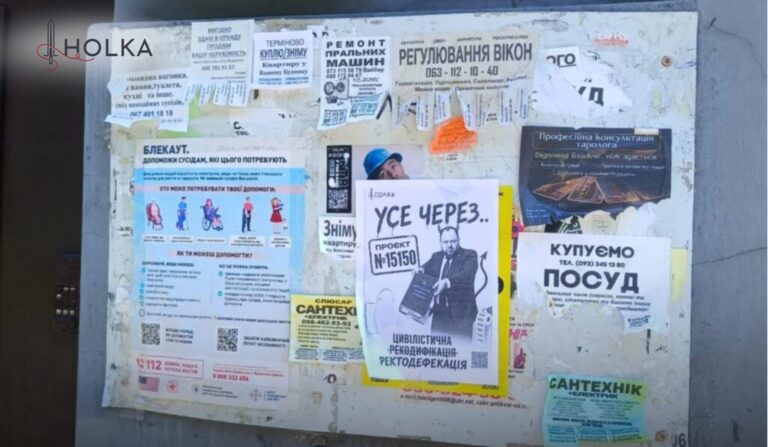
This evaluation, timed to the seventh anniversary of the current parliament’s convocation, was compiled by the civic initiatives “Holka” (Needle) and “Environment – People – Law” (EPL). It is based on their own analysis and expert assessments of legislative initiatives provided by environmental NGOs, including WWF-Ukraine, Greenpeace Ukraine, the Center for Environmental Initiatives “Ecoaction”, the Ukrainian Nature Conservation Group, and “Teren.” The evaluation includes both bills currently under consideration and those already passed by the Verkhovna Rada. Iryna Fedoriv, head of “Holka,” argues that the environmental concerns surrounding the initiatives proposed by the other four MPs are secondary to the risks associated with the draft Civil Code initiated by Stefanchuk, which is currently being prepared for its second reading:
“The adoption of the new Civil Code—the second most important legal document after the Constitution—could invalidate the high-quality judicial practice already developed by the Supreme Court. A petition against the draft code has gathered over 25,000 signatures, and MPs have submitted more than 15,000 amendments, setting a record for this parliament’s seven-year tenure. The Ministry of Justice has also recommended removing the ninth book of the draft, which contains provisions viewed as highly detrimental to the environment.
At the same time, the push against the current Civil Code began last year with the so-called ‘Ihor Mazepa law,’ submitted by Ihor Fris. Media reports note that the politician is associated with the ‘Kolomoisky group’ [a reference to a prominent Ukrainian oligarch]. Together with our partners, ‘Holka’ tracks controversial initiatives in our tool ‘Recharge the Country. It’s in Your Power’ to remember who votes for them and how.”
Representatives of the international charitable organization “Environment – People – Law” point to the draft law “On the Timber Market” as another highly concerning initiative. Olena Kravchenko, the executive director of the organization, emphasizes that while attempts by some parliamentarians to weaken safeguards like the Environmental Impact Assessment (EIA) are systemic, there are also cases where controversial legislative changes are introduced discreetly:
“Lobbyists often try to push through their desired changes via legislative amendments, doing so in violation of the parliamentary Rules of Procedure and the Constitution. This was the case with the draft law concerning the ‘Eastern Mining and Processing Plant’ (No. 15122). Through an amendment, there was an attempt to allow developers to build access roads and destroy biodiversity first, and only later submit an Environmental Impact Assessment report for territories where the topsoil and endangered species had already been effectively destroyed. We managed to react swiftly, and after pressure from the civic sector, the amendment was somewhat modified. We appreciate it when parliamentarians are open to dialogue.”
Another cited example of controversial legislation is an initiative proposing VIP safaris for wild animals, submitted by Ihor Marchuk (Draft Law No. 15431).
WWF-Ukraine, which analyzed the risks of this legislative initiative, stated:
“The draft law proposes changes to hunting management rules which, according to the conservation community, could weaken existing mechanisms for wildlife protection. Specifically, the initiative suggests allowing the use of certain technical devices during hunts, expands hunting opportunities during sensitive breeding periods for animal populations, and contains provisions that could pose risks to species requiring special protection. WWF-Ukraine urges the Verkhovna Rada not to support this legislative initiative and calls on its authors to withdraw the bill, as several proposed provisions may contradict the principles of biodiversity conservation and create additional risks for wildlife.”
As a reminder, “Holka” conducted a study for the parliament’s seventh anniversary, which found that the “Batkivshchyna” (Fatherland) faction most frequently abstains or votes against bills related to the Ukraine Facility Plan, including those concerning ecology.
Additionally, since 2023, the “Servant of the People” faction has not independently provided the 226 votes required to pass a single bill into law, indicating that their de facto single-party majority no longer exists.