“Judges Would Rather Elect a Deaf and Mute Person to the Constitutional Court – As Long As They Are One of Their Own”: A Conversation with Volodymyr Shapoval

Volodymyr Shapoval is a co-author of the Ukrainian Constitution and one of the first judges of the Constitutional Court (1996-2005). His name is the one mentioned when looking for experts to vet candidates for top positions in the judiciary. Volodymyr Shapoval’s professional path is unusual for a university professor: after resigning as a judge of the CCU, he represented the President in the Constitutional Court (2005-2007) and headed the Central Election Commission (2007-2013).
At the same time, Volodymyr Shapoval does not belong to those lawyers who speak cautiously and with restraint. He calls a spade a spade, ironizes about institutions, and gives assessments that are rarely heard from a retired Constitutional Court judge.
We are talking about the crisis of the Constitutional Court, why judges often choose “their own,” the difference between Ukrainian and foreign experts, why Mr. Shapoval is skeptical about the Venice Commission, and what the role of the Constitutional Court could be in ending the war.
This interview was created within the framework of Halyna Chyzhyk’s author project “Reasonable Doubt” in partnership with the public initiative “Holka” (The Needle).

Halyna Chyzhyk
Author of the "Reasonable Doubt" project
We are speaking during a difficult time for the Constitutional Court. In 2025, it did not work for almost half a year – there was no quorum. Only in June did the president appoint the 12th judge – Oleksandr Vodiannikov, which unblocked its work. In September, Yurii Barabash joined the Constitutional Court. At the same time, the parliament failed a vote in October, and the Congress of Judges hasn't even reached the voting stage – they are unable to present a sufficient number of worthy candidates who can pass all rounds of vetting. How does the shortage of judges affect the functioning of the court?
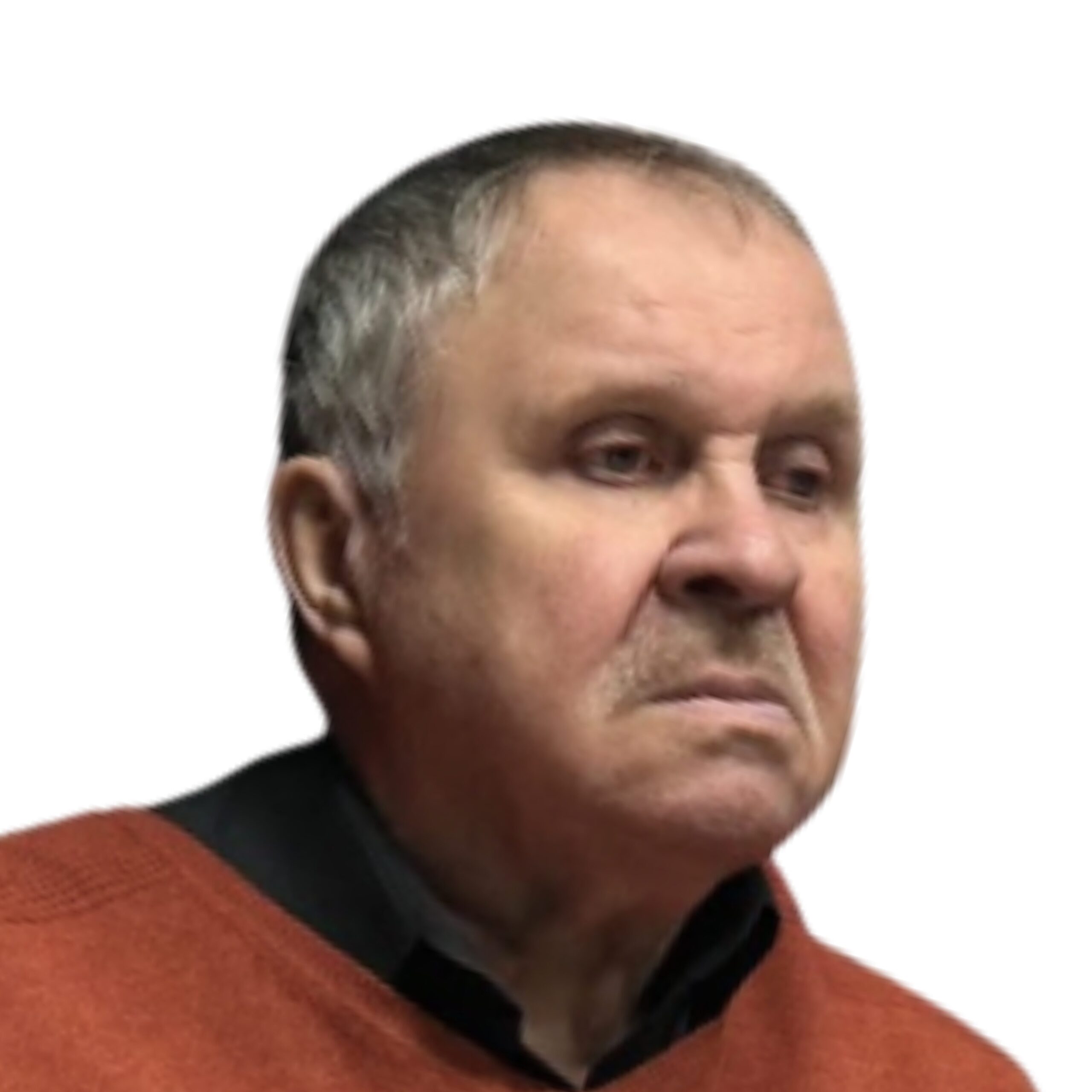
Volodymyr Shapoval
Judge of the Constitutional Court (1996—2005)
The longer the Constitutional Court does not function, the better it is for the state. Once, while listening to a radio broadcast of a Verkhovna Rada meeting, I heard a Member of Parliament call the conditional first composition of the Constitutional Court "golden."
Halyna Chyzhyk
Author of the "Reasonable Doubt" project
Do you disagree with this?
Volodymyr Shapoval
Judge of the Constitutional Court (1996—2005)
I don't like it. It's like comparing it to the goose that lays golden eggs. And there, you know, were different kinds of people.
Over nine years [the term of office for a Constitutional Court judge – H. Ch.], each of us developed complex feelings. During this time, forgive me, you could shoot each other. You are a witness to other people's betrayals. They are witnesses to your weaknesses. Moreover, everything happens in a small room.
This composition was good because when the first judges were appointed, people didn't yet understand what the Constitutional Court was. At first, they observed closely. And then they realized that this retail spot yields a profit, and the racketeers from the government rolled in. Unfortunately, starting from a certain point, the Constitutional Court became a tool for the cheap resolution of highly expensive issues.
Later on, when I worked as the President's [Viktor Yushchenko's – H.Ch.] representative in the Constitutional Court, I heard that among the candidates proposed to the president, the names of appellate court judges began to appear. I said: listen, this is not the level of the Constitutional Court. And the answer was so simple that I was taken aback: "But this is my person."
Over nine years [the term of office for a Constitutional Court judge – H. Ch.], each of us developed complex feelings. During this time, forgive me, you could shoot each other. You are a witness to other people's betrayals. They are witnesses to your weaknesses. Moreover, everything happens in a small room.
This composition was good because when the first judges were appointed, people didn't yet understand what the Constitutional Court was. At first, they observed closely. And then they realized that this retail spot yields a profit, and the racketeers from the government rolled in. Unfortunately, starting from a certain point, the Constitutional Court became a tool for the cheap resolution of highly expensive issues.
Later on, when I worked as the President's [Viktor Yushchenko's – H.Ch.] representative in the Constitutional Court, I heard that among the candidates proposed to the president, the names of appellate court judges began to appear. I said: listen, this is not the level of the Constitutional Court. And the answer was so simple that I was taken aback: "But this is my person."
Halyna Chyzhyk
Author of the "Reasonable Doubt" project
So at some point, this became a criterion?
Volodymyr Shapoval
Judge of the Constitutional Court (1996—2005)
This has always been the case. But earlier there were brakes, both external and internal. Earlier, they were afraid of responsibility.
Halyna Chyzhyk
Author of the "Reasonable Doubt" project
And when did the feeling of impunity appear?
Volodymyr Shapoval
Judge of the Constitutional Court (1996—2005)
Generations changed. More devils appeared who rely on impunity.
Moreover, the 2016 amendments to the Constitution introduced a very dangerous provision. It stipulates that a judge of the Constitutional Court can only be dismissed by a decision of the Constitutional Court itself, adopted by at least two-thirds of its composition. We essentially created a group of people who are almost untouchable.
I have never seen such idiocy anywhere.
Moreover, the 2016 amendments to the Constitution introduced a very dangerous provision. It stipulates that a judge of the Constitutional Court can only be dismissed by a decision of the Constitutional Court itself, adopted by at least two-thirds of its composition. We essentially created a group of people who are almost untouchable.
I have never seen such idiocy anywhere.
Halyna Chyzhyk
Author of the "Reasonable Doubt" project
Who, in your opinion, is the ideal candidate for the Constitutional Court? A constitutional scholar or a practicing judge?
Volodymyr Shapoval
Judge of the Constitutional Court (1996—2005)
I have enormous skepticism regarding so-called scholars. They say that the Constitutional Court needs experts in constitutional law. But such experts are still hard to find. The fact that a person wore out their trousers or skirt at a university is no guarantee.
In general, I believe that the Constitutional Court needs lawyers with analytical skills.
Do you know the difference between a judge of the Constitutional Court and a general court? A judge of the Constitutional Court judges the law, assessing it for constitutionality.
But for a judge of a general court, the law is an icon; they judge the fact and do not question the law. They face an avalanche of cases; they have to consider a multitude of procedural issues.
I remember my first meeting with general court judges who were appointed to the Constitutional Court. They have a completely different professional mentality; they clung to procedure like a life preserver. They could masterfully talk a problem to death, but substantively – it was paralysis, you understand?
At the same time, I'm not saying they are bad people, but they think differently.
For a Constitutional Court judge, analyzing a legal norm is paramount. It's like a dog's ability to find a truffle underground, excuse the comparison. Other dogs might be beautiful, with medals, but they won't sniff out the truffle. A judge of the Constitutional Court must be such a dog.
In general, I believe that the Constitutional Court needs lawyers with analytical skills.
Do you know the difference between a judge of the Constitutional Court and a general court? A judge of the Constitutional Court judges the law, assessing it for constitutionality.
But for a judge of a general court, the law is an icon; they judge the fact and do not question the law. They face an avalanche of cases; they have to consider a multitude of procedural issues.
I remember my first meeting with general court judges who were appointed to the Constitutional Court. They have a completely different professional mentality; they clung to procedure like a life preserver. They could masterfully talk a problem to death, but substantively – it was paralysis, you understand?
At the same time, I'm not saying they are bad people, but they think differently.
For a Constitutional Court judge, analyzing a legal norm is paramount. It's like a dog's ability to find a truffle underground, excuse the comparison. Other dogs might be beautiful, with medals, but they won't sniff out the truffle. A judge of the Constitutional Court must be such a dog.
Halyna Chyzhyk
Author of the "Reasonable Doubt" project
And how can one determine during the selection process whether a candidate possesses the necessary qualities? Is it even possible?
Volodymyr Shapoval
Judge of the Constitutional Court (1996—2005)
Only partially. Because a very smart person will fool any lie detector and overcome the tests.
Of course, there are obvious things that are easy to read. For example, to this day I don't understand how someone could be appointed as a judge of the Constitutional Court who, during a full-scale war, left the country for half a year, and then lied shamelessly, claiming, "I was on a business trip with my whole family."
How will he behave? You can expect absolutely anything from such a person.
Life consists of small betrayals. Someone is tormented by these betrayals, while for others, they are a way of moving through life. How can society rely on such a person?
Stupidity, on the other hand, is easy to detect. However, it mostly manifests itself post festum, as the ancient Romans used to say – after the feast. For example, I recently learned that one candidate, who was recommended for a position but not appointed, expressed a grievance to the president, claiming he should have been appointed. When I found this out, I said, hold on, doesn't he understand that the act of appointment is a power, a prerogative of the president? Because otherwise, it turns out, we don't need a president, let them be appointed automatically.
I would take away his diploma after he wrote such a thing.
Of course, there are obvious things that are easy to read. For example, to this day I don't understand how someone could be appointed as a judge of the Constitutional Court who, during a full-scale war, left the country for half a year, and then lied shamelessly, claiming, "I was on a business trip with my whole family."
How will he behave? You can expect absolutely anything from such a person.
Life consists of small betrayals. Someone is tormented by these betrayals, while for others, they are a way of moving through life. How can society rely on such a person?
Stupidity, on the other hand, is easy to detect. However, it mostly manifests itself post festum, as the ancient Romans used to say – after the feast. For example, I recently learned that one candidate, who was recommended for a position but not appointed, expressed a grievance to the president, claiming he should have been appointed. When I found this out, I said, hold on, doesn't he understand that the act of appointment is a power, a prerogative of the president? Because otherwise, it turns out, we don't need a president, let them be appointed automatically.
I would take away his diploma after he wrote such a thing.
 Former Constitutional Court Judge Shapoval and Halyna Chyzhyk
Halyna Chyzhyk
Author of the "Reasonable Doubt" project
According to the Constitution, the Constitutional Court consists of 18 judges: six each are appointed by the president, the Verkhovna Rada, and the Congress of Judges. We often see judges consistently voting for those who will represent their interests. And the Constitutional Court's decisions regarding judicial reform, asset declarations, or judicial salaries are often perceived as primarily protecting the judicial corps.
Why is it important that a third of the Constitutional Court judges are appointed by the Congress of Judges?
Why is it important that a third of the Constitutional Court judges are appointed by the Congress of Judges?
Volodymyr Shapoval
Judge of the Constitutional Court (1996—2005)
Do you know where this procedure for forming the Constitutional Court of Ukraine came from?
In the draft Constitution, which passed the constitutional commission, was approved and re-approved, a different model was envisioned: the president submits a candidacy, and the Verkhovna Rada accepts or rejects it.
In the draft Constitution, which passed the constitutional commission, was approved and re-approved, a different model was envisioned: the president submits a candidacy, and the Verkhovna Rada accepts or rejects it.
Halyna Chyzhyk
Author of the "Reasonable Doubt" project
All the candidates?
Volodymyr Shapoval
Judge of the Constitutional Court (1996—2005)
All of them.
And then a certain Oleksandr Lavrynovych appeared; he later served as an MP, the Minister of Justice three times, and a member of the High Council of Justice, and he began convincing everyone that political influence on the court needed to be eliminated.
And then a certain Oleksandr Lavrynovych appeared; he later served as an MP, the Minister of Justice three times, and a member of the High Council of Justice, and he began convincing everyone that political influence on the court needed to be eliminated.
Halyna Chyzhyk
Author of the "Reasonable Doubt" project
However, under conditions of parliamentary majority control – as we had after 2019 – the president effectively gains sole influence over the formation of the Constitutional Court.
Volodymyr Shapoval
Judge of the Constitutional Court (1996—2005)
And who told you that such a situation is cemented forever?
Halyna Chyzhyk
Author of the "Reasonable Doubt" project
The situation is not eternal, but even in a few years, judges appointed in this way can make quite a few decisions.
Volodymyr Shapoval
Judge of the Constitutional Court (1996—2005)
Excuse me, but the Constitutional Court is controlled in other ways – through various informal incentives. Both material and much harsher ones.
Once an acquaintance of mine, a retired judge of the Constitutional Court, told me that he was first invited to a restaurant, and then, after the restaurant, he was taken to the forest and shown a pit. Maybe something else happened there, because he was very scared. And the people who resolved issues in this way back then live among us. And some still hold high positions today.
Once an acquaintance of mine, a retired judge of the Constitutional Court, told me that he was first invited to a restaurant, and then, after the restaurant, he was taken to the forest and shown a pit. Maybe something else happened there, because he was very scared. And the people who resolved issues in this way back then live among us. And some still hold high positions today.
Halyna Chyzhyk
Author of the "Reasonable Doubt" project
So do you consider the introduction of quotas and the involvement of the Congress of Judges in the formation of the Constitutional Court to be a mistake?
Volodymyr Shapoval
Judge of the Constitutional Court (1996—2005)
I opposed this from the very beginning.
Do you know who always cliqued together the most? Those appointed at the Congress of Judges. No one has such developed corporatism as they do. I'll give you an example. A retired judge of the Constitutional Court, a former judge of the Supreme Court, unfortunately now deceased, frankly told me how the then-head of the Supreme Court gathered the Constitutional Court judges appointed under the Congress of Judges quota and gave them instructions on how to vote regarding the law on the High Council of Justice. When she told me this, I was shocked, yet this judge considered it normal.
They didn't have this protest.
Do you know who always cliqued together the most? Those appointed at the Congress of Judges. No one has such developed corporatism as they do. I'll give you an example. A retired judge of the Constitutional Court, a former judge of the Supreme Court, unfortunately now deceased, frankly told me how the then-head of the Supreme Court gathered the Constitutional Court judges appointed under the Congress of Judges quota and gave them instructions on how to vote regarding the law on the High Council of Justice. When she told me this, I was shocked, yet this judge considered it normal.
They didn't have this protest.
Halyna Chyzhyk
Author of the "Reasonable Doubt" project
And where does protest come from?
Volodymyr Shapoval
Judge of the Constitutional Court (1996—2005)
In any system, there will always be people who can destroy it. I have often observed colleagues who were black sheep among other judges. It's about personality, character, stubbornness. Moreover, the very position of a Constitutional Court judge can amplify these qualities.
In the Constitutional Court, general court judges have always dominated. While all these president-appointed professors were squabbling amongst themselves and proving who was better, the judges were making deals: you support me now, and I'll support you next time. That's how it is.
Therefore, it's useless to hope that judges will ever elect some renowned professor to the Constitutional Court – they would rather choose a deaf and mute person, as long as they are one of their own.
In the Constitutional Court, general court judges have always dominated. While all these president-appointed professors were squabbling amongst themselves and proving who was better, the judges were making deals: you support me now, and I'll support you next time. That's how it is.
Therefore, it's useless to hope that judges will ever elect some renowned professor to the Constitutional Court – they would rather choose a deaf and mute person, as long as they are one of their own.
Halyna Chyzhyk
Author of the "Reasonable Doubt" project
In 2023, the Verkhovna Rada changed the procedure for selecting Constitutional Court judges. Instead of separate appointment procedures under the quotas of the president, parliament, and the Congress of Judges, uniform candidate evaluation rules and an independent commission common to all three entities emerged – the Advisory Group of Experts, half of which consists of foreign experts.
The introduction of this model was one of the European Commission's demands within the framework of Ukraine's movement toward the EU.
How do you evaluate this procedure? In your opinion, does it solve the problem of appointing questionable or politically dependent judges to the Constitutional Court?
The introduction of this model was one of the European Commission's demands within the framework of Ukraine's movement toward the EU.
How do you evaluate this procedure? In your opinion, does it solve the problem of appointing questionable or politically dependent judges to the Constitutional Court?
Volodymyr Shapoval
Judge of the Constitutional Court (1996—2005)
When the model involving foreign experts appeared, I initially spoke about it rather positively. Representatives of USAID approached me then. I wrote that there is no violation of sovereignty in this model, because the state itself, by passing a law, establishes such a procedure and can change it. Sovereignty is primarily manifested in the fact that the state retains the right to regulate a given situation.
But back then I didn't know that this twist with the decisive vote belonging to foreigners would appear.
I consider this a tragic mistake. It turns out that there are two grades of members in the Advisory Group of Experts.
When this provision appeared, which essentially makes Ukrainian experts second-class, I thought, who do you have to be to agree to such a role? After all, you are at home, but you are a secondary participant in the process. By the way, this is an indirect assessment of the state itself by those who pushed this law through.
And then the then-head of USAID in Ukraine invites me to a meeting. This was right on the eve of the formation of the Advisory Group of Experts, and it was hinted to me that they wanted to propose my candidacy. The prospect appealed to me, because I wanted to contribute so as not to let unprofessional crap through, excuse my harshness. But during the conversation, it turned out that I was being offered to be a deputy to a judge from the United States.
I thanked him, but thought to myself: why the hell did you invite me?
My country and I were humiliated.
Like, "You, Mr. Shapoval, are second-class. You can only be a deputy to some American woman in your own country."
That's the story.
But back then I didn't know that this twist with the decisive vote belonging to foreigners would appear.
I consider this a tragic mistake. It turns out that there are two grades of members in the Advisory Group of Experts.
When this provision appeared, which essentially makes Ukrainian experts second-class, I thought, who do you have to be to agree to such a role? After all, you are at home, but you are a secondary participant in the process. By the way, this is an indirect assessment of the state itself by those who pushed this law through.
And then the then-head of USAID in Ukraine invites me to a meeting. This was right on the eve of the formation of the Advisory Group of Experts, and it was hinted to me that they wanted to propose my candidacy. The prospect appealed to me, because I wanted to contribute so as not to let unprofessional crap through, excuse my harshness. But during the conversation, it turned out that I was being offered to be a deputy to a judge from the United States.
I thanked him, but thought to myself: why the hell did you invite me?
My country and I were humiliated.
Like, "You, Mr. Shapoval, are second-class. You can only be a deputy to some American woman in your own country."
That's the story.
Halyna Chyzhyk
Author of the "Reasonable Doubt" project
But you aren't against the participation of foreign experts?
Volodymyr Shapoval
Judge of the Constitutional Court (1996—2005)
I believe the participation of foreigners is necessary. Do you know why they are interesting in such processes? Foreign specialists can see things that we are not used to or don't even want to think about.
Halyna Chyzhyk
Author of the "Reasonable Doubt" project
How much longer do you think we will need the participation of foreigners in the selection of Constitutional Court judges, competitions for positions in the judicial system, and anti-corruption bodies?
Volodymyr Shapoval
Judge of the Constitutional Court (1996—2005)
I'll say it pragmatically and cynically: until we sign the Lisbon Treaty on joining the European Union. And, for the sake of decency, for another year after that (laughs - H. Ch.).
I still have a decorated Christmas tree standing outside today. And why don't I take it down? It's beautiful, its needles aren't falling off. Who are they bothering – these foreign experts? Of course, if they have equal status with our experts, I consider their participation normal.
I still have a decorated Christmas tree standing outside today. And why don't I take it down? It's beautiful, its needles aren't falling off. Who are they bothering – these foreign experts? Of course, if they have equal status with our experts, I consider their participation normal.
Halyna Chyzhyk
Author of the "Reasonable Doubt" project
Ukraine frequently turns to the Venice Commission. We hardly pass any important law without its conclusion, although by its nature it is only an advisory body. Why is it given such importance in Ukraine? Does this body really know how to solve our problems better than we do?
Volodymyr Shapoval
Judge of the Constitutional Court (1996—2005)
I am very skeptical of it. I have witnessed many of the Venice Commission's contortions. And I'll say directly: it shouldn't be perceived as a gathering of top-tier lawyers. It's a political body that executes political orders.
Halyna Chyzhyk
Author of the "Reasonable Doubt" project
And who gives them these orders?
Volodymyr Shapoval
Judge of the Constitutional Court (1996—2005)
A political body – the Council of Europe. And I cannot imagine the Council of Europe adopting a decision that would fundamentally differ from the desires and intentions of the European Union. Therefore, in reality, it's the EU as the key European institution that stands behind it.
The Venice Commission is an organ that issues political recommendations under the guise of legal advice. I've read almost all their conclusions, and not only regarding Ukraine. And it is, essentially, an attempt to fit a square peg into a round hole. So why call political recommendations a legal expertise?
The Venice Commission is an organ that issues political recommendations under the guise of legal advice. I've read almost all their conclusions, and not only regarding Ukraine. And it is, essentially, an attempt to fit a square peg into a round hole. So why call political recommendations a legal expertise?
Halyna Chyzhyk
Author of the "Reasonable Doubt" project
So why do the Ukrainian authorities turn to the Venice Commission if they aren't going to say what they want to hear?
Volodymyr Shapoval
Judge of the Constitutional Court (1996—2005)
Not always. There are communicators. For example, Serhii Holovatyi. I have a normal attitude towards him, I've known him for a long time. He's a good communicator.
Over the decades he has worked in the Venice Commission, he has grown there. He has extensive connections, people listen to him. He knows how to persuade. He comes and says: we need to turn to the Venice Commission, we will be heard, we will be understood. And then, excuse me, this shuttling back and forth begins.
He is an event-person, very talented in such matters. He has a well-trained voice, he knows how to present an argument. And it works.
Over the decades he has worked in the Venice Commission, he has grown there. He has extensive connections, people listen to him. He knows how to persuade. He comes and says: we need to turn to the Venice Commission, we will be heard, we will be understood. And then, excuse me, this shuttling back and forth begins.
He is an event-person, very talented in such matters. He has a well-trained voice, he knows how to present an argument. And it works.
Halyna Chyzhyk
Author of the "Reasonable Doubt" project
Formally, we are not obligated to appeal to the Venice Commission or implement its recommendations. But in the context of European integration, one gets the impression that this is essentially becoming mandatory. Should Ukraine heed these recommendations?
Volodymyr Shapoval
Judge of the Constitutional Court (1996—2005)
It all depends on how confident the government feels. We had a period when they appealed to the Venice Commission on any occasion. Simply because they didn't know how to behave.
I think they would turn to them less now. The president is evolving, after all.
We shouldn't constantly look back at what the Venice Commission will say. I repeat, I have no trust in their recommendations. Moreover, to what extent can their recommendations even be useful to us given our specific circumstances?
I think they would turn to them less now. The president is evolving, after all.
We shouldn't constantly look back at what the Venice Commission will say. I repeat, I have no trust in their recommendations. Moreover, to what extent can their recommendations even be useful to us given our specific circumstances?
Halyna Chyzhyk
Author of the "Reasonable Doubt" project
Will the Constitutional Court be a participant in the peaceful settlement? And is it capable of withstanding pressure and making a decision in the interests of Ukrainian society?
Volodymyr Shapoval
Judge of the Constitutional Court (1996—2005)
If we do not lose territories in the legal sense, it's all very simple here. It will depend on the filling of that peace agreement which will be concluded.
Article 73 of the Constitution explicitly states: "Issues of altering the territory of Ukraine are resolved exclusively by an All-Ukrainian referendum." Period.
The key point here is that exclusively the Verkhovna Rada can call such a referendum. And most importantly: the Constitution permits territorial changes.
Another matter is, what constitutes territorial changes? Here, the role of the Constitutional Court could be serious. For instance, if the agreement states that Ukraine retains sovereignty over the occupied territories, but they remain occupied, does this constitute territorial changes? Formally no, but de facto yes, because they are not controlled by us. This is exactly where the Constitutional Court will be needed.
It will be necessary to sit at a round table and, well prepared, explain, discuss, and persuade.
However, I am convinced that the Constitutional Court will make the right decision.
Ultimately, don't forget: there is society. And societal pressure is completely normal.
Article 73 of the Constitution explicitly states: "Issues of altering the territory of Ukraine are resolved exclusively by an All-Ukrainian referendum." Period.
The key point here is that exclusively the Verkhovna Rada can call such a referendum. And most importantly: the Constitution permits territorial changes.
Another matter is, what constitutes territorial changes? Here, the role of the Constitutional Court could be serious. For instance, if the agreement states that Ukraine retains sovereignty over the occupied territories, but they remain occupied, does this constitute territorial changes? Formally no, but de facto yes, because they are not controlled by us. This is exactly where the Constitutional Court will be needed.
It will be necessary to sit at a round table and, well prepared, explain, discuss, and persuade.
However, I am convinced that the Constitutional Court will make the right decision.
Ultimately, don't forget: there is society. And societal pressure is completely normal.

Supported by the European Endowment for Democracy (EED)
Exclusively for “Dzerkalo Tyzhnia“