The Division of the Inheritance of the Ministry for Restoration as a Test for Bankova. The Staff Will Show Everything!

The Ministry of Regional Development, which was previously merged with the Ministry of Infrastructure, needs to be restored. The necessity of returning to its former format was the official reason for the resignation of the Minister for Communities, Territories, and Infrastructure Development, Oleksandr Kubrakov. Regardless of the real reasons for this personnel decision, the president’s office thereby acknowledged its mistake: it was unnecessary to create a super ministry a few years ago.
This ministry was tasked with solving a variety of issues: infrastructure and construction development, regional development, as well as organizing public authority in the territory.
This inherently contained a conflict of interest. Why? Because it is like merging the Ministry of Ecology with the Ministry of Industry. Environmentalists protect nature, while industrialists are tasked with building industrial zones. These cannot be combined in one ministry because there must be a struggle to form the rules of the game. If such ministries are combined, whoever has more money will win in shaping policies. And there will be no one to oppose. The mission of the Cabinet of Ministers is precisely to reconcile the positions of opposing ministries.
When it comes to a super ministry, they combined what cannot be combined. There will be a constant conflict of interest in shaping the rules for the developers’ market and regional development. The expert community highlighted this during the preparation of the decision to merge the ministries.
The Ministry of Regional Development must fight for the even development of territories to avoid imbalances in development and the living standards of people in different communities and within the communities themselves. Developers are primarily interested in building housing in large cities because it sells for more there.
Unfortunately, it has been a month since Kubrakov’s resignation, but no document on the division of the Ministry for Restoration at the government level has been adopted. Moreover, there is an opinion that it is better to leave everything as it is because “there is a war, and it is not the time to spend half a year on organizational matters.” But on the contrary, war requires the prompt correction of mistakes. Without wasting months on political games.
What do we observe now?
The merger and creation of a new ministry is indeed a time-consuming process. The Ministry of Regional Development de jure needs to be created anew.
The restored ministry should become key in the issues of real continuation of decentralization of power, territorial organization of executive power, and spatial development, which the state has been implementing for over ten years. And this will be a test of maturity for the central government.
To do this, a number of organizational issues need to be resolved. One of them is to return the building on Velyka Zhytomyrska Street, which fully corresponds to the status of not the first, but not the second ministry in the system of central executive bodies. This institution, along with the Ministry of Finance, the Ministry of Justice, and the Ministry of Digital Transformation, should have not a sectoral but a functional character. That is, their activities concern not each ministry separately but all ministries of the Cabinet. This means that all government projects should go through these ministries. When it comes to the Ministry of Regional Development, this institution should consider them in terms of application to the territory, or even space, given its three-dimensionality.
The tasks facing the newly created Ministry of Regional Development echo those that existed back in 2007 when Vasyl Kuybida held the position of profile minister in the government of Yulia Tymoshenko. At that time, it was necessary to form the regulatory framework for local self-government and regional development from scratch.
The package of legislative and regulatory acts developed at that time “shot” in 2014 when decentralization was launched. Currently, there are quite promising prospects for adopting the legislative initiative “On Local State Administrations” (No. 4298), which opens a new functionality for local state administrations and introduces state oversight of local self-government bodies (LSG). Thus, the main field of creativity for the ministry should be the deconcentration of executive power. This means defining the powers of territorial executive bodies and their relationship with general competence executive bodies, which local state administrations should become.
The complexity of the task lies in the development of amendments to sectoral laws, which will provide a clear delineation of powers between central executive bodies, as well as between district and regional territorial bodies, will naturally arouse the jealousy of the central government. This primarily concerns the “power structures,” such as the Ministry of Internal Affairs, the State Emergency Service of Ukraine, the State Tax Service, and the Ministry of Social Policy, which has not yet managed to organize the Social Service.
Moreover, it will be necessary to organize methodological support for the activities of local state administrations, which the president’s office will also consider interference with de facto powers that are not actually defined by any law.
On the other hand, the Ministry of Regional Development ceases to be resourceful, which will make it uninteresting in terms of organizing financial flows for political projects. Unless the State Fund for Regional Development remains under its management, but this is rather a stream compared to what should go to the restoration of Ukraine and what is currently overseen by the super ministry.
Such steps will require considerable courage and political skill from the newly appointed head of the Ministry of Regional Development. And as practice shows, personal loyalty to the president and professionalism still do not guarantee even a year’s carte blanche necessary only for the development and approval by the government of by-laws and legislative projects.
A positive assessment of the minister’s activities by European partners, on the one hand, will promote European integration, on the other hand, may become the reason for his unexpected resignation. And this has been demonstrated more than once not only by the current but also by the previous government under conditions of constant constitutional collision in the power triangle president-parliament-government.
But the position of passive support of processes in the style of a government of political survival will actually distance the prospects of European integration. Ultimately, the real intentions and potential of the ministry will become clear after the formation of the leadership team at the level of deputies and department directors. Back in 2007, the profile minister relied on graduates of the training school — the Institute of Public Administration and Self-Government. The method of personnel selection that the current head of the institution will choose — corporate, merit-based, or banal nepotism — will determine the level of success of the Ministry of Regional Development.
Successes and failures. What should we remember about the Ministry of Regional Development?
The successful activity of the team of the former profile minister Kuybida was manifested in the sector of territorial organization of power and regional development. But the sphere of regulatory regulation of the construction industry already needed to be transferred to the Ministry of Infrastructure because it is a sectoral activity.
On the other hand, the war introduces specificity into the ministry’s activities, requiring not only the development of long-term policy but also dynamic decisions given daily challenges. Therefore, it would be quite logical to merge the Ministry of Reintegration with the Ministry of Regional Development. A specific task caused by the war for the Ministry of Regional Development should be the regulatory framework for the grounds, procedures for creating military administrations in communities, limiting their functionality to reduce authoritarianism and corruption, the procedure for their transformation first into military-civil administrations, and then the restoration of full-fledged local self-government.
Successful in the activities of the Ministry of Communities was the active strengthening of digital technologies. Given the task of constant interaction with local self-government and territorial bodies of central executive power, strengthening the significance of municipal statistics, this direction of activity of the newly created Ministry of Regional Development should be actively supported.
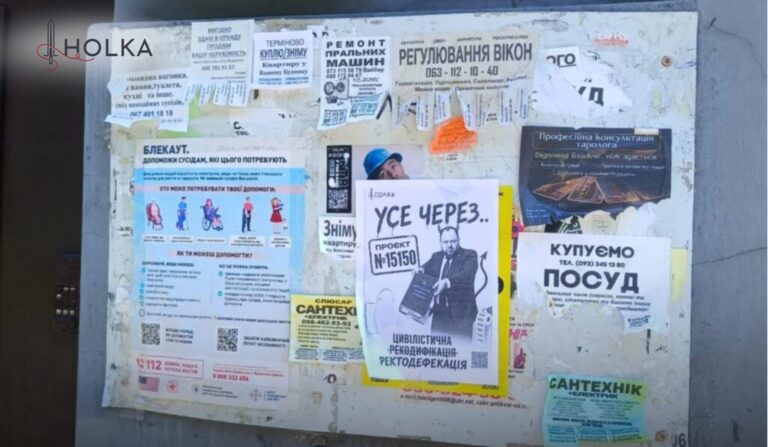
The conflict of interest of the Ministry of Communities, Territories, and Infrastructure Development was vividly manifested during the scandalous urban planning “reform” (bill No. 5655), which at the same time provided for overdue changes in the regulation of the construction industry. However, the authors combined construction with urban planning. For example, according to the bill, the process controller for constructing structures could be chosen by the customer in the person of the urban planning department of the city council’s executive body. If the Ministry of Regional Development and the Ministry of Infrastructure were separated, such inconsistencies could have been blocked by experts on local self-government organization.
Finally, one of the signals indicating the need to separate the Ministry of Communities, Territories, and Infrastructure Development was the inconsistency of regional development issues. And this is not only the inconsistency of basic planning documents, which was repeatedly noted. The combination of functions of fund utilization for reconstruction, infrastructure construction, and simultaneously policy development, which involves the participation of other central executive bodies, regional and local self-government, already in itself creates a conflict of interest.
It is also necessary to consider Ukraine’s claims to receive funds from the EU structural funds, which requires careful regulation of the activities of all involved public law entities, otherwise, the money will not be given. Obviously, the development of the regulatory framework for regional development issues should be under the authority of the central executive body, which simultaneously is responsible for organizing the interaction of executive power and local self-government, that is, the Ministry of Regional Development.
Ukraine does not have centuries to transform from an authoritarian to a democratic country through the natural change of ruling elites. The need for quick and radical decisions regarding the optimal organization of power is caused not only by the war but also by society’s desire to break away from the communist-imperial heritage. But war is not a reason to abandon reforms.
The reincarnation of the Ministry of Regional Development, its mission to organize the territory and connect with local self-government — a form of public authority that is gaining weight, requires delicate work. Whether the ruling elites will succeed can be understood from the reaction of the European community. We would very much like to hear a surprised and admiring: “They did it!”
Specially for “Dzerkalo Tyzhnia“