Ihor Solovey: “FSB in robes” incites Ukrainians to riots abroad

Russia is conducting information operations not only in the information field of Ukraine, but also abroad, where millions of our citizens have found themselves because of the war.
Disinformation against Ukrainians who have left their homeland due to the full-scale invasion is one of the goals of enemy propaganda.
What messages does the enemy spread, and how does it build its agent network, which involves Ukrainian refugees and ‘agents in robes’?
Ihor Solovey, Head of the Centre for Strategic Communications and Information Security, talks about this in the project Mosty (The Bridges of Ukraine) by the Civic Initiative “Holka”.

The issue of discrediting Ukrainians abroad is one of the two main, even major, tasks of Russian propaganda. A large number of different messages are produced against them, the purpose of which is to create a negative image of them, which would then contribute to the decision of the authorities in these countries, under the influence of the public and the media, to suspend aid first to refugees and then to Ukraine as a whole.

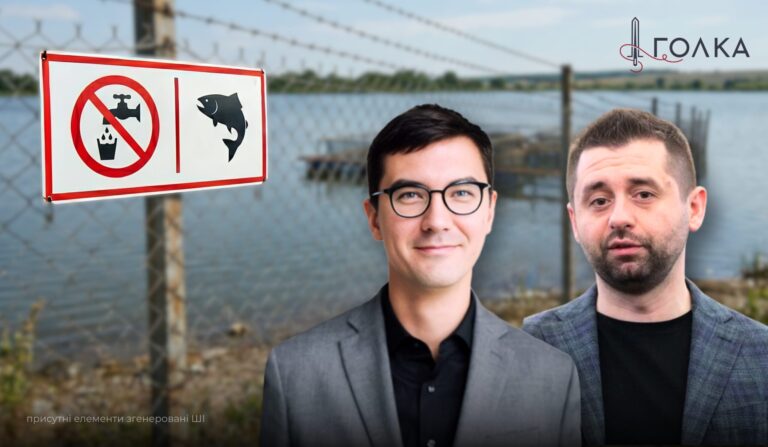
Ihor Solovey, Head of the Centre for Strategic Communications and Information Security and Margaryta Sytnyk
In other words, the aggressor needs to cut Ukraine off from Western assistance. First of all, from military and political, and then from socio-economic. In particular, not only for Ukrainians in Ukraine, but also for Ukrainians who have left.
First, they talk about Ukrainians as poor people who bring poverty and disease to this country. The most effective horror story is that Ukrainians take jobs away from locals. In general, the methodology for creating negative messages about Ukrainians is very simple: you invent or take real facts of some negative life situations and stick a sign saying that they are Ukrainians. There are many cases where similar videos are about Belarusians or Russians, but are attributed to Ukrainians. For example, a video of a man with Nazi tattoos, who is a Belarusian, was shared on social media as of a man from Ukraine.
 Among gents abroad are also Moscow priests. I think only the lazy do not understand that the Russian Orthodox Church is used by the Russian special services for their activities. Representatives of the Russian Orthodox Church in Ukraine, under the guise of the UOC-MP, have begun massive missionary work abroad, especially in places where Ukrainians live.

Фото: Ihor Solovey and Margaryta Sytnyk
As far as I know, there are currently about 59 parishes of the UOC-MP in different countries. They open their representative offices, ignoring any laws and regulations. And Ukrainians who find themselves abroad at a difficult time, in harsh emotional conditions, are looking for communication with their fellow countryman. Someone went to church in Ukraine and is looking for a parish in the territory where they now find themselves. Especially during major holidays, such as Easter and Christmas. And that’s when these priests appear and begin to ‘feed the flock’.
‘We need peace’, about “brotherly peoples,” this rhetoric closes the search for an answer to the main question: ‘Who is to blame for this?’ They say that the West created it and is to blame. That is, the task is to convince their parishioners, including Russians who have long lived there and Ukrainian refugees, to reinforce their opinion or sow doubt that Russia attacked Ukraine.

First, Ukrainians need to unite. And unite around trusted, ideological, adequate people and organisations, for example. These associations make it possible to keep abreast of what is happening in Ukraine. At the Centre for Strategic Communications, we work with communities in many countries through their NGOs. When they contact us with questions, we are happy to provide explanations about various events. We also publish them on the Centre’s website. Please come and find out the position of the state on certain issues.
And, importantly, just stay Ukrainian. Imagine that you are an embassy, that you are the ambassador of Ukraine, how would you behave? Actually, the activity depends on this positioning. This is the representation of the language, culture, politics, and society in that country through various channels, communication with friends, opportunities for communication at work, and so on.
This war is being waged against Ukraine and Ukrainians in general, no matter where you are – in Ukraine, Russia or another country abroad. A Ukrainian in Britain, Sweden, the United States, or somewhere in Bruges is just as much a participant in this war. And this must be remembered.
Margaryta Sytnyk – Communications manager, Co-founder of the Civic Initiative “Holka”
Translated by Iryna Kovalenko, The Ukrainian Review