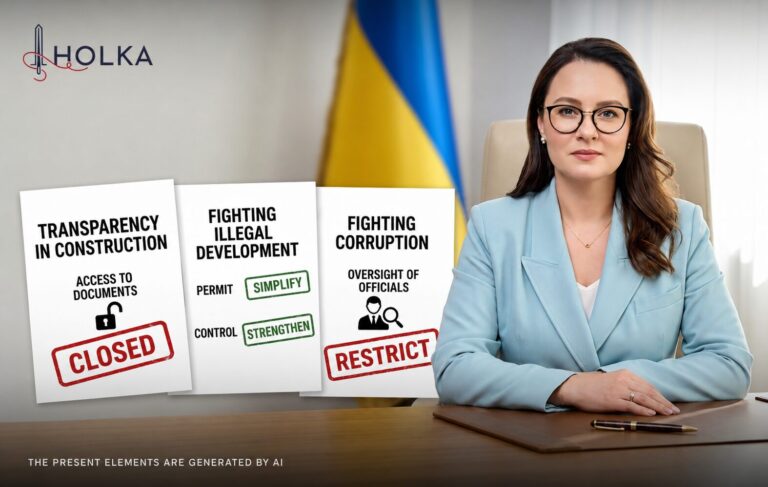
Budget 2026 and Government Composition: How the Political Crisis Affects the Work of the Verkhovna Rada

On December 3, the Verkhovna Rada is considering the draft budget for 2026. It was formulated under the former Head of the Office of the President, Andriy Yermak, and several factions and groups have raised questions regarding the draft.
Due to the political crisis, the state—which is currently defending its sovereignty in the Russo-Ukrainian war—lacks a consensus budget. As a result, the Ministry of Finance is conducting consultations with various political forces. Even today, People’s Deputies are uncertain whether the draft budget will even reach the floor for consideration.
Currently, discussions revolve around teacher salaries, the 64% PIT (Personal Income Tax) allocation to communities, and whether funds should be allocated to the “United Marathon” (state-backed TV broadcast) and new railway cars. There is also a dispute over who should receive more funding: the Bureau of Economic Security (BEB) or the State Bureau of Investigation (DBR).
Furthermore, following Operation “Midas” conducted by anti-corruption authorities, the issue of government composition has become acute. Deputies are discussing who will lead the Ministry of Justice and the Ministry of Energy following the dismissals of Herman Halushchenko and Svitlana Hrynchuk.
Government Turbulence: Why the Instability?
Regarding the government situation, Yulia Sirko, Deputy Chair of the “Holos” (Voice) parliamentary faction (formerly Klymenko), notes that Ukraine is currently facing a political crisis:

Oleg Kulinich, head of the “Dovira” (Trust) deputy group, emphasized in a comment to the “Holka” civic initiative that personnel issues will not be easy:

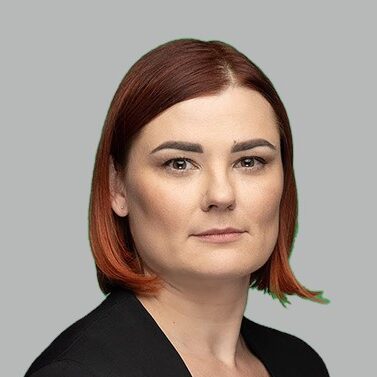
Lyudmyla Buimister, a People’s Deputy who was elected as a majoritarian candidate from the “Servant of the People” in the capital but is currently a member of the “Batkivshchyna” (Fatherland) faction, highlights that government appointments under current conditions are a major challenge:
It is worth noting that the government merges and separates ministries quite frequently. For instance, at the start of the term in 2019, the Ministry of Culture was merged with the Ministry of Youth and Sports and the Ministry of Information Policy. Less than a year later, they decided to separate them. This summer, despite expert warnings, three ministries were merged into one: the Ministry of Economy, the Ministry of Agrarian Policy, and the Ministry of Ecology. In the fall, over 130 signatories petitioned deputies to restore the independent operation of the Ministry of Ecology, which helped block laws with corruption risks. However, this issue is not currently under discussion.
It is the Verkhovna Rada that approves not only the ministers but also the number of ministries and the Cabinet’s operational format. Yet, the parliamentary majority often lacks the agency (subjectivity) to resist directives from Bankova (the Presidential Office).
What’s Wrong with the 2026 Budget Project?
Deputy Buimister notes that besides personnel issues, there is another matter where consensus is lacking and votes are being sought: the national budget for next year.
Even deputies from the “Servant of the People” faction have questions about the draft budget. Deputy Oleksandr Aliksiichuk says the budget discussion is a priority:
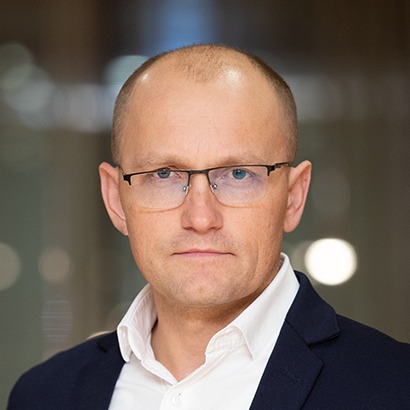
The “Dovira” group agrees that these are key issues. Oleg Kulinich stated that amendments to the state budget have already been drafted alongside the Ministry of Finance to provide for the 64% PIT in local budgets:
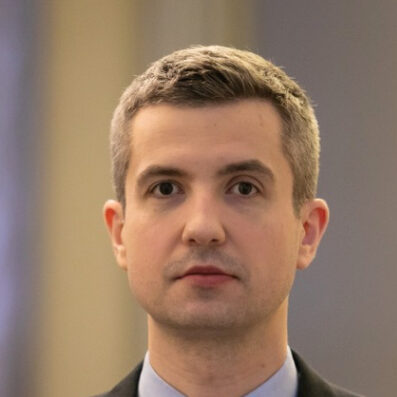
“Holka” inquired with the Secretary of the Budget Committee, Volodymyr Tsabal (“Holos”), about the progress of the draft budget. The politician noted that dialogue with the Ministry of Finance is improving:
These are not the only issues with the draft budget. In the spring, the Verkhovna Rada passed the “Ihor Mazepa Law” (Draft 12089), which essentially provides for the legalization of property stolen during the Yanukovych presidency and earlier. If ten years have not passed since the illegal distribution (deriban) of forests and coastlines, the state or community must deposit funds equal to the market value of the stolen property into a court account to reclaim it. If it is proven that the land was seized illegally, the perpetrator returns the property but takes the budget funds. Thus, the state and the community lose either way.
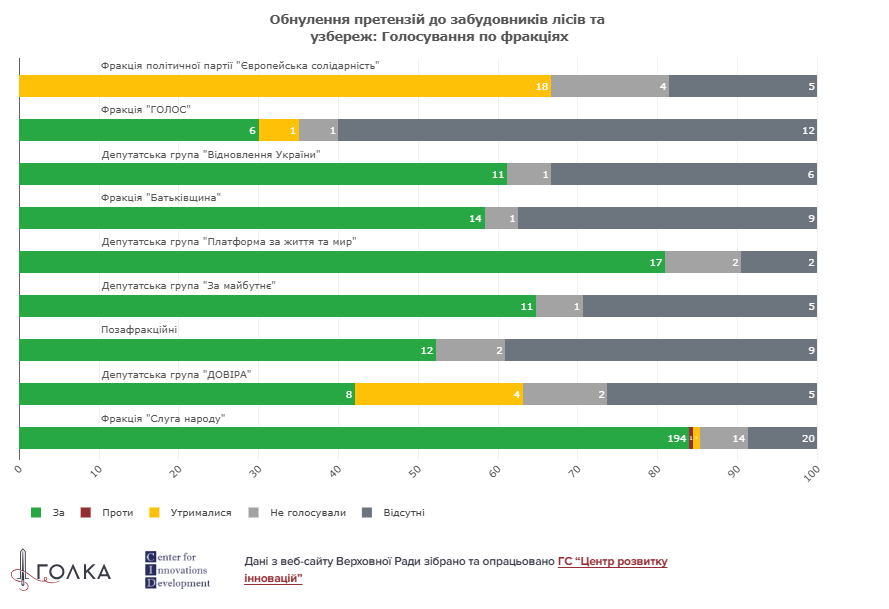
This “Ihor Mazepa Law” was criticized by both the European Parliament and the European Commission.
Notably, the government attempted to delay the implementation of this law regarding the budget deposits to protect the state budget from this scheme. However, deputies from the “Kolomoisky Group”—Taras Batenko and Ihor Fris—submitted three amendments to nullify the Cabinet’s actions. In the first reading, two were supported, while one failed. Now, with a shortage of votes for the budget, the “Kolomoisky Group” is ready to support the draft but is setting its own conditions.
If preliminary vote counts show sufficient support, the budget may be considered on the afternoon of December 3.
Special for “ZAXID.net”
Цей матеріал підготовлено в межах проєкту “Перезарядити Україну тобі під силу“. Проєкт реалізується за підтримки Національного фонду на підтримку демократії (NED).