Constitutional HollyCourt and the Verkhovna Rada. Why do we need to call Johnny Depp to defend national security?

The Grand Chamber of the Constitutional Court has withdrawn itself from resolving the national security issue and closed the proceedings in a high-profile case. For over 5 years, fifty MPs have argued that the Verkhovna Rada violated the Constitution by abolishing the list of objects that cannot be privatized. The existence of such a list is a direct requirement of the Basic Law and it is the responsibility of the parliament.
For some reason, Motor Sich was not included in the list, and the strategic defense company ended up in the hands of Viacheslav Bohuslaev, who is now on trial for treason. When the list disappeared completely, several other strategic enterprises were threatened with privatization.
Two judges of the Constitutional Court wrote dissenting opinions—one reminded his colleagues of the presidential decree on martial law, and the other even quoted Johnny Depp’s character. Neither of them helped, though. As a result, no one pointed out to the parliament that national security was left unprotected during the war, which contradicts the Basic Law.
Yet, the threat is growing. A draft law by Speaker Ruslan Stefanchuk (6013) is being prepared for the second reading in the parliament. If it is supported, the public and municipal sectors could be transferred to “private hands” without any privatization.

The Constitutional Court noted that the absence of the list is only an omission of the legislator, who did not exercise his constitutional powers and cannot be checked for constitutionality.

Excerpt from the decision of the Grand Chamber of the Constitutional Court of October 01, 2024
MP Serhiy Vlasenko (Batkivshchyna ), one of those who filed the appeal with the Constitutional Court, calls what the judges wrote in the decision “legal gibberish.”

Out of the entire Grand Chamber of the Constitutional Court, there were only two judges who tried to protect national security. These are judges Viktor Horodovenko ( speaker ) and judge Oleh Pervomaiskyi, but their colleagues did not hear their arguments.

Photo by Pravo.ua, Judge of the Constitutional Court Viktor Horodovenko
In his dissenting opinion, Judge Horodovenko explicitly stated:

Another judge, Pervomaiskyi, decided to explain to his colleagues, who did not realize the content of the Basic Law, how the situation now looks, referring to the words of the movie character played by Johnny Depp:


Excerpt from the dissenting opinion of Constitutional Court Judge Oleh Pervomaiskyi
As for Judge Pervomaiskyi, it is not the first time that he has taken a principled position, even when it concerns judges directly. For example, when the issue of criminal liability of judges for deliberately unjust decisions arose, he also wrote a dissenting opinion and noted that this did not contradict the basic law and practice of other countries. Well, it takes time for judicial reform to take place. Pervomaisky recalled the Bible and the fact that Moses led people through the desert for 40 years.

Constitutional Court Judge Oleh Pervomaiskyi
The composition of the Grand Chamber, which did not see any threat to national security when considering this issue: Viktor Kryvenko (chairman), Oksana Hryshchuk, Viktor Krychun, Viktor Kolisnyk, Vasyl Lemak, Volodymyr Moisyk, Alla Oliynyk, Oleksandr Petryshyn, Serhiy Riznyk, Petro Filyuk, Halyna Yurovska.
When it comes to the meaning of the Constitutional Court’s existence, it is a question of the institutional capacity of this structure to protect the Basic Law, which clearly defines the issue of national security during the war.
MP Vlasenko emphasizes that another petition can be submitted:
It is worth noting that the Constitutional Court made this scandalous decision after the Grand Chamber of the Supreme Court emphasized that state-owned joint-stock companies such as Naftogaz, Nadra Ukrainy, and Ukrposhta cannot sell property transferred by the state to their authorized capital at their discretion. This was previously reported by the Holka civic initiative.
In other words, the Grand Chamber essentially protected the strategic property of the state through judicial practice when the legislative and executive branches of government failed and when their colleagues from the Constitutional Court simply did nothing. However, this protection has its expiration date and protects such strategic enterprises only until April of this year. It was then that lawmakers amended the law “ On Management of State-Owned Property ” (Article 11).
Even before these legislative changes, there were serious problems with the property of joint-stock companies, where the state owns 100% of the property, due to the management of “talented managers with high salaries.” Thus, Ukrposhta is selling off its property, including the main post office in Kryvyi Rih, and discussions are ongoing about the sale of the main post office on Khreshchatyk. The joint-stock company does not respond to the public sector’s request to know how much money it received from the sale of property and what it spent it on. Ihor Smelyansky, the head of Ukrposhta, explains that this is a “commercial secret.”
The government, which is supposed to control the activities of joint-stock companies in which the state holds a 100% stake, also failed to provide the Holka civic initiative with answers to these questions and forwarded the request to Ukrposhta. And so they send from each other in a circle. That way, in the end, the state, as the main shareholder of Ukrposhta, may end up owning the logo, and the shares will be just pieces of paper and will not be backed by property, as they once were.
It is worth recalling that this is a rather threatening trend nowadays when all state-owned enterprises eventually become joint-stock companies or limited liability companies, followed by privatization. It is worth noting that in its resolution, the government stipulated that the state-owned enterprise “Forests of Ukraine” should become a joint-stock company, and the same may be true for “Water of Ukraine.” This means that the state may lose particularly valuable resources, access to which the state must guarantee to its citizens.
In the absence of a legally defined list of property that cannot be privatized, the only protection for property is the Law of Ukraine “On Privatization of State and Communal Property” (Article 4), which stipulates that state-owned enterprises and objects necessary for the state to perform its basic functions, to ensure the defense capability of the state, and objects of property rights of the Ukrainian people, property that constitutes the material basis of Ukraine’s sovereignty, are not subject to privatization. However, not everything is so good here, given the new legislative initiatives in the Verkhovna Rada and the fact t
And now, because the Constitutional Court has withdrawn itself, the state has no list, and the parliament has changed the law, the State Property Fund puts defense and strategic enterprises up for sale during the war. And the Verkhovna Rada still does not provide a list of enterprises that the state considers important.
The United Mining and Chemical Company, which is Ukraine’s largest titanium ore mining and processing enterprise, has already been sold this month.
Mykhailo Gonchar, president of the Strategy XXI Center, notes that this privatization will result in “the formation of a new supply chain of Ukrainian titanium raw materials for the enemy, that is, for the leading holding of the Russian military-industrial complex Rostec, which produces all the deadly machinery that flies at Ukrainian cities, industrial infrastructure and positions of the Ukrainian Defense Forces.”
The state joint-stock company Smoly is also awaiting sale. This is the property that was previously on the list of those prohibited from privatization.

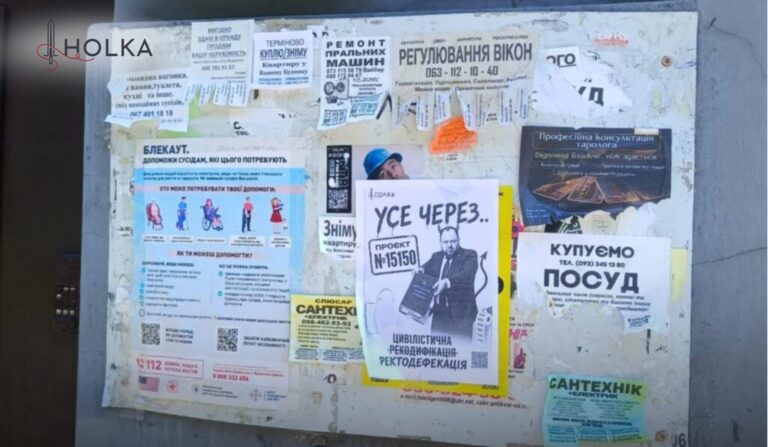
While the country does not have a list that protects strategic property, some have decided to take advantage of the situation and make it even worse. That is why, we should pay attention to the draft law No. 6013, which is due to be considered by the Verkhovna Rada soon. This is a legislative initiative of the Speaker of the Parliament Ruslan Stefanchuk, which was supported by several dozen MPs (6013). If it is approved, all state-owned and municipal enterprises will be privately owned in a few years.
Doctor of Law and Professor Olena Belyanevych believes that this will result in the largest redistribution of state property outside of privatization since Ukraine’s independence:

The Main Scientific and Expert Department of the Verkhovna Rada emphasizes that the state may lose control over enterprises whose privatization is prohibited.

Screenshot of the GPEU conclusion
Thus, all state-owned and municipally owned enterprises should be transformed into business entities or liquidated. Notwithstanding the fact that these enterprises are mentioned in the Constitution of Ukraine.
The space industry, critical infrastructure (ports, railways, etc.), defense industry, important social facilities, etc. whose activities are aimed at ensuring security and fulfilling the state’s social guarantees are under threat.”
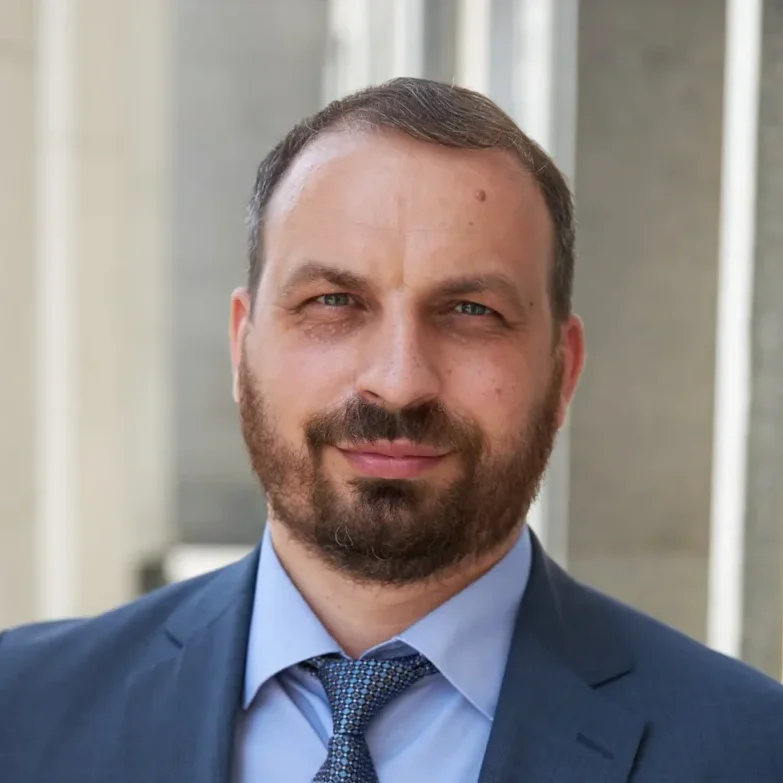
Roman Babiy, a member of the Legal Policy Committee(elected from the Servant of the People party), notes that the draft law, which was registered in 2021, was supported in the first reading by MPs only a year ago:
This state policy of property alienation may be a threat from Russia and China, which also uses its economic power to acquire ownership of various strategic facilities in other countries, making them dependent on Chinese money over time.
This is confirmed by the Institute for Strategic Studies’s research under the National Security and Defense Council and leading European countries. The European Union has recognized the need to achieve a clear definition of positions on the development of a common policy and format of interaction with China, given China’s obvious intentions to expand its sphere of influence on member states through the use of economic levers.
Specially for “LB.ua”