At Christmas and New Year, some of the more than 7 million Ukrainians who have fled abroad due to the full-scale invasion return home to visit their families. This is the time when both the state and the Ukrainians who stay here can become much closer to those who have left.
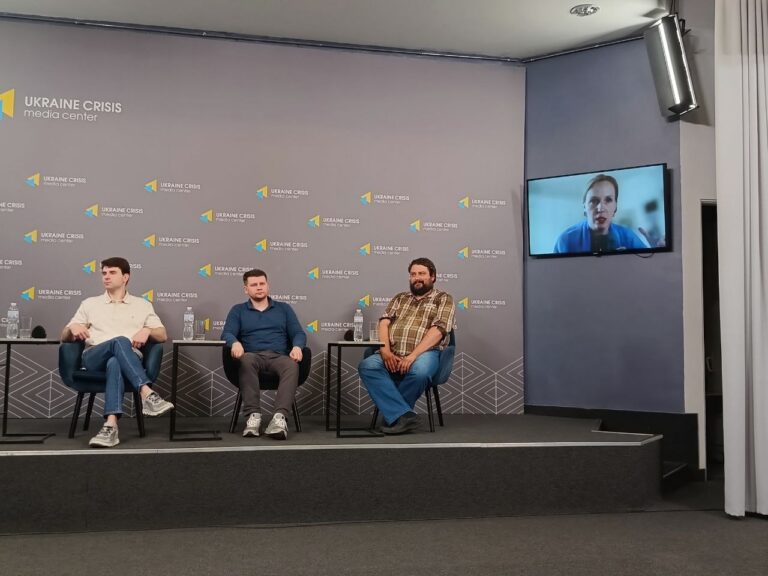
Over this year, Margaryta Sytnyk’s MOSTY (Bridges of Ukraine) project has featured more than a dozen expert interviews on how Ukraine’s Ministry of Foreign Affairs and the newly created Ministry of Unity should build a strategy to engage Ukrainians abroad in advocating for Ukraine’s interests. The project was filmed both in Ukraine and in the EU.
To summarise the results of 2024, the Golka civic initiative has selected the key ideas of our guests – Pavlo Klimkin (former Minister of Foreign Affairs), Yevhen Nyshchuk (former Minister of Culture, Director General of the Ivan Franko National Academic Drama Theater), Serhiy Kvit (former Minister of Education, President of the National University of Kyiv-Mohyla Academy), Paul Grod (President of the Ukrainian World Congress) and other experts and politicians.
Margaryta Sytnyk
communications manager, Co-founder of the Civic Initiative “Holka”
Ask Question
How do we explain to Ukrainians abroad that we need them now and that they are our asset?
Pavlo Klimkin
former Minister of Foreign Affairs
Ask Question
We have almost no communication with Ukrainians abroad… at the human level, it all works, but at the systemic level, I think not. At first, it was good to understand who ‘Ukrainians abroad’ are. Where are they? Where did they go? Secondly, what do they actually do for a living? What is important to them? Ukrainians who are now in the European Union have settled down, found themselves, and understood reality – this is our great asset. It is very, very important to use it in the process of European integration.
Margaryta Sytnyk
communications manager, Co-founder of the Civic Initiative “Holka”
Ask Question
Speaking of history, how Russia manipulates it abroad and labels us… How can Ukrainians abroad become ambassadors of true history to debunk these fakes?
Volodymyr Viatrovych
historian, MP and former head of the Ukrainian Institute of National Memory
Ask Question
They can and should become ambassadors of our history. Obviously, this requires preparation. Because not all Ukrainians abroad know their own history. Nowadays, there are opportunities for research, study and just reading. Without understanding Ukrainian history, it is literally impossible to understand the current war. On the one hand, there are correct points. It is a war for identity, so culture is also an incredibly important element of this war. But despite this, there is a constant reduction in spending on culture. And how will it survive? …. If we lose the information war, then, unfortunately, the physical front will start to crumble.
Margaryta Sytnyk
communications manager, Co-founder of the Civic Initiative “Holka”
Ask Question
Why does Russia discredit Ukrainians abroad? How can every Ukrainian abroad strengthen the information front?
Ihor Solovey
Head of the Centre for Strategic Communications and Information Security
This topic is one of the two major tasks of Russian propaganda. The first task is to reduce the resistance of the Ukrainian people by throwing in various scare stories. The other is to cut Ukraine off from Western assistance. Our people abroad must unite around trusted, ideological, adequate people and organisations. We just need to remain Ukrainian. And this is manifested in the language, attitude to the country, and participation in actions supporting Ukraine. This war is being waged against Ukraine and Ukrainians as a whole, no matter where you are – in Ukraine, Russia or another country. A Ukrainian in Britain, Sweden, the United States, or somewhere in Bruges is just as much a participant in this war. And we need to remember that.
Margaryta Sytnyk
communications manager, Co-founder of the Civic Initiative “Holka”
Ask Question
How should Ukrainians act abroad when Russia promotes its ‘cultural diplomacy’?
Yevhen Nyshchuk
former Minister of Culture, head of the Ivan Franko Theatre
Ask Question
Money, as the saying goes, doesn’t smell… Somewhere in some gallery, a solo exhibition of a Russian artist suddenly appears again. And this needs to be banned. Somewhere, a so-called Russian opera star suddenly starts singing in a joint project, and you have to go there and practically stop the performance. The organisers… They are very calculating… When one of their events fails and they lose money, the organisers will never again risk inviting a Russian opera diva… They will easily invite someone no less talented, but ours’. They will get support. Somewhere out there, whether someone loves opera or not, you have to go.
Margaryta Sytnyk
communications manager, Co-founder of the Civic Initiative “Holka”
Ask Question
According to various studies, about half or two-thirds of Ukrainians who have gone abroad because of the full-scale invasion plan to return home. At least, that’s what they declare. There are a lot of undecideds. What are your predictions?
Andriy Gaidutskyi
an expert on migration policy, Doctor of Economics
Ask Question
Ukrainians will return only after they achieve their goals abroad. As a rule, there are four of them: studying, working, building savings and acquiring certain contacts and skills that they want to implement at home. Therefore, on average, Ukrainians will stay abroad for 3 to 15 years, depending on their goals. And after that, they are likely to start returning. When one migrant returns and opens a business, he creates jobs, and Ukrainians will either go abroad at a slower pace or not at all… The role of the newly created ministry should be to encourage local authorities to develop various programmes. And when you have 100 programmes, they are weeded out, you see that only 10 work. And these 10 are then scaled up…. Developing programmes by the Ministry itself would be populism.
Margaryta Sytnyk
communications manager, Co-founder of the Civic Initiative “Holka”
Ask Question
Those who left will want to have their representatives in the government and even run for office. How to deal with this?
Yevheniia Kravchuk
Member of the Verkhovna Rada
Ask Question
We will have to change the electoral code so that women who have left because of the war to save their children, and of course they have not lived in Ukraine for the last 5 years as required by the electoral code of Ukrainian law, can run for office… and this will be a big discussion in parliament… But I do not think it is right that men who were not supposed to leave can simply come and run for mayor or deputy. I know that the Ministry of Foreign Affairs …. in official letters, does not support the creation of a separate ministry that would take away some of their responsibilities, but it is evident” that, at least temporarily, such a ministry of the diaspora will need to be created and there are good examples of how it works in other countries.
Margaryta Sytnyk
communications manager, Co-founder of the Civic Initiative “Holka”
Ask Question
But as long as Ukrainians who have left live abroad, what should the state do to preserve their identity?
Serhiy Kvit
former Minister of Education, President of the Kyiv-Mohyla Academy
Ask Question
A lot depends on education. In particular, it depends on education to what extent Ukrainians will associate their future with Ukraine. Education gives the prospect of the future of this country. We must change both the country and education even during the war. This country should be attractive to Ukrainians above all. If there are no workers in the broad sense of the word, they will be found, for example, from Asia, and they will not be people who have any sentiments for Ukraine and Ukrainian culture.
Margaryta Sytnyk
communications manager, Co-founder of the Civic Initiative “Holka”
Ask Question
At the same time, Ukrainians abroad should understand that in times of war, the state will not be able to provide funds to support education abroad properly. How to deal with this?
Paul Grod
President of the Ukrainian World Congress
Ask Question
If anyone hopes that Ukraine should fund something in the diaspora, it is unrealistic. We will be rebuilding Ukraine for many decades, investing money. The best and most powerful Ukrainian communities in the world are those that are self-financing. This is civil society. This is how our communities have been built for over 100 years. When my parents came to Canada, my mother was 16 years old, and she came without her parents. They united, gathered and built Ukrainian churches, and raised money among themselves. Concerned Ukrainians should not think about their next vacations but what we can do to build a stronger community. Because we will need it for many generations.
If each of the nearly 2 million Ukrainians living in the United States would take the responsibility to talk to someone daily. We don’t need to convince, and we don’t need to inform about what’s going on. Russian propaganda wants to convince American voters that Ukraine has no chance of winning. We have to counter this propaganda and tell them that Ukraine can win. The biggest threat is
disinformation.
Margaryta Sytnyk
communications manager, Co-founder of the Civic Initiative “Holka”
Ask Question
However, the local government of Ukraine, which has developed a network of partner cities worldwide, could also engage in advocacy at the international level. How is this happening now?
Oleksandr Slobozhan
Executive Director of the Association of Ukrainian Cities
Ask Question
The ban on local council deputies travelling abroad has really had a very serious impact on us. We have seen a threefold drop in foreign aid to these communities. But from the very beginning of the full-scale war, local governments have been building partnerships with different countries.
Margaryta Sytnyk
communications manager, Co-founder of the Civic Initiative “Holka”
Ask Question
The Ministry of Unity should now be created to take over developing a strategy in these matters. What challenges does the new ministry face?
Микола Княжицький
Member of Parliament of Ukraine, member of the Committee on Humanitarian and Information Policy
Ask Question
The demographic crisis that awaits us, which we already have, is, in fact, a catastrophe. We have the lowest birth rate in the world, a very high mortality rate and the largest migration. It may happen that there will be no one to defend the country. And this is Putin’s goal. The return is a very narrow direction, which is a small part of the problem. Because there is return, there is not leaving, and there is making sure that people know, wherever they live, that there is a country that will take care of them and is always ready to protect them.
Margaryta Sytnyk
communications manager, Co-founder of the Civic Initiative “Holka”
Ask Question
What should the Ministry of Unity do first?
Natalia Panchenko
Leader of Euromaidan Warsaw and head of the Stand with Ukraine Foundation
Ask Question
Firstly, I would establish a permanent channel of communication with the diaspora and make it feel like a part of Ukraine. We need to take care of the children who are now going to Polish and German schools. There is a huge problem with identity here. We must create projects to help these children remain Ukrainian, and understand and remember that they are Ukrainian. The Ukrainian state should also do this.
Translated by Iryna Kovalenko, The Ukrainian Review