Last Chance for Sophia: Why is the UNESCO Site at Risk?

For nearly 10 years, Kyiv residents have been resisting developers who have decided to “reconstruct” the Prague hotel complex in the buffer zone, which could adversely affect the Saint Sophia of Kyiv. Sophia is not just one of Ukraine’s most important landmarks—it’s a site of global significance protected by UNESCO.
In addition to its cultural and historical value, Sophia has also become a symbol of resistance from the early days of the full-scale war when in February, Andriy Khlyvnyuk sang acapella near the cathedral, and on the empty streets of the capital, the song “Chervona Kalyna” by the Sich Riflemen was performed. Later, the band Pink Floyd wrote the song “Hey Hey Rise Up,” their first since 1994, and began their concert in support of Ukraine with footage from Khlyvnyuk’s performance near Sophia.
A few months later, President of Ukraine Volodymyr Zelensky decided that from now on, ambassadors would present their credentials to him in the Sophia Cathedral, which was founded by Yaroslav the Wise.
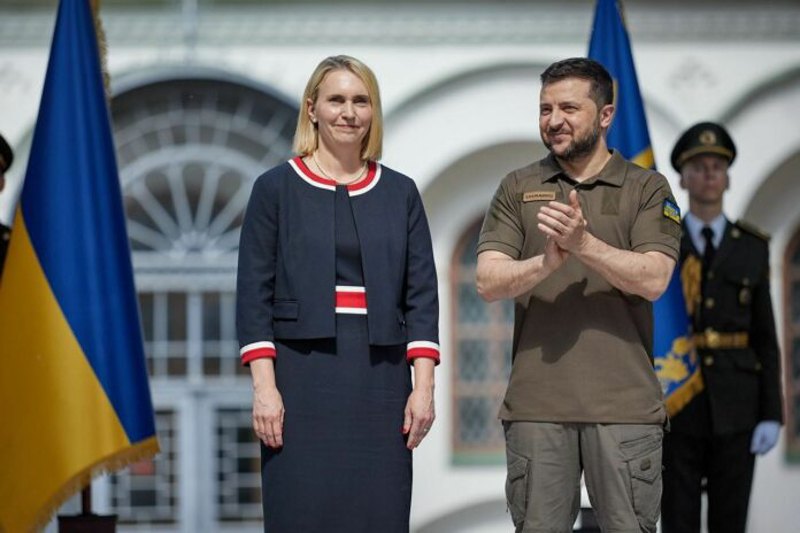
Volodymyr Zelensky with US Ambassador Bridget Brink
Currently, the government has a final chance to protect Sophia and its buffer zone in court from the developer “L-Capital”. The Ministry of Culture has already lost the first instance in the “wolf court” – the now liquidated OASC. Currently, the interests of the government are represented by the Ministry of Justice, as the decision of the first instance court affects the rights and obligations of the Cabinet of Ministers as stipulated in international treaties. Strangely, the government simply wasn’t involved during the first instance trial.
The main battle for the monument of world significance is unfolding in the Sixth Appellate Court, which recently opened proceedings in this case.
UNESCO vs “L-Capital” Developer
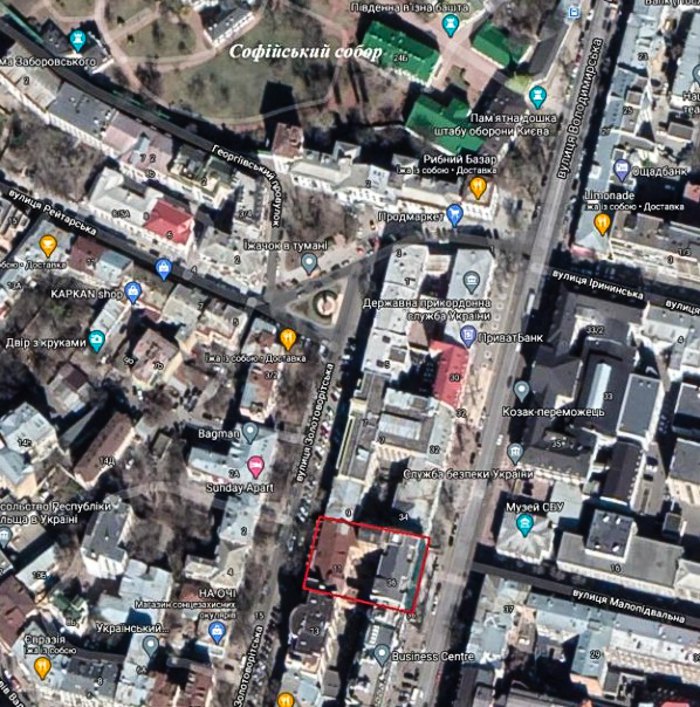
The World Heritage Committee of the United Nations Educational, Scientific and Cultural Organization (UNESCO) obliged Ukraine to impose a moratorium on construction projects in the buffer zones of world heritage sites – Sophia and Lavra. This happened in 2015. Within a year, near Sophia, about 400 meters away, it was decided to “reconstruct” the aforementioned hotel-office complex. Behind this stands PJSC “L-Capital”.
UNESCO emphasized in its assessment that in Kyiv near Sophia, it is necessary to preserve a four-story building at 11 Zolotovoritska Street and avoid adding an eighth floor at 36 Volodymyrska Street.
What is the position of the city authorities?

Hanna Starostenko
Deputy Head of the Kyiv City State Administration
The developer wants to construct a hotel-office complex in the buffer zone of the UNESCO World Heritage Site, Sofia, with a height of 32 meters (!). This contradicts the Convention concerning the Protection of the World Cultural and Natural Heritage and the Convention for the Protection of Architectural Heritage of Europe. This poses a real threat to Sofia's status as a UNESCO World Heritage Site. Moreover, the building at 36 Volodymyrska Street is a monument of local significance in Kyiv, and according to the Law of Ukraine "On the Protection of Cultural Heritage," the responsibility for its preservation and protection lies with the city authorities. Kyiv will make every effort to preserve both the monument of local significance and the UNESCO World Heritage Site of Sofia.
And here the issue is not only about protecting Sofia of Kyiv, which can be adversely affected by increased height, but also about the building on Volodymyrska Street – the “Prague” hotel, which is valuable both culturally and historically.
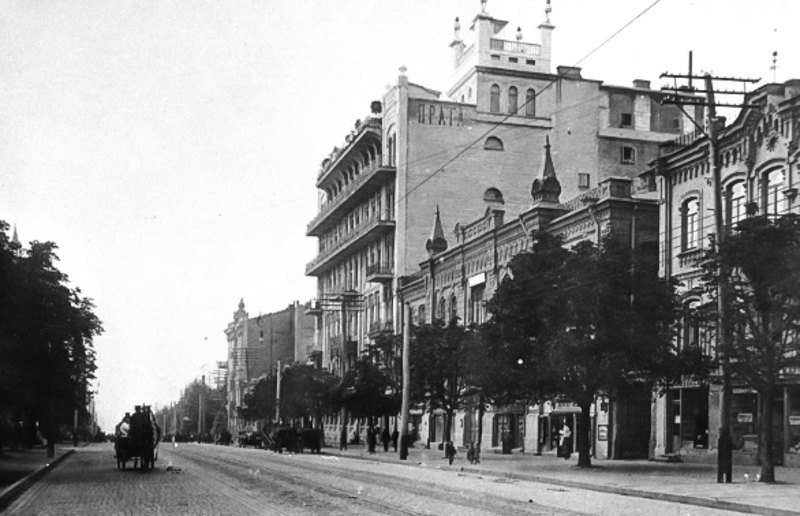
Ancient photo of the “Prague” hotel on Volodymyrska Street.
At one time, Jaroslav Hašek stayed at the hotel and wrote his “Adventures of the Good Soldier Švejk During the World War” there. Simon Petliura also lived at the hotel. About how this building was bought during the Maidan times and immediately began “reconstruction,” “Access to Truth” wrote in 2015.
Next to the “Prague,” there was another landmark building — part of the estate, but it was excluded from the list of landmarks on formal grounds at the initiative of the developer due to the lack of a building number. However, the issue with the main building remains unresolved, and the developer is currently trying to obtain a court decision.
PhD in History Alexander Alfiorov, who is now an officer of the 3rd Separate Assault Brigade, emphasizes that Saint Sophia of Kyiv is a shrine not only of the Orthodox world but of all Christianity in the Central-Eastern European territories:
“Minority and uncultured boorishness — that is what guides those who are trying to convince someone that the protection zone of Sophia can be moved. These people are no better than the occupiers who said the same about Crimea, Donbas, and then tried to seize the entire Ukraine. We are Europeans, albeit without many mature elites, including the judiciary, we understand: the boundary of cultural or private space is sacred. European law is built on this. The actions of the developer are treason, worse than occupation. These are our own scoundrels, worse than Moscow lice, as Petliura said. The government and the city authorities must not only demonstrate unity.”
As for the developer “L-Capital,” “Nashi Groshi” reported several years ago that the ultimate beneficial owner of the Cypriot company behind it is one Vadym Ukrayinsky. He is a former Vice President of NJSC “Naftogaz of Ukraine,” worked as Deputy Chairman of the Board of NJSC “Naftogaz of Ukraine,” and advisor to the Minister of Fuel and Energy Yuriy Boyko (current MP from the former Party of Regions).
Wolf Court
So, this “L-Capital” several times appealed to the Ministry of Culture and demanded approval of the disputed project, which contradicts our international obligations. The Ministry of Culture refused. And then the developer decided to go to court — and won: the court recognized the refusal of the Ministry of Culture to register the project as unlawful.
The Ministry of Culture lost the first instance. It should be noted that the judge who made the decision in the first instance is Igor Pohribnychenko. The same one who appears on the recordings of the Judge Vovk (in Ukrainian “Vovk” means “Wolf”)
“Many things that were unacceptable to me before I became decent are now absolutely acceptable to me,” — a voice similar to that of Judge Pohribnychenko can be heard on these recordings.
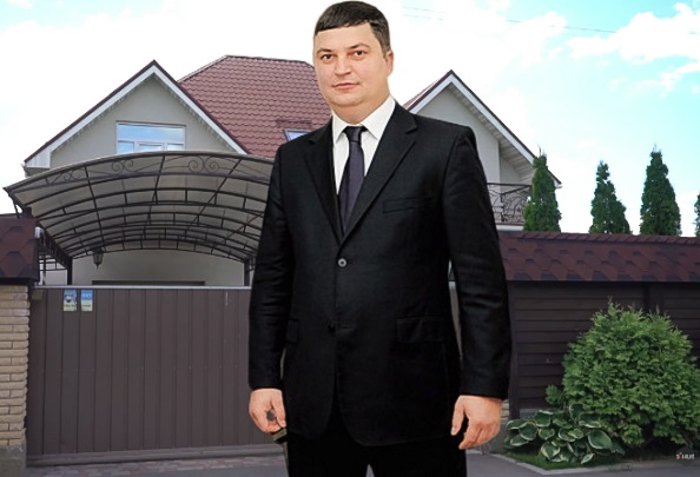
Photo: Collage by Bihus.info featuring Judge Pohribnichenko
This judge ruled that the Ministry of Culture had to approve the development documentation for the developer and allow work in the Central historical area of the capital.
In its decision, the court relied on the principle of tacit consent and confirmation by the plaintiff of compliance with height restrictions. What is tacit consent? It is when the relevant authority does not refuse the developer’s project within a certain period. However, tacit consent, when it comes to cultural heritage sites, is not currently provided for by law and contradicts our international obligations. Although the “Servant of the People” party tried to introduce it through urban planning “reform” 5655, even in this controversial document, tacit consent cannot be applied in the UNESCO buffer zone.
The court made this decision and relied on the principle of tacit consent, despite UNESCO’s negative assessment of this construction and direct prohibitions in the legislation on building additions to “Prague,” which is a landmark.
The Ministry of Culture tried to appeal this decision in the appellate and cassation procedures. But all in vain.
Subsequently, “L-Capital” even appealed to the police demanding the initiation of criminal proceedings against the Ministry of Culture for not complying with the court’s decision.
The decision of the “wolf court” was tried to be appealed by the Prosecutor General’s Office on behalf of the Cabinet of Ministers and the Department of Cultural Heritage Protection of the Kyiv City State Administration, as it contradicts Ukraine’s international obligations. However, the courts did not allow prosecutors to participate in the process at the appellate and cassation levels.
What way out did the government find?
And here, seemingly, the situation was hopeless, but the government and the Department of Cultural Heritage Protection of the Kyiv City State Administration found a way to restart the judicial process.
“The courts knowingly and without grounds did not involve the Cabinet of Ministers in the case. This is a violation of the government’s rights and obligations, as we must properly fulfill the requirements of the Convention on the Protection of the World Cultural and Natural Heritage and ensure compliance with and implementation of international obligations. Prime Minister Denys Shmyhal instructed the Ministry of Justice to represent the government in court this spring. We immediately prepared the documents, and the case will be heard at the beginning of next year – January 23,” said Olena Vakulenko, Director of the Department of Judicial Practice of the Ministry of Justice.
Indeed, by the order of Prime Minister Denys Shmyhal, the Ministry of Justice filed an appeal on behalf of the Cabinet of Ministers to challenge the decision of the first instance and assert its right to defend Ukraine’s interests. But the appeal was initially rejected. It was necessary to go to the Supreme Court and fight for this right. Eventually, it succeeded – and the case was opened.
Therefore, now the decision of the first instance is again being appealed in the Sixth Appellate Court. A panel of three judges is reviewing the case: Mykhailo Kobal, Nataliia Buzhak, Liubov Kostiuk.
An attempt to win this judicial process is the last (!) chance for the government to protect the cultural heritage of world significance in the case against “L-Capital.”
Essentially, while Ukraine is moving towards EU membership, as a country, we cannot fulfill international treaties. And here the question also arises about judicial reform.
Status obliges: Ukraine has become Vice-Chair of the UNESCO Committee
While battles for the UNESCO monument are ongoing in court, our country has become Vice-Chair of the UNESCO Committee to protect cultural values in case of armed conflict.
Why is this important for Ukraine?

Rostyslav Karandeiev
Acting Minister of Culture
This is another victory for Ukrainian cultural diplomacy. We are sincerely grateful to our international partners from UNESCO for yet another decision in favor of protecting Ukrainian heritage, which is part of world culture.
Regarding the case with “L-Capital,” he emphasized:
“Each State Party to the Convention is obligated not to harm the heritage located on the territory of other State Parties. Therefore, the Ministry of Culture requested the Ministry of Foreign Affairs to provide positions on the implementation of decisions of the UNESCO World Heritage Committee, as well as on the potential violation of norms of international law in this case.”
Why is UNESCO important for Ukraine?

Olena Zelenska
First Lady
Today, UNESCO is one of the few global organizations effectively standing at the threshold between civilization and chaos, between memory and culture, and the modern barbarism easily recognizable through its desire to destroy everything. We ask for the expansion of UNESCO's presence in Ukraine.
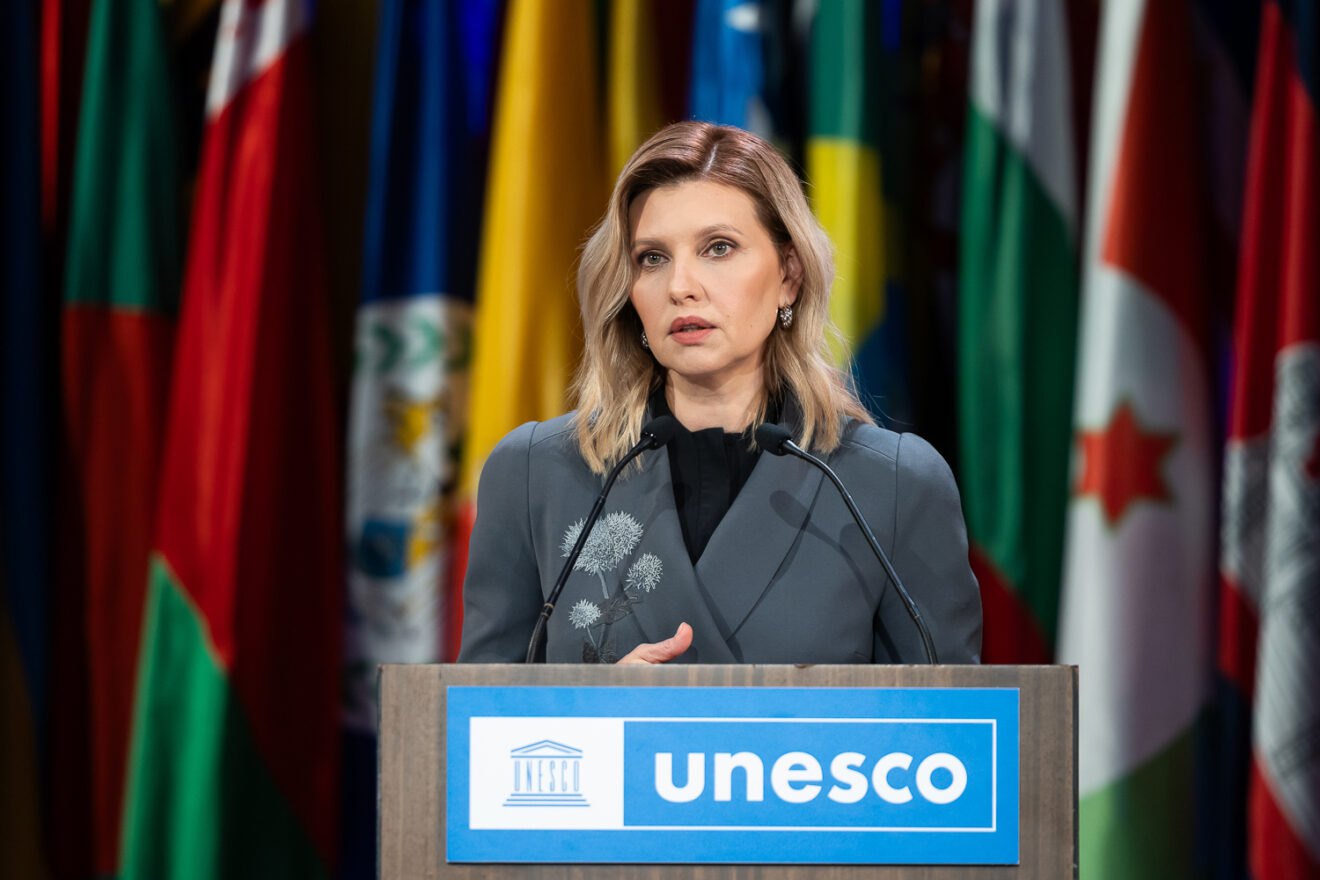
Report by the First Lady Olena Zelenska
Accordingly, the fate of not only the undeniably iconic landmark of Ukraine and the world will be in the hands of the judges, but also the image of the state.
“Additional height is not just spoiled landscapes. Height creates pressure on the soil, and this can lead to the destruction of monuments. It is precisely the densification of soils due to the overload of tall buildings that poses a threat of removing the monument from UNESCO protection. This case has been going on for years. The community and journalists should monitor how the court hearings are proceeding, and the Ministry of Justice should ensure proper representation of the state’s interests and protect the monument, which is important not only for us, Ukrainians, but for the whole world,” says Kyiv resident Iryna Vilchynska, who previously worked at the Research Institute “St. Sophia’s”.

Reminder: the government website has published a draft resolution that duplicates the provisions of the controversial urban planning “reform” 5655. Experts emphasize that both the draft law and the draft government resolution pose risks to the preservation of cultural heritage. The Ministry of Culture has also expressed its reservations about these initiatives.
Specially for “Left Bank“