The Stefanchuk Brothers, Gerega, and other MPs from Khmelnytskyi: how did they vote for key decisions?

It was the Khmelnytskyi region that sent to the Verkhovna Rada politicians who have the greatest influence on changing the country’s legislative field. We are talking about the Stefanchuk brothers. One of them — Ruslan Stefanchuk — became the Speaker of the Verkhovna Rada, and compared to other people’s deputies, it is much easier for him to rally votes for his draft laws. The second — Mykola Stefanchuk — is a majoritarian and chairman of the subcommittee responsible for the adaptation of Ukrainian legislation to European law.
Among their legislative initiatives, the parliament’s repeal of the Economic Code (Project 6013) has become quite controversial over these 6 years. The main author of this law was the Chairman of the Verkhovna Rada, and his brother — Mykola Stefanchuk — was one of the co-authors. This legislative initiative allowed for a massive redistribution of the country, in particular, state-owned enterprises. In essence, all state or communal enterprises can now be transferred into private hands. Despite the requirements of the Constitution, the Verkhovna Rada did not approve a list of enterprises that cannot be privatized under any circumstances, including those that could guarantee the national security of the country.
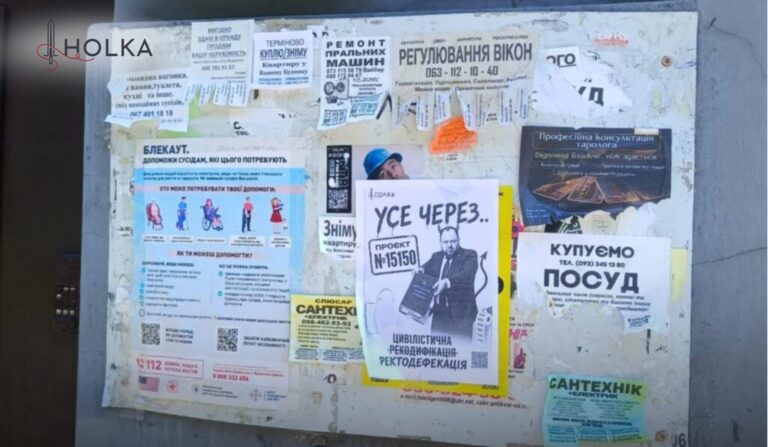
The Stefanchuks are only preparing a second large-scale change — we are talking about changing the Civil Code. At the start, this attempt was criticized by the journalistic community due to an attempt to carry out an attack on freedom of speech.
In general, the Khmelnytskyi region is represented in parliament by seven majoritarians. Among them, besides Stefanchuk’s brother, there are three more “servants” — Oleksiy Jmerynetskyi, Ihor Marchuk, and Olena Kopanchuk, whose son fled abroad. Also — non-factional Viktor Bondar and two self-nominated majoritarians from the “For the Future” deputy group — Serhiy Labaziuk and Oleksandr Gerega. Regarding the Gerega spouses, “Schemes” journalists proved that they maintain interaction with the management in “Epicenters” in the temporarily occupied territories.

In addition to Ruslan Stefanchuk from Khmelnytskyi, who heads the Verkhovna Rada of Ukraine, there are four more party-list members — three “servants” Volodymyr Vatras, Yuriy Zaslavskyi, Serhiy Mandziy, and “Batkivshchyna” member Bohdan Lukashuk. The latter was a deputy of the Khmelnytskyi City Council, and a year ago, when people’s deputy Alyona Shkrum resigned her mandate and went to work in the government, he entered parliament.

“Holka”, together with other public organizations, compiled a list of landmark draft laws for the country that had corruption risks, anti-constitutional norms, or, conversely, were useful for protecting the statehood of the country. These laws are collected in the new tool “ReCharge UA”. The project’s media partner “Glavcom” continues to publish a series of information materials about the work of majoritarians in different regions of Ukraine based on these votes.
Russian equipment for the construction of the Khmelnytskyi Nuclear Power Plant
The Verkhovna Rada’s decision to purchase two nuclear reactors from Bulgaria caused significant resonance last year because this equipment was produced in Russia. One of the co-authors of Project No. 11392 was a majoritarian from Khmelnytskyi — Ihor Marchuk.
Ukraine expressed readiness to purchase equipment for 600 million US dollars — tariffs were raised for the population and the funds were supposed to go to “Energoatom” precisely for such “great construction.” The public organization “Ecoaction” noted that in the future, the technical participation of Russia — direct or indirect — would be inevitably required for the operation of the NPP, and this undermines the energy independence of Ukraine.
The decision to purchase the reactors was discussed last year before the inauguration of US President Trump, and in the media, it caused significant resonance because the Ukrainian authorities themselves agreed to the purchase of reactors manufactured in Russia. “Nashi Groshi” emphasized that in the future, the parliament would have to additionally make a decision on the completion of the Khmelnytskyi NPP units, and this construction would stretch, according to expert estimates, for 7–8 years. Opposition deputies emphasized that it is during this construction that there could be serious corruption risks. The relevant committee noted that the legislative initiative does not comply with the anti-corruption legislation of Ukraine.
Despite this, three majoritarians and four party-list members from Khmelnytskyi voted for such a decision: Olena Kopanchuk, Ihor Marchuk, Mykola Stefanchuk, Volodymyr Vatras, Yuriy Zaslavskyi, Serhiy Mandziy, and “Batkivshchyna” member Bohdan Lukashuk.
Voting of MPs from Khmelnytskyi for draft law No. 11392
It is worth noting that warnings about corruption risks in the context of “Energoatom” were not groundless. At the end of the year, the National Anti-Corruption Bureau of Ukraine stated that it had uncovered a large-scale corruption scheme in this very National Nuclear Energy Generating Company. The operation was called “Midas.” Subsequently, anti-corruption authorities conducted searches of the then Head of the President’s Office Andriy Yermak, and later he wrote a letter of resignation.
Constitution on pause. Stefanchuk’s role in the attempt to liquidate the independence of anti-corruption bodies
Before Ukrainians learned about the results of Operation “Midas,” the Verkhovna Rada, by its decision, tried to destroy the independence of anti-corruption bodies — the National Anti-Corruption Bureau and the Specialized Anti-Corruption Prosecutor’s Office (draft law No. 12414). These two anti-corruption institutions were created after the Revolution of Dignity, and it is they who must uncover corruption schemes where top-level officials are involved.
It is important to remind that with the amendments introduced to the draft law by MP from “Servant of the People” Maksym Buzhanskyi, NABU and SAPO became dependent on the Prosecutor General, who in turn is appointed by the President. And these amendments in no way related to the topic of the draft law that passed the first reading. That is, these amendments were mounted there contrary to the regulations. And the Speaker of the Parliament allowed not only this but also a number of other violations of the Regulations during the consideration of this draft law. Stefanchuk had no right to bring this issue for consideration because the people’s deputies were supposed to receive it 5 days in advance, but they received it only 15 minutes before the meeting. The draft law passed the committee on the morning of the same day it was voted on.
263 people’s deputies voted “for” this draft law. Among them — all five party-list MPs from Khmelnytskyi and five majoritarians. And here the special role of the Chairman of the Verkhovna Rada Ruslan Stefanchuk should be noted — it was he who, contrary to the Constitution, immediately signed the law and sent it to the President for signature. Although he could have done this no earlier than two days after the vote. However, it was a political blitzkrieg so that society and international partners would not have time to react.
Citizens did not even have time to submit a petition to Volodymyr Zelenskyy, because the one who was supposed to be the guarantor of the Constitution signed the law on the same day it was voted for. And in order for the Office of the President to register a petition — after its submission, it is necessary to wait several days for its verification.

Protest in Khmelnytskyi against draft law 12414, July 23. Photo: ZHAR.INFO
Moreover, such an accelerated procedure for signing the law by Stefanchuk was initiated, again, by Maksym Buzhanskyi. For the party in power, it is a standard approach to use such people’s deputies as Buzhanskyi to carry out the decisions needed by the “Servants of the People.”
It is important to emphasize that MPs Oleksiy Jmerynetskyi and Viktor Bondar were absent during the vote on the abolition of the independence of NABU and SAPO.

Note that Jmerynetskyi voted for other items on the agenda, but Viktor Bondar was absent during the consideration of all issues.
Separately, it is important to note that people’s deputies Labaziuk and Bondar are involved in cases investigated by anti-corruption bodies. The former received his suspicion in 2023, while the latter — in 2025.

Handing over the suspicion to People’s Deputy Labaziuk. Source: NABU
Serhiy Labaziuk, who voted for the dictatorship laws of 2014 before Yanukovych fled the country, is suspected of appealing to the leadership of the Ministry of Restoration and asking to provide contracts worth one billion hryvnias to a company associated with him. In exchange, he offered officials a 3-5% reward of the contract value. Last year, the High Anti-Corruption Court allowed Labaziuk to go on a business trip abroad. The politician motivated this by the fact that he is the only one among the participants of the delegation who has experience in conducting negotiations.
As for Viktor Bondar, on January 17 of this year, NABU and SAPO notified him of suspicion. Law enforcement officers consider him a co-organizer of the scheme to seize funds from “Ukrzaliznytsia” during the procurement of cable and wire products in 2021–2022.

Handing over the suspicion to People’s Deputy Labaziuk. Source: NABU
According to the investigation, through a conspiracy with Ukrzaliznytsia officials and controlled companies, products were supplied at inflated prices. The state enterprise suffered losses of over 140 million hryvnias, and suspicions were announced to a total of 8 people.
Constitution is not an order. Special rules for land alienation in Zakarpattia
The law on abolishing the independence of NABU and SAPO is not the only one where the norms of the Constitution were violated during adoption. The same applies to the law providing for special rules for the alienation of land in Zakarpattia (Project 9549). In essence, the Cabinet of Ministers, upon the submission of the military administration, can simply take away property from citizens. Moreover, the law extended the right for local councils until 2028 to approve detailed plans of territories contrary to the General Plan.
And during the adoption of this draft law, a significant role was played, again, by the Chairman of the Verkhovna Rada — Ruslan Stefanchuk.
At first, Zelenskyy vetoed the draft law, which allows such corruption schemes, and provided his comments to the people’s deputies, but during the repeated consideration of this project, the parliamentarians ignored most of the comments submitted by the President. The Verkhovna Rada could do this under one condition — if two-thirds of the people’s deputies — a constitutional majority — voted for such a text of the law. However, this did not happen. Under these conditions, Stefanchuk could not sign the document and transfer it to Bankova, because it was considered unadopted, but contrary to the Constitution, Stefanchuk did it.
In order for the law not to go immediately for the President’s signature, a number of people’s deputies submitted as many as five blocking resolutions, but they themselves suddenly withdrew their own resolutions.
Among the majoritarians of Khmelnytskyi, essentially all but three MPs voted for this scandalous draft law. Only one people’s deputy did not participate in the voting — Oleksiy Jmerynetskyi, and Oleksandr Gerega and Viktor Bondar were absent.
How did deputies vote for the legalization of stolen goods?
Last year, the Verkhovna Rada supported a legislative initiative that the European Parliament called the “legalization of stolen goods.” We are talking about the “Ihor Mazepa law” (Project 12089) — this document reset claims against those who managed to seize forests or coasts into private ownership more than 10 years ago. If ten years have not passed since the acquisition of such property, then the state or the community, in order to sue for their property, must pay a deposit into court — the market value of such property. As a rule, there are no such funds in the budget. Therefore, forests and coasts have every chance to remain in private ownership if the courts do not take into account the Constitution of Ukraine. The Supreme Court has already appealed to the Constitutional Court for clarification.
In this context, it is important to remind that Mykola Stefanchuk heads the subcommittee that was supposed to monitor the adaptation of Ukraine’s legislation to the provisions of European Union law. And it was precisely in this part that the European Parliament criticized the “Ihor Mazepa law.”

Excerpt of the text of the European Parliament Resolution in the original
All people’s deputies from Khmelnytskyi, both majoritarians and party-list members, voted for this law, except for Viktor Bondar. He was absent.
National security. Prohibition of the Moscow church and pro-Russian parties
At the end of August 2024, the Verkhovna Rada adopted a law on the prohibition of Moscow institutions associated with the aggressor state (No. 8371). During this vote, Oleksandr Gerega decided to “evaporate.” During this vote, his card was not in the slot of the voting console, although he voted for other items on the agenda.
Here it is worth recalling the “Schemes” investigation. Journalists found that in Crimea, the network of “Epicenter” hypermarkets changed its name to “Novacentre,” but not the owners, and in Donbas, the network became called “Galaktika.” Its chief manager, both before the full-scale invasion and after, received a salary from the Geregas and traveled to the territory controlled by Ukraine, financed the party they founded, and in 2023 was elected as a “deputy” from Putin’s “United Russia” party in the Donetsk region.

People’s deputy Serhiy Mandziy did not remove the card from the slot but decided not to press any button. According to the regulations of the Verkhovna Rada, a deputy, in case of presence in the session hall, must vote “for,” “against,” or “abstain.” The “did not vote” option is not provided for by the Regulations. People’s deputies who avoided voting for this draft law, like Mandziy, were highly likely trying to avoid a possible conflict in the district with those who continue to visit the churches of the Moscow Patriarchate.
“Glavcom” calculated that by the end of 2025, fewer than a thousand communities since the full-scale invasion had joined the ranks of the Orthodox Church of Ukraine. To this day, more than 7,800 communities maintain ties with the aggressor country.
The rest of the people’s deputies from Khmelnytskyi supported the draft law on the prohibition of the Moscow church.
As for the prohibition of pro-Russian parties, in May 2022, all people’s deputies from Khmelnytskyi — both majoritarians and party-list members — voted unanimously “for.”
Openness of the parliament’s work
In September 2022, due to security issues, the Verkhovna Rada prohibited the broadcasting of parliamentary sessions. However, some people’s deputies, in particular Oleksiy Goncharenko, broadcast sessions on their pages and channels on social networks, so the security factor was not observed here.
Representatives of civil society have repeatedly called for the restoration of session broadcasts. However, this was only possible at the beginning of autumn 2025; then 266 people’s representatives voted “for” such an initiative.
Serhiy Labaziuk, Olena Kopanchuk, and Ruslan Stefanchuk were absent during the voting on all items on the agenda. And Viktor Bondar and Oleksandr Gerega simply did not vote on all issues. This may indicate that they completely ignored all items on the agenda or that their voting card, despite their absence, was inserted by one of the deputies or staff of the council apparatus.
At the same time, Ihor Marchuk was present in the session hall, but did not provide support for the restoration of broadcasts.
Currently, the “Recharging the Country is in Your Power” tool has already collected information on 34 landmark votes. Serhiy Labaziuk, Viktor Bondar, and Oleksandr Gerega systematically do not participate in voting for decisions landmark for the country.
The public initiative “Holka”, together with a coalition of other public organizations, in particular with the Center for Innovation Development and the Ukrainian Nature Conservation Group, launched the volunteer project “ReCharge UA“. Analysts have compiled a list of legislative initiatives useful and harmful for the development of the country, the voting for which are markers for each of the deputies. All these votes fill the voting battery of each parliamentarian and show what charge he gives the country. In addition to the votes that have already taken place, the tool contains a single window for advocacy of the public sector, where useful and harmful laws that are being considered by parliament will be entered. This project was created with the funds of the great Ukrainian people and since November 2025 has been supported by NED.
“Glavcom” acts as an information partner of the project.