
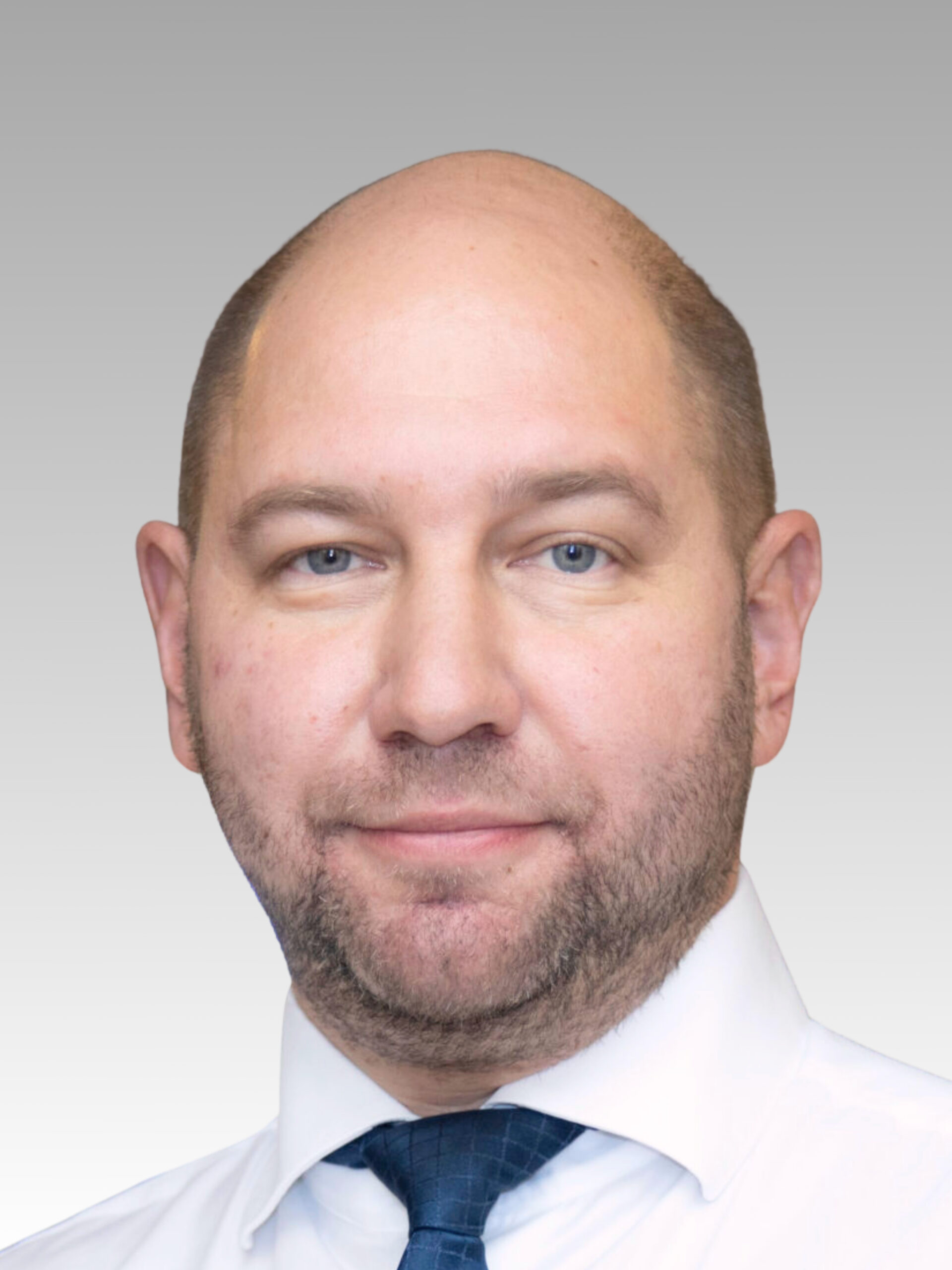
Oleksandr Haidu
Фракція політичної партії "СЛУГА НАРОДУ"
Region
Миколаївська область



Green: voted for beneficial and against harmful bills, red: voted against beneficial and for harmful bills. Yellow: abstained. Dark grey: present but did not vote, or absent.
Green: voted for beneficial and against harmful bills, red: voted against beneficial and for harmful bills. Yellow: abstained. Dark grey: present but did not vote, or absent.
Biography
Oleksandr Haidu was elected as a Member of the Verkhovna Rada of the 9th convocation in 2019 representing the “Servant of the People” party (District No. 128, city of Mykolaiv). Initially, the politician served as the head of the subcommittee on innovation and infrastructure in the agro-industrial complex, and in 2022, he became the head of the Committee on Agrarian and Land Policy.
Timeline of Key Events
2026
Voted in the first reading for the controversial draft Civil Code (15150), submitted by the Chairman of the Verkhovna Rada, Ruslan Stefanchuk. The draft, spanning 803 pages, was submitted for parliamentary consideration in “turbo mode” without sufficient time for review, even by the Ministry of Justice. The legislative initiative contained provisions allowing for the plundering of state and communal property, including forests, coastlines, and mineral resources, while also posing risks to freedom of speech. Following the vote, street protests occurred across several regions, with demonstrators outraged by proposals that infringed upon the rights of women and the LGBT community. A petition demanding a presidential veto gathered over 25,000 signatures on the first day of registration. Judges of the Supreme Court also expressed substantial objections to the draft, noting that it would effectively destroy two decades of established judicial practice.
2025
Supported the so-called “Ihor Mazepa Law” (Draft 12089). This initiative, which reflects the demands of unscrupulous businesses, provides for the “resetting” of claims regarding forest and coastal land grabs if 10 years have passed since the land entered private hands, effectively legalizing such acts from the last decade. If the 10-year period has not passed, a deposit equal to the value of the property must be placed in a court account before a lawsuit can be filed to recover it. Despite a petition demanding a veto gathering over 25,000 signatures, President Volodymyr Zelenskyy signed the law. The first case affected by this law was that of Protasiv Yar, which had been defended by the late scout and Kyiv resident Roman Ratushnyi.
Voted for the liquidation of the independence of anti-corruption bodies, the NABU and the Specialized Anti-Corruption Prosecutor’s Office (Draft #12414). This vote triggered protests near Bankova Street, though the law was signed by Volodymyr Zelenskyy that same day.
2024
Was one of the initiators of bill #9627 regarding the simplification of the procedure for changing the intended purpose of land from agricultural to industrial. Experts have assessed this bill as containing significant corruption risks, as it allows for the changing of land use—primarily agricultural land outside settlements—without urban planning documentation during martial law and for five years after its cancellation.
Supported the bill prohibiting religious organisations linked to the Russian Federation from operating in Ukraine.
2023
Did not support the amendment to law #9534 that provided for the immediate opening of officials’ declarations after the resumption of mandatory reporting. By continuing the closure of these declarations for another year, the law prevented public and journalistic control. The Anti-Corruption Action Centre emphasised that seeing a declaration would only be possible with the declarant’s consent, disregarding the opinions of the European Union, G7 ambassadors, the European Parliament, and 91.7% of Ukrainians who support open declarations.
Following this, military officer Oleksandr Yabchanka submitted a petition to the President demanding a veto, which set a record by gathering over 83,000 signatures in a single day. Organisations such as the Centre for Political and Legal Reforms and Bihus.info also demanded a veto, which the President eventually exercised.
2022
Elected as the head of the Committee on Agrarian and Land Policy.
Supported the controversial urban planning “reform” (#5655), which he co-authored with a number of colleagues. The initiative faced criticism from organisations such as CHESNO, DEJURE, the Association of Ukrainian Cities, the National Union of Architects of Ukraine, and Dzerkalo Tyzhnia. Both the European Parliament and the European Commission expressed reservations. Furthermore, Chatham House, citing analytical materials from “Holka,” noted that the law creates risks for the emergence of construction cartels and could pose an obstacle to Ukraine’s EU accession.
In the same year, the National Agency on Corruption Prevention (NACP) drew up an administrative protocol because Haidu abused his right to an MP inquiry; he filed a complaint against a café named “Strudel” after they refused to serve his companion because she lacked a COVID certificate during the pandemic. These actions paralyzed the café’s operations for a week. The MP attempted to challenge the NACP protocol in court but lost.
2019
Elected as a People’s Deputy of Ukraine in single-mandate district #128 (Mykolaiv region) from the “Servant of the People” party. At the time of the election, he was the executive director of Vibo-Trans LLC.
2018
Included in the list of Ukrainians subject to sanctions by the Russian Federation.
2011-2017
Served as the head of the “Nika-Tera” maritime specialized port, part of the OSTCHEM Group DF, which belonged to Ukrainian oligarch Dmytro Firtash.
If, in your opinion, this profile contains inaccurate information, please contact us in writing at ngo.holka@gmail.com. The team of the Holka civic initiative will review your submission and provide a response.
Voting record
For
- Fake Abolition of Parliamentary Immunity (2237)
- Recognition of the Revolution of Dignity as a Key Moment of State-Building (2739)
- Condemnation of Protests on Bankova Street (5295)
- On the Judiciary and the Status of Judges (3711-д)
- Restoration of Financial Reporting for Political Parties (Amendment No. 93) (5253-1)
- Denunciation of Certain Agreements under CIS Treaties (0101)
- Ban on Pro-Russian Political Parties (7172-1)
- Ratification of the Istanbul Convention (0157)
 Did not vote
  Absent