
Save Pyrohiv. How a nearly 20-year legal battle for land near the Museum unfolds in courts?

The outskirts of the largest open-air museum in Europe are under threat of destruction. For 17 years, the prosecutor’s office has been fighting to preserve these lands. Investigative journalism has revealed that the traces here lead to the partner of former MP and ex-regional Vasyl Khmelnytskyi — Andriy Ivanov.
Moreover, this land is implicated in recently discovered “scenarios” of developers, which could have been stored on the computer of the office overseeing Kyiv, Denis Komarnytskyi. He is an associate of former mayor Leonid Chernovetskyi. We are talking about 230 hectares of particularly valuable land in the capital, of which almost 160 hectares the prosecutor’s office is still trying to reclaim through legal proceedings.
This territory was supposed to be protected by a presidential decree of Viktor Yushchenko, which instructed the government to stop the illegal use of plots not only by the Museum but also in its protected areas and consider expanding the Museum’s territory.
However, the Ministry of Culture’s order de facto reduced the protected areas, and now the prosecutor’s office has to go to court over this as well.
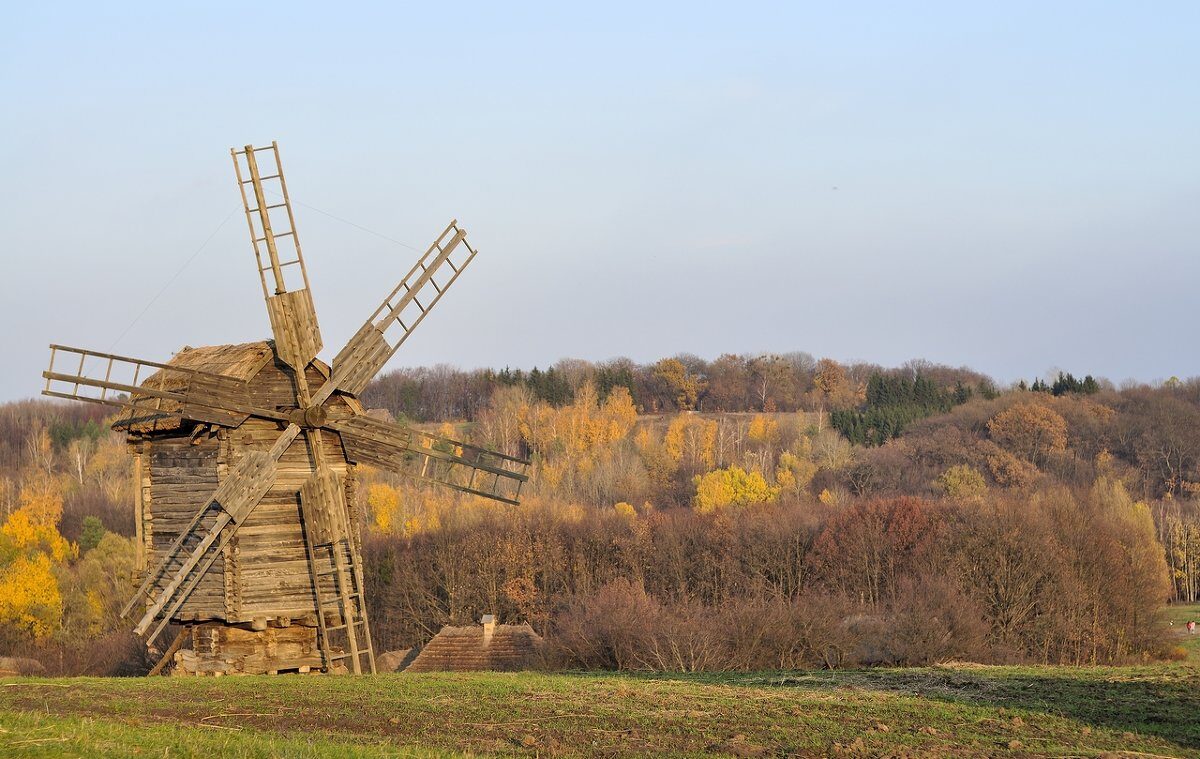
Photo: My Ukraine
The civic initiative “Holka” was investigating why, after 17 years, the lands surrounding Pirohovo still haven’t been saved.

The presidential decree states: “recommend to the Prosecutor General’s Office to verify the legality of the decisions of the Kyiv City Council regarding the provision of land plots in the protected zone of the Museum and take appropriate response measures in accordance with the established procedure if necessary.”
What’s wrong with the decisions of the Kyiv City Council that the prosecutor’s office checked?
According to journalists from Bihus.info, among the parties to the agreement (the so-called “understandings” of Komarnytskyi) were developers and the current MP from the Opposition Platform – For Life, Vadym Stolar, the son of former mayor Leonid Chernovetskyi – Stepan Chernovetskyi, and the aforementioned Andriy Ivanov:
“The understanding mentions that Andriy Ivanov and Stepan Chernovetskyi plan to develop this land plot, and Vadym Stolar is supposed to help resolve issues with all authorities: “Ensure that the Kyiv City Council adopts a detailed plan of the territory by the end of the year; Ensure the decision of the Kyiv City Council to permit the construction of high-rise buildings (no less than 9 floors); Ensure the issuance of urban planning conditions; Approve reduced land lease rates.” Stolar is allegedly offered $15 million for these services”.

So, this “understanding” didn’t just happen out of nowhere. About 20 years ago, the Kyiv City Council leased the land to the agricultural enterprise Agrocombine “Khotivsky.” At that time, the Agrocombine indeed used the plots for their intended purpose and engaged in agricultural activities.
However, during the time of Chernovetsky, at a “night meeting” of the Kyiv City Council, part of these lands was transferred to ownership of housing construction cooperatives, which were created based on the passport data of capital city students and other individuals who weren’t even residents of Kyiv. Up to 15 people could be allocated over a thousand hectares of land, which could include natural reserves and cultural heritage sites. At the time, the controversial secretary of the Kyiv City Council, Oles Dovhyi, called such a scheme “youth assistance.” It took journalists nearly six months to uncover the scheme.
A similar scheme with cooperatives was also used during the looting of the Belichansk forest in the capital—students wrote applications to receive land, they were given a few hundred hryvnias for this, and they signed a power of attorney to the necessary person who was supposed to dispose of it. However, it was used by deputies of neighboring councils to plunder the land around the capital.
This same scheme allowed for the change of land use around Pirogovo from agricultural to development. Later, the prosecutor’s office managed to return this part of the land to the city’s ownership through legal proceedings. After the Revolution of Dignity, the Kyiv City Council initiated the termination of the lease agreement for some plots of land that continued to be leased to the Agrocombine.
However, a few years later, the enterprise regained the right to use several land plots by using the services of State Registrars. The Prosecutor’s Office has repeatedly proven in court the illegality of registering leases for these lands.
Ivan Dutchyn, the head of the Department of State Interests Representation in Court of the Office of the Prosecutor General, explains why law enforcement officers are defending these lands:
Why do law enforcement agencies defend these lands?

Ivan Dutchyn
Head of the Department of State Interests Representation in Court of the Office of the Prosecutor General
The Prosecutor's Office protects lands of historical and cultural significance with archaeological sites, architectural monuments, and other objects of cultural heritage located on them, which are the national heritage of the Ukrainian people and reveal the life of past generations, including the character of art and architecture in different cultural-historical periods.
As for the lawsuits of the Prosecutor’s Office against developers regarding Pirohovo, there are currently four of them. The total area of lands being returned through legal proceedings is almost 160 hectares. All these cases involve the “Khotivske” association and are being heard by various courts.
One case is being considered in the Economic Court of Kyiv (Judge Vasyl Melnyk), two are in the Northern Court of Appeal (judges Olexandra Agrikova, Antonina Malchenko, Tetiana Kozyr; as well as judges Ivan Vovk, Valentyn Paliy, Oleksandr Sybyha), and one has already reached the Supreme Court and is being considered by the Cassation Economic Court (Judge Inna Berdnik).
However, despite the lack of legal right to use the land plots, the Agrocombine “Khotivske” continues to consider them as the basis for implementing its development project.
Illustrative are the events that took place at a meeting of the ecological commission of the Kyiv City Council last year. Then, at the request of the Servant of the People deputy Ksenia Semenova, a question was raised regarding the creation of a natural reserve on one of the land plots near the museum, which the prosecutor’s office returned to the city’s ownership.
Representative of the Agrocombine “Khotivske,” Hanna Ishchenko, who also previously represented the interests of several housing cooperatives, noted:
What is the position of the Agrocombine "Khotivske"?

Hanna Ishchenko
Representative of the Agrocombine "Khotivske"
As a result of the judicial investigation into the circumstances of land allocation, the disputed land plots were returned to the use of the Agrocombine "Khotivske." My principal believes that these circumstances were not taken into account when making decisions on this project. Currently, there is a situation where, due to a superficial examination of the situation, a number of circumstances that have actually been the subject of judicial investigation for a long time are being ignored by the Kyiv City Council. In the event of disregarding the rights of the Agrocombine "Khotivske" as a leaseholder, a situation may arise where legal disputes will continue.
Later, a working group found that the Agrocombine did not have legal rights to use this land plot. This information was also confirmed by the Department of Land Resources.
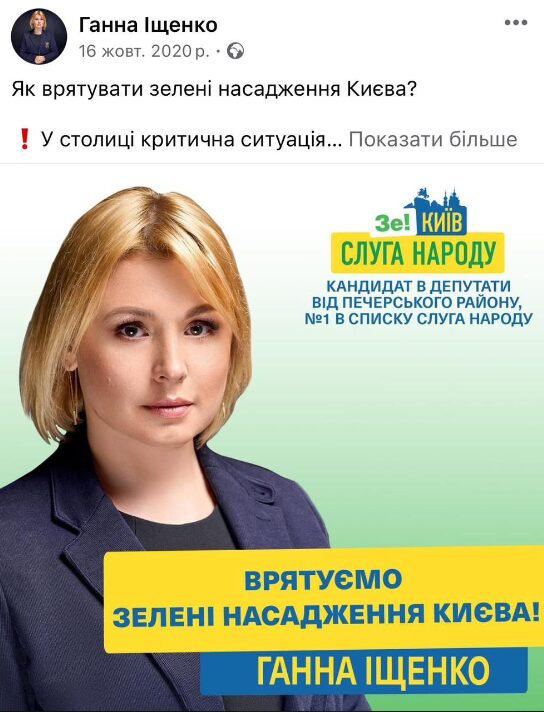
It is noteworthy that Ishchenko ran for the Kyiv City Council from the “Servant of the People” party in 2020, and “saving green zones in Kyiv” was one of her promises.
Screenshot from Hanna Ishchenko’s Facebook page
She represented developers when it came to Zhukiv Island, and in the media, there were reports that Ishchenko was involved in the aforementioned concepts associated with Komarnytskyi.

As for the government, according to the presidential decree, it was supposed to not only ensure the protection of existing protected areas but also to expand the territory of the Museum. However, immediately after Yushchenko signed the decree, then-Minister of Culture Yuriy Bohutsky issued his order for “adjustment” of the Museum’s protected areas. The territory where the construction of residential complexes was planned was excluded from the protected areas.
The head of the National Museum of Folk Architecture and Life, Oksana Povyakel, says that this was illegal and emphasizes that the concept of the open-air museum lies in the unity of the ensemble of monuments with the surrounding natural environment, devoid of modern influence.
Why did this situation arise?

Oksana Povyakel
CEO of the National Museum of Folk Architecture and Life
By this order, the Ministry of Culture painted a picture that was favorable to the developer. This was done without the necessary scientific and project documentation and without proper scientific justification for the need to adjust the protective zones. The museum's exposition comprises over 300 unique monuments of folk architecture, which, combined with traditional household items, reflect the ethnic culture of Ukrainians from different regions. Such an ensemble within the allocated territory is considered a complex architectural monument and a unique compositional formation, characterized by artistic completeness and expressiveness in combination with the natural environment. We won't have this atmosphere if there are just more high-rises looming behind the museum.
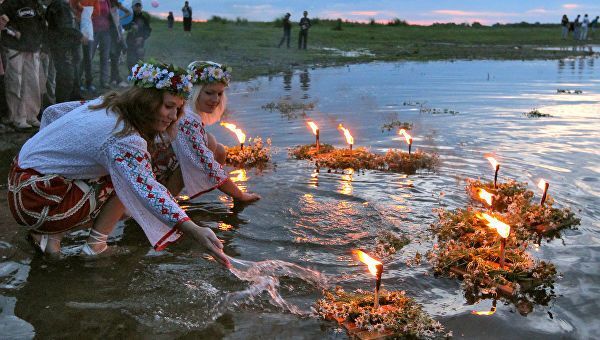
Photo: Ivan Kupala celebration in Pyrohiv 2019. Viewer
The land in question is located between the “Holosiivskyi” National Park and the park-monument of landscape art “Feofaniya.” National park employee Oleksandr Sokolenko emphasizes that developing this plot with high-rise buildings will have a negative impact on the national park itself.
Why should development not be allowed?

Olexander Sokolenko
Employee of the "Holosiivskyi" National Nature Park
Even if it's not part of the national park or "Feofaniya" right now. Allowing development would disrupt this unique natural complex. We already have a sad experience, particularly with the Bilichansky Forest, where skyscrapers were built next to our forest. The forest is drying up, and this is happening on large scales because construction affects many factors, including groundwater circulation. Allowing landscape and atmospheric disturbances around Pyrohiv would also guarantee the destruction of part of the national park.
To comply with the presidential decree, the Prosecutor General’s Office is not only litigating with developers but also suing the Ministry of Culture. This case is being heard by Judge Vitaliy Shchavinskyi of the Kyiv District Administrative Court (640/17785/22).
Of course, over nearly 20 years, there have been changes in the Ministry of Culture, and currently, the Ministry assures that they are ready to acknowledge the prosecutor’s lawsuit. This is emphasized by Nataliia Voitseshchuk, the head of the Department of Permitting and Approval Documentation at the Ministry of Culture.
Why does the Ministry of Culture acknowledge the lawsuit?

Nataliia Voitseshchuk
Head of the Permitting and Approval Documentation Department of the Ministry of Culture
The area around the museum should create a rural landscape. This is the specificity of the open-air museum. Visitors should see such a landscape around the Museum. Here you can shoot films and music videos. The Ministry acknowledges the lawsuit of the Office of the Prosecutor General in terms of the claims to recognize several provisions of the Ministry of Culture's order regarding the approval of the boundaries and usage regulations of the protection zones of the Museum of Folk Architecture and Life of the National Academy of Sciences of Ukraine as unlawful and void, taking into account the requirements of the President of Ukraine's Decree.
When the Ministry of Culture acknowledges the prosecutor’s lawsuit, it strengthens the position of law enforcement, particularly in ongoing legal proceedings with developers.
Specifically for “Left Bank“