
“Flowers of Ukraine”. What legal precedent will emerge for the entire country behind the closed doors of the Supreme Court?


The building was constructed 40 years ago. The cascades of structures were specifically designed for flower greenhouses.
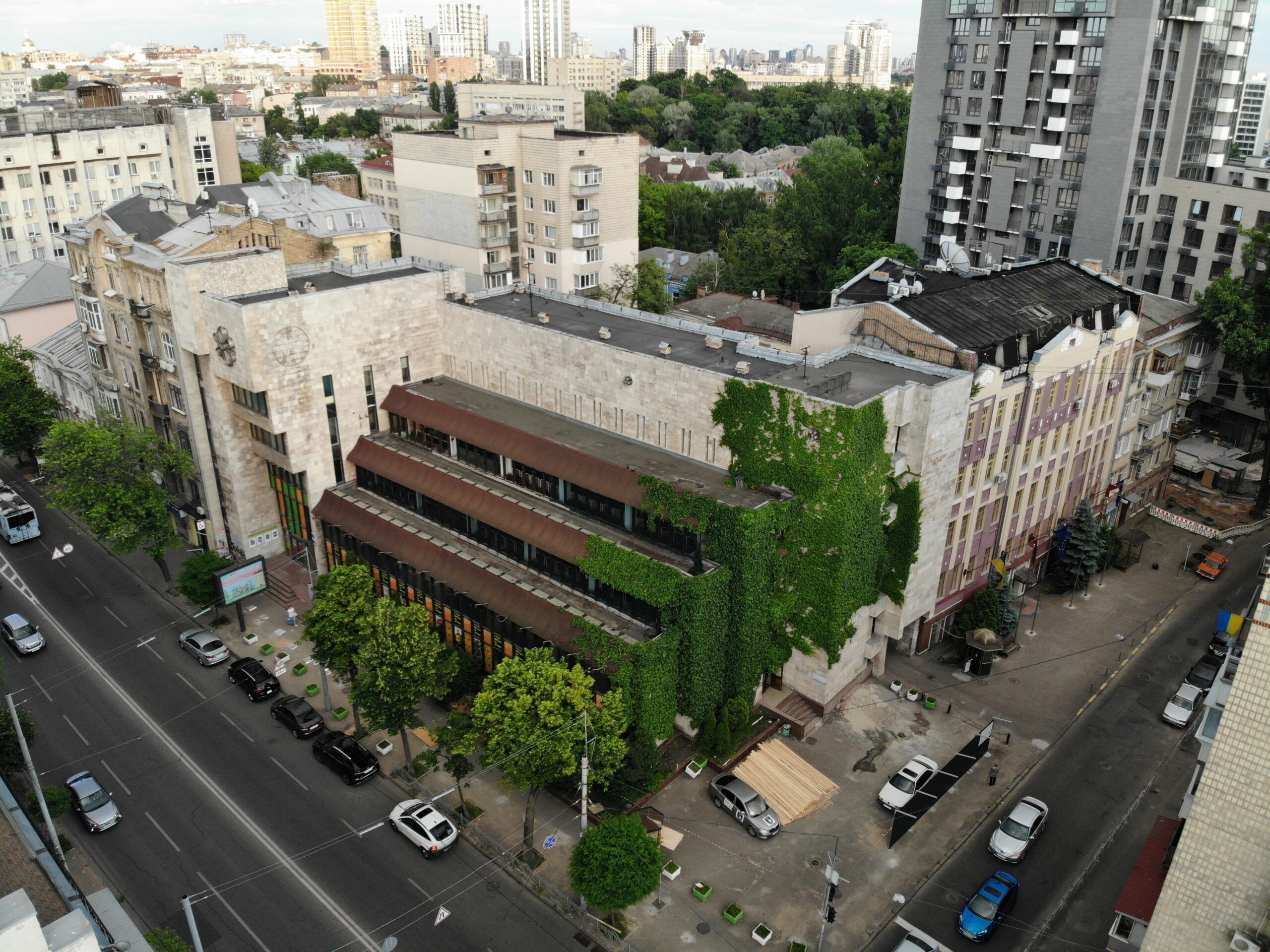
Photo: Renovation Map
But the new owner had different plans. He wanted to turn it into an office center with parking.
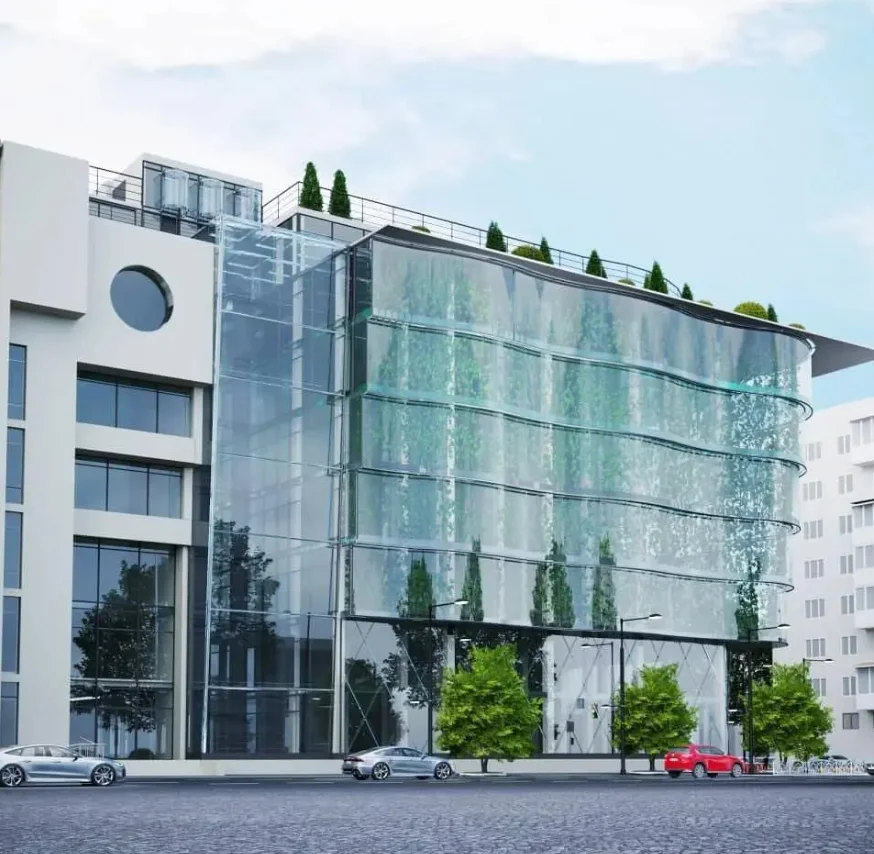
Caption: This is how the owner envisioned the future of the “Flowers of Ukraine” building. Photo from Sofia Lenartovych’s article.
The vines that entwined the building were destroyed half a year before the full-scale invasion. At that time, they also started to demolish the facade. Kyiv residents came out to defend the building. This is how the “Save Flowers of Ukraine” community emerged.
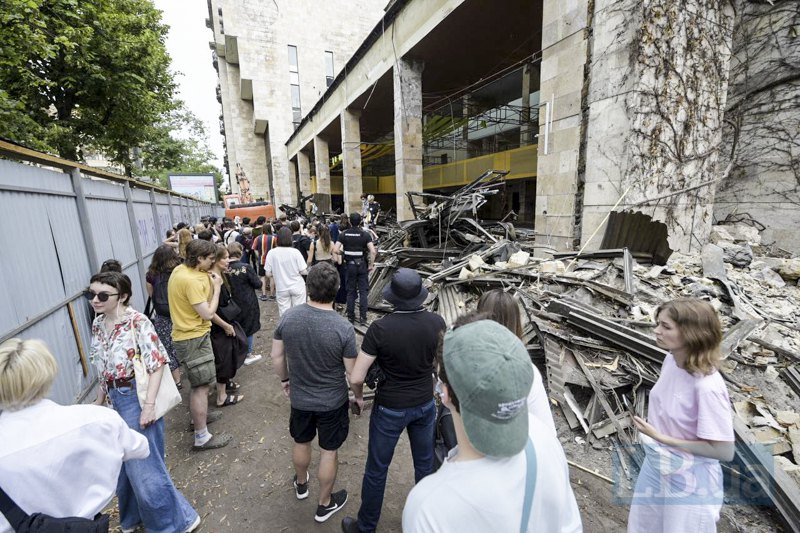
Photo: Max Trebukhov
Then the Ministry of Culture and Information Policy promptly responded to the citizens’ appeal. Less than a month passed, and the building was granted the status of an architectural monument and included in the corresponding state register. However, this did not satisfy the developer because the legislation in this case obliges the owner to maintain the monument in proper condition. Therefore, he turned to the OASC (“wolf court”) (liquidated by the Verkhovna Rada due to corruption) and won the lawsuit there. However, this decision did not have legal force because the Ministry of Culture, Kyiv City Prosecutor’s Office, Department of Cultural Heritage Protection of the KMDA, as well as the public organizations “Save Flowers of Ukraine” and “Renovation Map,” won the appeal, and the building retained its monument status.
Natalia Voytseshchuk, head of the Department of Permitting and Coordination Documentation of the Ministry of Culture and Information Policy, emphasized in a comment to the public initiative “Holka”:

Thus, the Ministry of Culture protected the monument status of the building. However, another legal process is currently ongoing. After the developers vandalized the structure, architect Mykola Levchuk went to court to protect his non-property copyright to preserve the integrity and inviolability of the work without the author’s consent.


While battles were raging around the “Flowers of Ukraine” building, which was being destroyed, “Slidstvo.Info” found out that one of its new owners – Oleksiy Pyshnyi – had business interests in Russia, as did his family. He confirmed that his father resides in Russia. But he denied having Russian citizenship or a Russian taxpayer number himself, although journalists discovered otherwise.
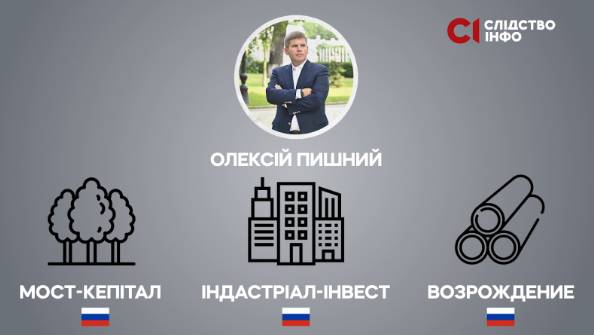
Screenshot from the “Slidstvo.Info” investigation
However, it’s not just about business. There is also a political aspect to this story. One of the companies, with a name almost identical to the Russian “Most-Kapital,” which is associated with Pyshnyi, financed the “Smart Power” party. At its very first congress, this political project emphasized that Ukraine should have a non-blocked status. Informational support came from the pro-Russian and now banned NewsOne channel. The Security Service of Ukraine (SBU) conducted searches at the office of this party. However, the party, whose members reportedly include former policemen and prosecutors from Donbas, who are associated with fugitive officials from Yanukovych’s team, is not yet banned in Ukraine.
While the courts are ongoing, it seems the developer has decided to get rid of the problematic building. Currently, efforts are being made to sell it.
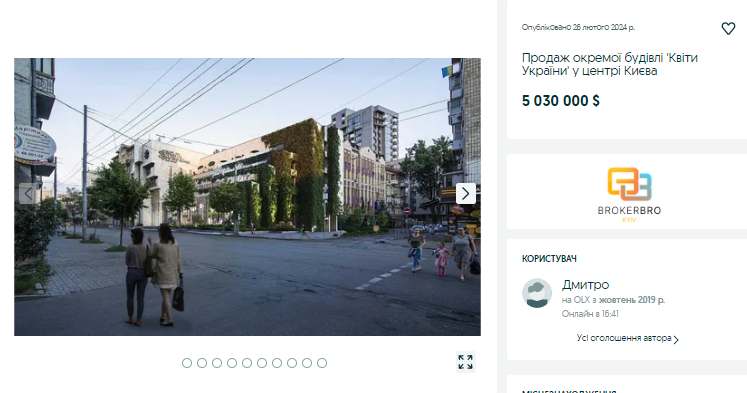
Screenshot: Advertisement on OLX
The advertisement was updated in February of this year. Similar attempts were made half a year ago. Since then, the price has not changed – the owner wants slightly over $5 million.

A similar situation to the one that arose with “Flowers of Ukraine” and the copyright to the project embodied in the building has already occurred in Kyiv with “Tarilka” (a plate) on Lybidska Street when there were plans to reconstruct this object, which later also received monument status.
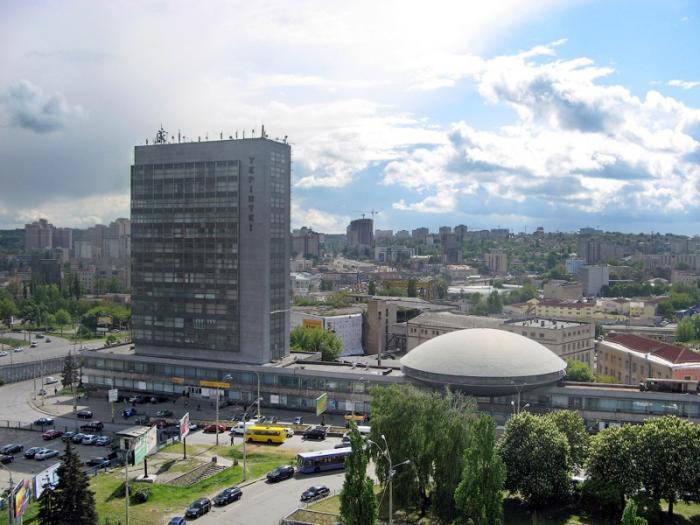
Photo of the “Flying Saucer” building from the Wikipedia page
Back then, architect Florian Yuriev emphasized that he holds the copyright to this building and later bequeathed it to the state without the right to alter or reconstruct this structure with extensions.

Unrealized development project of the “flying saucer” on Lybidska Street

At the end of last year, the need to establish a Higher Court for Intellectual Property was discussed in the Supreme Court. The Chair of the Cassation Commercial Court, Larysa Rohach, emphasized that this would not only address a range of issues in the field of intellectual property rights protection but also ensure qualified judicial protection for rights holders regarding industrial property objects, copyright and related rights, as well as investors, including foreign ones.
Only the Cassation Commercial Court has a separate chamber for the protection of intellectual property rights. By the way, Judge Bohdan Lvov worked there, who is now, with the support of the Supreme Court Chair, trying to reclaim his judge’s seat despite having Russian citizenship. In the same chamber, there is another judge, Igor Benedisyuk, who, like Lvov, has a negative conclusion from the Public Integrity Council. He is also a former military judge (until 1994 – a judge of the 37th Military Court of the Far Eastern Military District in the Russian city of Yuzhno-Sakhalinsk). Like Lvov, he is a graduate of the Military Institute of the Ministry of Defense of the USSR (Moscow).
In all other departments of the Supreme Court that consider cases related to the protection of intellectual property and generally in the courts of Ukraine with relevant specialization, there is nowhere else to turn. This cannot but affect the quality of justice in such cases.
Sometimes, even Western manufacturers are involved. For example, in 2019, the miniseries “Chernobyl” produced by the American channel Home Box Office, Inc. (HBO) was released. It turned out that real names of movie characters were used in the series without their consent.
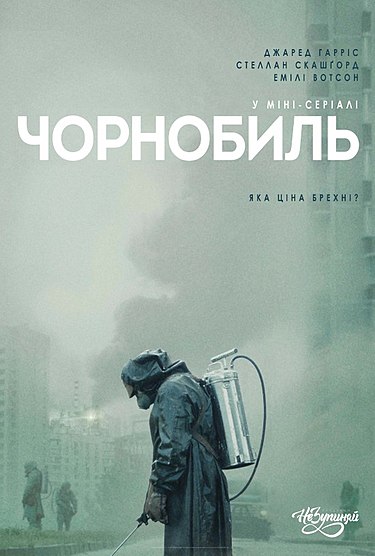
Photo from the “Chernobyl (miniseries)” page on Wikipedia
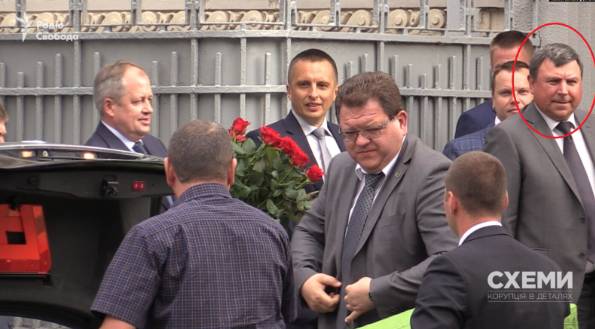
The lineup in the “Schemes” screenshot: on the right is Goulko, in the center is Lviv, on the far left is Romaniuk, former head of the Supreme Court of Ukraine and now the Secretary of the Advisory Group of Experts evaluating candidates for positions in the Constitutional Court of Ukraine.
Also on the panel reviewing the case of the “Chernobyl” miniseries is Judge Dmytro Luspenyk. He previously worked in the same Higher Specialized Court as Goulko. Since 2011, he has been the Secretary of the Plenum. Initially, in the aforementioned “Portnov’s court,” and since 2017, in the Supreme Court. By “coincidence,” the constant Secretary of the Plenum consistently hears cases in the same panel as the permanent head of the Cassation Civil Court.
Another member of their panel, which “judged” the case of the right to use names in the film “Chernobyl,” is Hanna Kolomiets. The Anti-Corruption Action Center noted that she was among those who appealed to the President of Ukraine to veto the law introducing open competitions to the High Council of Justice with the involvement of independent experts with international experience.
The problem of using real people’s names without their consent as prototypes for film characters is not complicated. Ukrainian legislation directly states that using a person’s name in literary and other works, except documentary works, as a character is only allowed with their consent, and after death – with the consent of their children or spouse. If they are not available, then with the consent of parents, brothers, and sisters. But how the panel of judges of the Supreme Court will resolve the case of the “Chernobyl” miniseries is still open.
In the context of the “Flowers of Ukraine” case, it is important to note the ruling of the Supreme Court, which appeared not long ago and protected the copyright of a dissertation abstract from plagiarism, committed by a teacher at Uzhhorod National University. So, in the composition of the panel that made the decision mentioned above, there are some of the same judges who are considering the “Flowers of Ukraine” case (Iryna Dundar, Yevhenii Krasnoshchokov, and Mykola Rusinchuk).
The decision in the “Flowers of Ukraine” case is important not only for the specific situation at hand. The key question is whether a building owner, who did not obtain the appropriate rights from the author of its project during the author’s lifetime and without their consent, can demolish the building simply because they are the owner. Does acquiring ownership rights to the building square allow ignoring the author’s right to the integrity and inviolability of their architectural work embodied in the respective structure?
In Europe, the judicial system for protecting intellectual property rights is more developed. In Poland, for example, there is not just one separate court but an entire network of courts that handle disputes regarding copyright. And for particularly complex cases involving computer programs, inventions, plant varieties, trade secrets of enterprises, a separate court is designated.
Specialized courts or chambers for hearing cases related to intellectual property exist in the UK, France, Germany, Italy, the Netherlands, the USA, and others. The experience of these countries, as noted by Maria Tymofiienko, the manager of the UK Government’s Project providing assistance in creating a similar court in Ukraine, convincingly demonstrates that a specialized court for handling cases related to the protection of intellectual property rights is a guarantee of improving the qualifications of judges in the field of intellectual property law and ensuring predictability in relevant judicial practice.
The Extraordinary and Plenipotentiary Ambassador of the UK to Ukraine from 2019 to 2023, Melinda Simmons, noted that “intellectual property rights are closely linked to creativity, innovation, economic growth, and prosperity, but these opportunities can only be realized with the proper judicial protection of intellectual property rights by independent courts.”
So what happened in our judicial system? The High Qualification Commission of Judges of Ukraine announced a competition for the Higher Court on Intellectual Property in 2017. The candidates passed the exams and received some of the results. Then, in 2019, the newly elected President, along with the parliament, dissolved the High Qualification Commission of Judges. The unfinished competition remained in limbo for years. As did the quality protection of intellectual property rights in Ukrainian courts.
Last year, a member of the new composition of the High Qualification Commission of Judges, Roman Sabodash, during the Intellectual Property Rights Dialogue between Ukraine and the EU, stated that “the issue of creating the Higher Court on Intellectual Property is under consideration by the Commission – it is necessary to identify the current state of affairs with candidates for this court, to find out how they were affected by military actions after the full-scale invasion, and also to consider their desire to continue participating in the competition.” He also emphasized the need to complete the procedure for verifying the practical tasks performed by the candidates.
For Ukraine, it is important to have a more favorable investment climate because a strong economy is one of our best allies in victory. For such a climate, the protection of tangible and intangible copyright and other intellectual property rights is extremely important. Therefore, completing the process of creating the Higher Court on Intellectual Property, which has been delayed for years, is one of the important tasks. At the same time, its personnel should not raise doubts about the integrity of judges or their professional qualities. Until then, we can only hope that the structures of the Supreme Court – the Civil Cassation and the Commercial Cassation Courts – will consider relevant cases and shape judicial practice not in the interests of individual economic players, some of whom have a Russian “trail.”
Specially for “Left Bank“