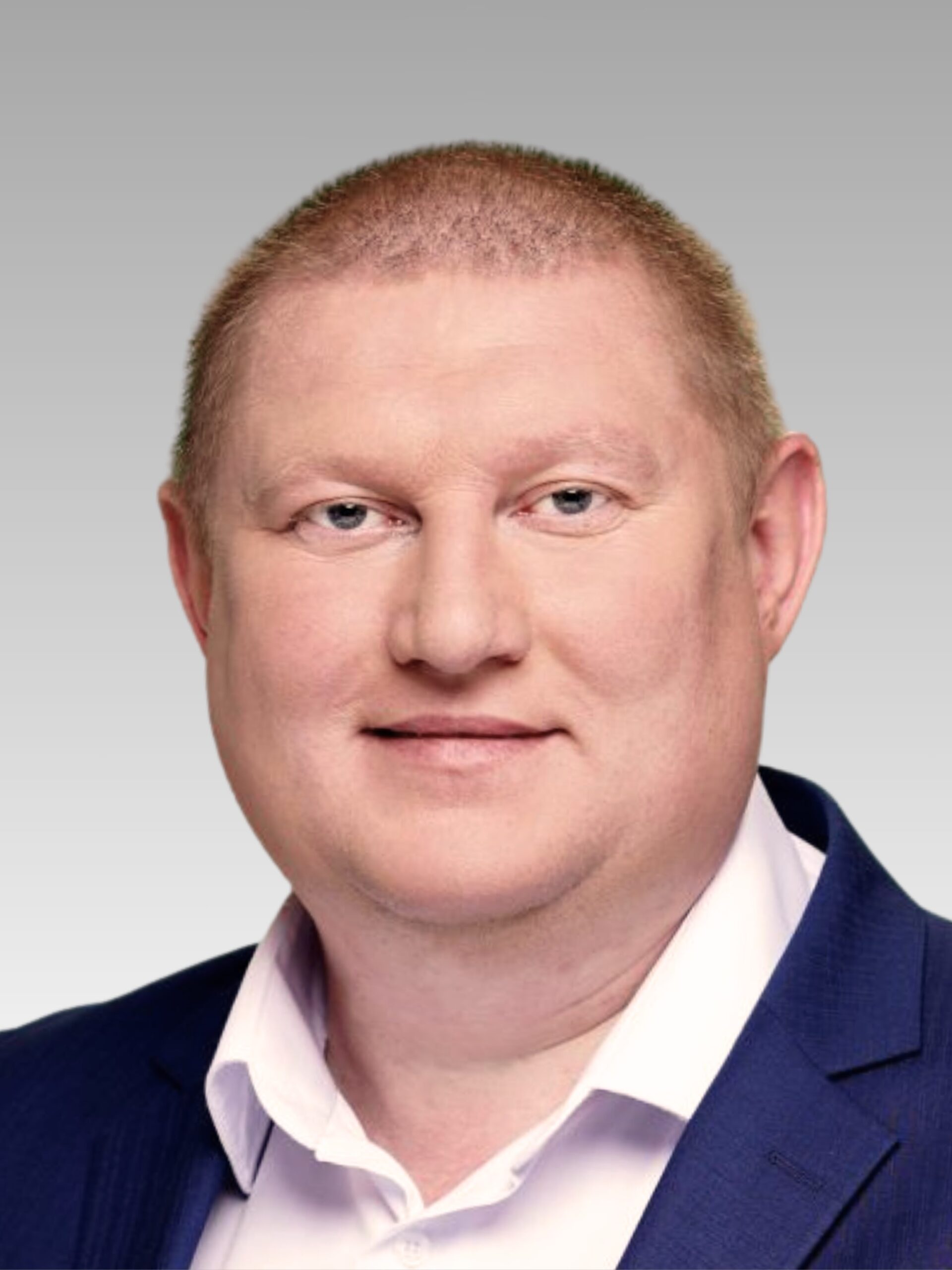
Volodymyr Vatras
Фракція політичної партії "СЛУГА НАРОДУ"
Region
None


Green: voted for beneficial and against harmful bills, red: voted against beneficial and for harmful bills. Yellow: abstained. Dark grey: present but did not vote, or absent.
Green: voted for beneficial and against harmful bills, red: voted against beneficial and for harmful bills. Yellow: abstained. Dark grey: present but did not vote, or absent.
Biography
Volodymyr Vatras became a Member of the Verkhovna Rada of the 9th convocation, representing the “Servant of the People” party (No. 72 on the party list, non-partisan). He was recommended for the list by the future Speaker, Ruslan Stefanchuk, who, like Vatras, was a party-list candidate from the Khmelnytskyi region.
Vatras immediately joined the “Servant of the People” faction. He was elected Chair of the subcommittee on the organisation and activities of the bar and legal aid bodies of the Verkhovna Rada Committee on Legal Policy. The politician supports the activities of the Ukrainian National Bar Association, which has been headed since 2012 by Lidiia Izovitova, an associate of Viktor Medvedchuk. The monopolisation of the bar took place after Andriy Portnov lobbied for the Law “On the Bar.” In its report, the European Commission highlighted the need to reform the bar, which is part of the justice system and serves as a recruitment pool for the judiciary.
Vatras defended a bill (Draft #12320) that would allow for the prosecution of individuals for identifying a lawyer with their client. Civic organisations and international partners noted that the project had a chilling effect on freedom of speech. If a lawyer intends to run for office and participates in the public sphere—in broadcasts, publications, or by whitewashing traitors—journalists and citizens could be held administratively liable for mentioning this fact.
During the presidential election, Vatras was an official representative of presidential candidate Volodymyr Zelenskyy in the Khmelnytskyi region.
After his election, Vatras’s wife, who was registered as a sole proprietor, began receiving state contracts, despite not having previously conducted business in that sector. This was reported by Bihus.info, while investigators from ZHAR.INFO analysed the politician’s assets.
The MP voted for the purchase of Russian reactors in Bulgaria for the completion of nuclear reactors at the Khmelnytskyi Nuclear Power Plant (Draft #11392).
Timeline of Key Events
2026
Voted in the first reading for the controversial draft Civil Code (15150) submitted by the Chairman of the Verkhovna Rada, Ruslan Stefanchuk. The 803-page draft, which the Ministry of Justice had not managed to review within three weeks of registration, was fast-tracked through parliament. The legislative initiative contained provisions allowing for the carve-up of state and municipal property—forests, coastlines, and subsoil resources. Additionally, the project contained risks to freedom of speech. Following the parliamentary vote, street protests broke out in several regions. A petition demanding a veto garnered over 25,000 signatures on the first day of registration. Judges of the Supreme Court also expressed substantial objections. The draft Civil Code, which had not undergone proper discussion, effectively destroyed judicial practice developed over 20 years.
2025
Voted for the liquidation of the independence of anti-corruption bodies—the National Anti-Corruption Bureau of Ukraine (NABU) and the Specialized Anti-Corruption Prosecutor’s Office (Draft #12414). After the law was passed, protests began near Bankova Street, but Volodymyr Zelenskyy signed the law that same day. Later, the President submitted a project restoring the independence of anti-corruption bodies. At the end of July, following public and international pressure, the parliamentary majority voted for project #13533, which restored the powers of the anti-corruption bodies.
Supported the project regarding a special procedure for the compulsory alienation of land in the Uzhhorod district of the Zakarpattia region (#9549). The initiative contained scandalous provisions creating risks for both deforestation and the development of a corrupt scheme to purchase real estate using budget funds at prices 3–3.6 times higher than market value. These provisions violated the Constitution, and the President vetoed the bill, but MPs ignored most objections during the revision.
Voted for the so-called “Ihor Mazepa Law” (Draft 12089). This legislative initiative essentially reflected the demands of unscrupulous businesses. The law provides for the “resetting” of claims regarding illegally acquired forests and coastal lands if ten years have passed since they entered private ownership. This means that all such land grabs that occurred over the last decade could be legalised. Despite a petition demanding a veto gathering over 25,000 signatures, President Volodymyr Zelenskyy signed the document. The first victim of the “Ihor Mazepa Law” was the case concerning Protasiv Yar, which was defended by the late scout and Kyiv resident Roman Ratushnyi.
Supported Speaker Ruslan Stefanchuk’s controversial bill to abolish the Commercial Code of Ukraine (#6013). While the initiators declared an expansion of economic freedoms, the law canceled fundamental norms of state-business interaction and governance in state and municipal economic sectors. A number of NGOs emphasised that the law posed risks to national security and could lead to a large-scale redistribution of the country’s assets.
2024
The MP was one of 212 MPs who voted for bill #10242 on pressure on journalists and their sources. This bill created serious risks for freedom of speech and the protection of sources and whistleblowers. Under the guise of combating “data abuse,” it proposed amendments to the Criminal Code that would increase penalties for disclosing information from state registers during martial law—up to 8 years in prison, with no exceptions. ZHAR.INFO investigators noted that the MP’s family had acquired five houses in Lisova Hrynivka in the Khmelnytskyi region since 2021.
Voted for bill #8371, which provided for the prohibition in Ukraine of religious organisations whose governing centres are located in a state carrying out armed aggression against Ukraine.
2023
Supported project #7457 “On the Legalisation of Medical Cannabis,” which allowed the production of medical cannabis in Ukraine for the rehabilitation of wounded military personnel, including for the treatment of PTSD. The adoption of the law was advocated by the “Patients of Ukraine” organisation.
Voted for bill #9296-d on strengthening financial monitoring of Politically Exposed Persons (PEPs). The key change introduced by the bill was the introduction of a lifelong PEP status for top officials, replacing the current three-year limit after leaving office.
2022
Supported law #2693-d “On Media,” which provided for the relaxation of restrictions on Russian content and performers, and the regulation of online media, bloggers, and various web platforms. Adoption of this law was one of the conditions for starting negotiations on Ukraine’s accession to the EU. Civic organisations and media figures stated that the law violated the right to freedom of expression guaranteed by the Constitution of Ukraine and the Convention for the Protection of Human Rights and Fundamental Freedoms.
Voted for the urban planning “reform” (#5655), authored by the head of the “Servant of the People” party, Olena Shuliak. The civic sector and media criticised this legislative initiative, and Chatham House (Britain) noted that with such rules of the game, there is every chance for the emergence of construction cartels. The European Parliament warned President Zelenskyy against signing the law, and the European Commission also provided critical comments.
2021
Bihus.info reported that the MP’s wife, Oksana Vatras, registered as a sole proprietor in 2017 and began receiving state contracts after her husband was elected as an MP, despite having no such contracts previously. Investigators discovered that in 2021, she provided legal services to state-owned companies, although she did not hold the status of a lawyer at the time. She had the right to practice law for only two months—from October to December 2018—after which it was terminated. Oksana Vatras renewed this right only in 2022. The MP’s wife refused to comment to journalists regarding the lack of lawyer status while receiving contracts from state companies for the provision of legal services.
2020
Supported resolution #4104, by which parliament approved its representatives to the competition commission for selecting the leadership of the Specialised Anti-Corruption Prosecutor’s Office. The composition of this commission drew large-scale criticism from civil society, EU delegations, and G7 countries, as it included individuals whose independence and integrity were in doubt.
Voted for the “anti-Kolomoiskyi law” (Draft #2571-d), which prohibited the return of insolvent banks removed from the market to their former owners.
2019
Voted for bill #1031 on restoring punishment for illicit enrichment and the establishment of civil forfeiture for unjustifiably acquired assets.
Elected as an MP of the 9th convocation from the “Servant of the People” party. Joined the faction of the same name. Elected Chair of the subcommittee on the organisation and activities of the bar and legal aid bodies of the Verkhovna Rada Committee on Legal Policy.
Was an official representative of presidential candidate Volodymyr Zelenskyy in the Khmelnytskyi region.
2016
Elected Chair of the Qualification Chamber of the Qualification and Disciplinary Commission of the Bar of the Khmelnytskyi region; managed the “Vatras and Partners” law firm.
2002
Ran for the Khmelnytskyi City Council of the 9th convocation in a majoritarian district.
The online media outlet “ZHAR.INFO” participated in the creation of this profile.
If, in your opinion, this profile contains inaccurate information, please contact us in writing at ngo.holka@gmail.com. The team of the Holka civic initiative will review your submission and provide a response.
Voting record
For
- Fake Abolition of Parliamentary Immunity (2237)
- Criminalization of “Button-Press Voting” (2148)
- Recognition of the Revolution of Dignity as a Key Moment of State-Building (2739)
- Condemnation of Protests on Bankova Street (5295)
- On the Judiciary and the Status of Judges (3711-д)
- The Emerald Network (4461)
- Reduction of Industrial Emissions (4167)
- Restoration of Financial Reporting for Political Parties (Amendment No. 93) (5253-1)
 Did not vote
  Absent
 Відео