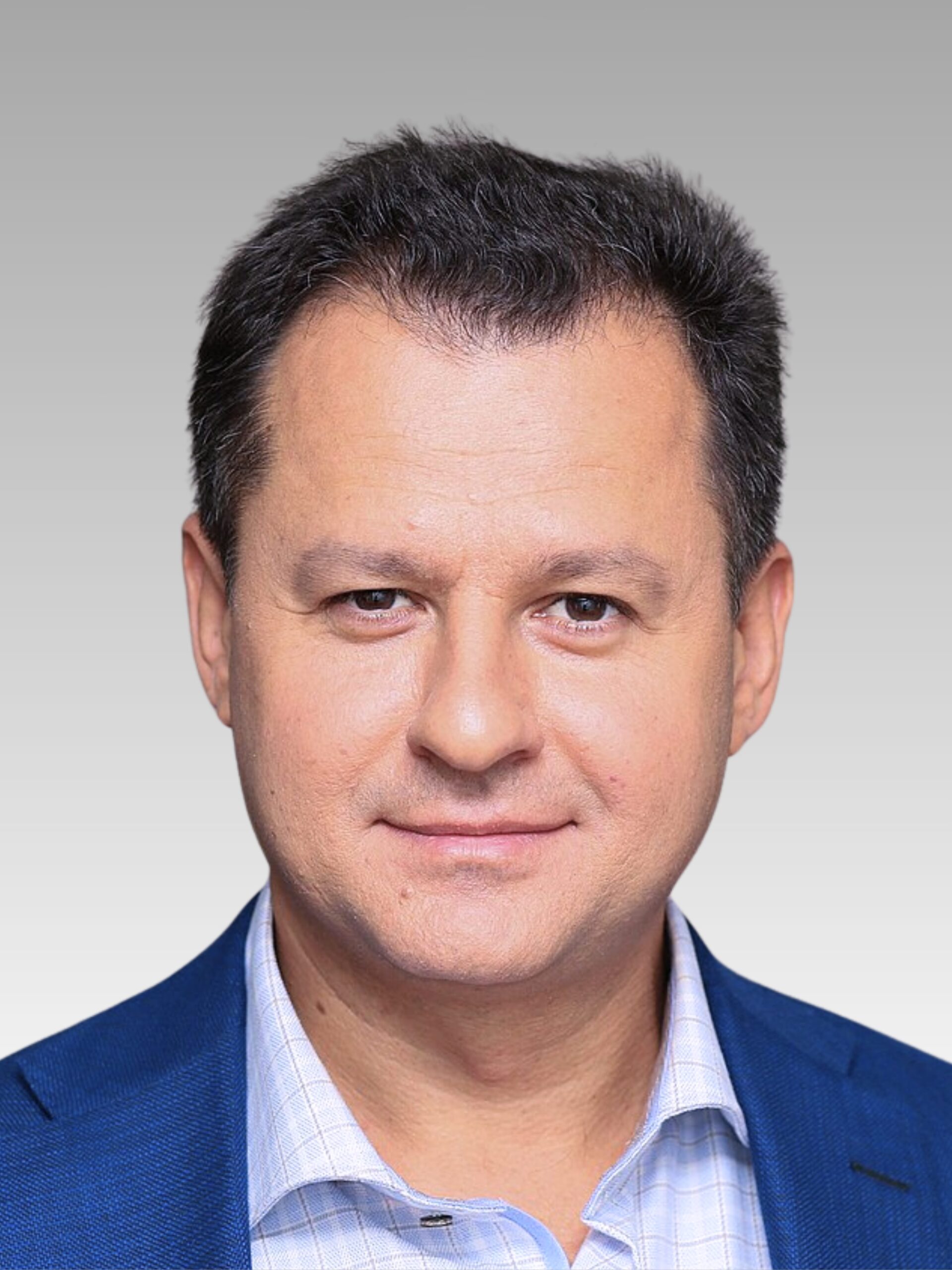
Taras Batenko
Депутатська група "Партія "За майбутнє"
Region
Львівська область


Green: voted for beneficial and against harmful bills, red: voted against beneficial and for harmful bills. Yellow: abstained. Dark grey: present but did not vote, or absent.
Green: voted for beneficial and against harmful bills, red: voted against beneficial and for harmful bills. Yellow: abstained. Dark grey: present but did not vote, or absent.
Biography
Taras Batenko is a Member of the Ukrainian Parliament of the VIII and IX convocations. In 2019, he was elected in single-mandate district #123 (Lviv region). In the Verkhovna Rada, he joined the Budget Committee and headed the “Za Maybutnye” (For the Future) parliamentary group.
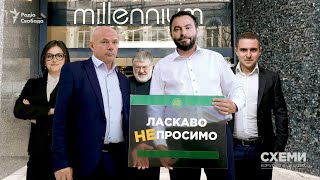
He is linked to the informal political group of Ihor Kolomoisky in the Verkhovna Rada. Batenko previously chaired the political council of the UKROP party and subsequently led the “Za Maybutnye” party and its parliamentary group. During voting, this group essentially supported the ruling party. Batenko voted against the “anti-Kolomoisky” law and co-authored a number of bills that could have been submitted in the interests of those engaged in the illegal appropriation of forests and coastlines. This specifically concerns the Carpathians and Svydovets, areas in which, according to media reports, Kolomoisky has interests.
The MP headed the “Za Maybutnye” party list for the Lviv Regional Council, where the political project barely cleared the 5% threshold. This is a standard election technique where MPs lead local election lists to help the party gain more votes, while remaining in the Verkhovna Rada after the election.
Previously, Batenko ran in the same district in the Lviv region for the Petro Poroshenko Bloc (BPP), but left the party after the detention of Hennadii Korban, who is also linked to Kolomoisky’s group.
He served as deputy head of the Lviv regional campaign office for presidential candidate Viktor Yushchenko and later became an assistant to “Our Ukraine” MP Petro Oliinyk and deputy head of the Lviv Regional State Administration. In 2006, he was elected to the Lviv Regional Council representing “Our Ukraine – People’s Self-Defence” and led its faction. He subsequently ran for the council again, this time representing the Ukrainian People’s Party.
Over the years, he has also been a member of the Ukrainian Republican Party, the People-Democratic Party, and the “Reforms and Order” party.
Timeline of Key Events
2026
Voted in the first reading for the controversial draft Civil Code (15150) submitted by the Chairman of the Verkhovna Rada, Ruslan Stefanchuk. The 803-page draft, which the Ministry of Justice had not managed to review within three weeks of registration, was fast-tracked through parliament. The legislative initiative contained provisions allowing for the carve-up of state and municipal property—forests, coastlines, and subsoil resources. Additionally, the project contained risks to freedom of speech. Following the parliamentary vote, street protests broke out in several regions. A petition demanding a veto garnered over 25,000 signatures on the first day of registration. Judges of the Supreme Court also expressed substantial objections. The draft Civil Code, which had not undergone proper discussion, effectively destroyed judicial practice developed over 20 years.
2025
Supported a bill that restricted the powers of the National Anti-Corruption Bureau (NABU) and the Specialized Anti-Corruption Prosecutor’s Office (SAPO) while strengthening the powers of the Prosecutor General (#12414). According to a number of NGOs, including Transparency International Ukraine, the bill posed a direct threat to the independence of the NABU, a key anti-corruption institution created with the support of international partners to be protected from political influence. The European Commission considered the adoption of this law a serious step backward. Subsequently, under pressure from street protests, parliament supported a new presidential initiative that restored the independence of anti-corruption bodies.
Supported the bill on restoring the openness of parliamentary committees (#11321).
Supported the unconstitutional project regarding a special procedure for the compulsory alienation of land in the Uzhhorod district of the Zakarpattia region (#9549). The initiative contained scandalous provisions creating risks for both deforestation and corrupt schemes involving the purchase of real estate using budget funds at 3–3.6 times the market price.
Supported Speaker Ruslan Stefanchuk’s controversial bill to abolish the Commercial Code of Ukraine (#6013), which posed risks to national security.
Supported the so-called “Ihor Mazepa Law” (Draft Law 12089), which provided for the “resetting” of claims regarding illegally acquired forests and coastal lands if ten years had passed since they entered private ownership.
Supported a bill on administrative liability for journalists and activists who equate clients with their lawyers (#12320). Organisations such as DEJURE, “Holka,” the Anti-Corruption Action Centre, and the CHESNO movement opposed the bill, noting that it contained signs of censorship.
2024
Supported the law on prohibiting religious organisations whose governing centres are located in Russia, specifically the UOC-MP (#8371).
Supported a bill to simplify the procedure for changing the intended use of land from agricultural to industrial (#9627), which experts claim contains significant corruption risks.
2023
Supported the “Medical Cannabis Legalization” bill (#7457), which allowed the production of medical cannabis in Ukraine.
Supported the decolonisation bill (#7253), which prohibits the promotion of Russia’s imperial policy and decolonises local names.
Elected Chairman of the “Za Maybutnye” political party, replacing Ihor Palytsia.
2022
Voted for the urban planning “reform” (#5655), which was criticised by the civil sector and media. The European Parliament warned President Zelenskyy against signing the law, and the European Commission also provided critical remarks.
Supported the bill on the liquidation of the District Administrative Court of Kyiv (#5369), the “Wolf Court.”
Voted for the bill on the ban of pro-Russian parties (#7172-1).
2021
Voted for the draft resolution recognising the Revolution of Dignity as one of the key moments in state-building (#2739).
2020
Was one of the initiators of an appeal to the Constitutional Court regarding the constitutionality of several anti-corruption provisions, which resulted in the cancellation of liability for false asset declarations.
Was among the MPs who petitioned the Constitutional Court to have the appointment of NABU Director Artem Sytnyk declared unconstitutional.
Voted against the so-called “anti-Kolomoisky law,” which prohibited the return of PrivatBank to its former owner, Ihor Kolomoisky.
Joined the “Za Maybutnye” party. His office was located on the premises of a business partner of Kolomoisky.
Headed the “Za Maybutnye” party list for the Lviv Regional Council elections. The party received 5.24% of the vote and entered the regional council, although Batenko remained in the Verkhovna Rada.
2019
Elected as a People’s Deputy of Ukraine in single-mandate district #123 (Lviv region). Joined the Budget Committee and headed the “Za Maybutnye” parliamentary group. During the campaign, questions arose as to why Batenko’s assistants were directing funds to his campaign fund. The politician insisted he did not give them the money himself, stating he was convinced the funds were their own savings.
Abstained from voting for the bill on criminalising proxy voting (“button-pushing”) by MPs (#2148).
2018
Caught engaging in proxy voting (button-pushing) for bill #8201.
2016
Elected Chairman of the UKROP party’s political council; two years later, he headed the party.
2015
Following the detention of Hennadii Korban, he left the Petro Poroshenko Bloc faction, declaring that political repressions had begun in the country.
2014
Elected as a People’s Deputy of Ukraine in district #123 (Lviv region) representing the Petro Poroshenko Bloc. Joined the party’s faction. Became Chairman of the Subcommittee on Oil, Oil Transport, and Petroleum Supply of the Verkhovna Rada Committee on Fuel and Energy Complex, Nuclear Policy, and Nuclear Safety.
2012
Ran for the Verkhovna Rada of the VII convocation in district #123 (Lviv region) as an independent candidate but lost to a candidate from the “Batkivshchyna” party. At the time of running, he was a member of the Ukrainian Republican Party.
2010
Elected as a deputy to the Lviv Regional Council of the VI convocation in majoritarian district #32 representing the Ukrainian People’s Party. At that time, he was non-partisan and worked as Director of the “Druzhba” oil pipeline branch of “Ukrtransnafta.”
2009
Appointed Director of the “Main Oil Pipelines Druzhba” branch of “Ukrtransnafta.”
2006
Elected as a deputy to the Lviv Regional Council of the V convocation on the “Our Ukraine – People’s Self-Defence” bloc list. From 2009 to 2010, he chaired the faction of the same name.
2005-2008
Served as Deputy Head of the Lviv Regional State Administration for political and legal affairs.
2005
Headed the Department of History, Theory, and Culture at the Lviv Polytechnic National University.
2003-2005
Served as one of the leaders of Viktor Yushchenko’s campaign headquarters in the Lviv region.
2002
Became Head of the Press Service of the Lviv Regional State Administration.
1999-2005
Worked as an assistant and later as an associate professor in the Department of Political Science at the Faculty of Philosophy of the Ivan Franko National University of Lviv.
1999
Obtained a Candidate of Political Sciences degree.
Joined the “Reforms and Order” party.
1997
Joined the People-Democratic Party.
1996
Graduated from the Ivan Franko National University of Lviv with a degree in political science.
Upon graduation, began postgraduate studies and started working as a specialist, and later as an assistant to the Head of the Information and Analysis Department of the Lviv Regional State Administration.
1990-1996
Participated in the activities of the Ukrainian Republican Party, led by Levko Lukianenko, and in the publication of the party magazine “Respublikanets” (The Republican).
If, in your opinion, this profile contains inaccurate information, please contact us in writing at ngo.holka@gmail.com. The team of the Holka civic initiative will review your submission and provide a response.
Voting record
For
- Fake Abolition of Parliamentary Immunity (2237)
- Recognition of the Revolution of Dignity as a Key Moment of State-Building (2739)
- Condemnation of Protests on Bankova Street (5295)
- On the Judiciary and the Status of Judges (3711-д)
- Denunciation of Certain Agreements under CIS Treaties (0101)
- Ban on Pro-Russian Political Parties (7172-1)
- Restoration of Asset Declaration (9534)
- Ensuring Constitutional Rights to Life, Health, and Environment (6004-д)
Abstained
- Criminalization of “Button-Press Voting” (2148)
- The Emerald Network (4461)
- Reduction of Industrial Emissions (4167)
- Restoration of Financial Reporting for Political Parties (Amendment No. 93) (5253-1)
- Pressure on Journalistic Activity Through the Disclosure of Publicly Important Information from Registers (10242)
 Did not vote
 Відео