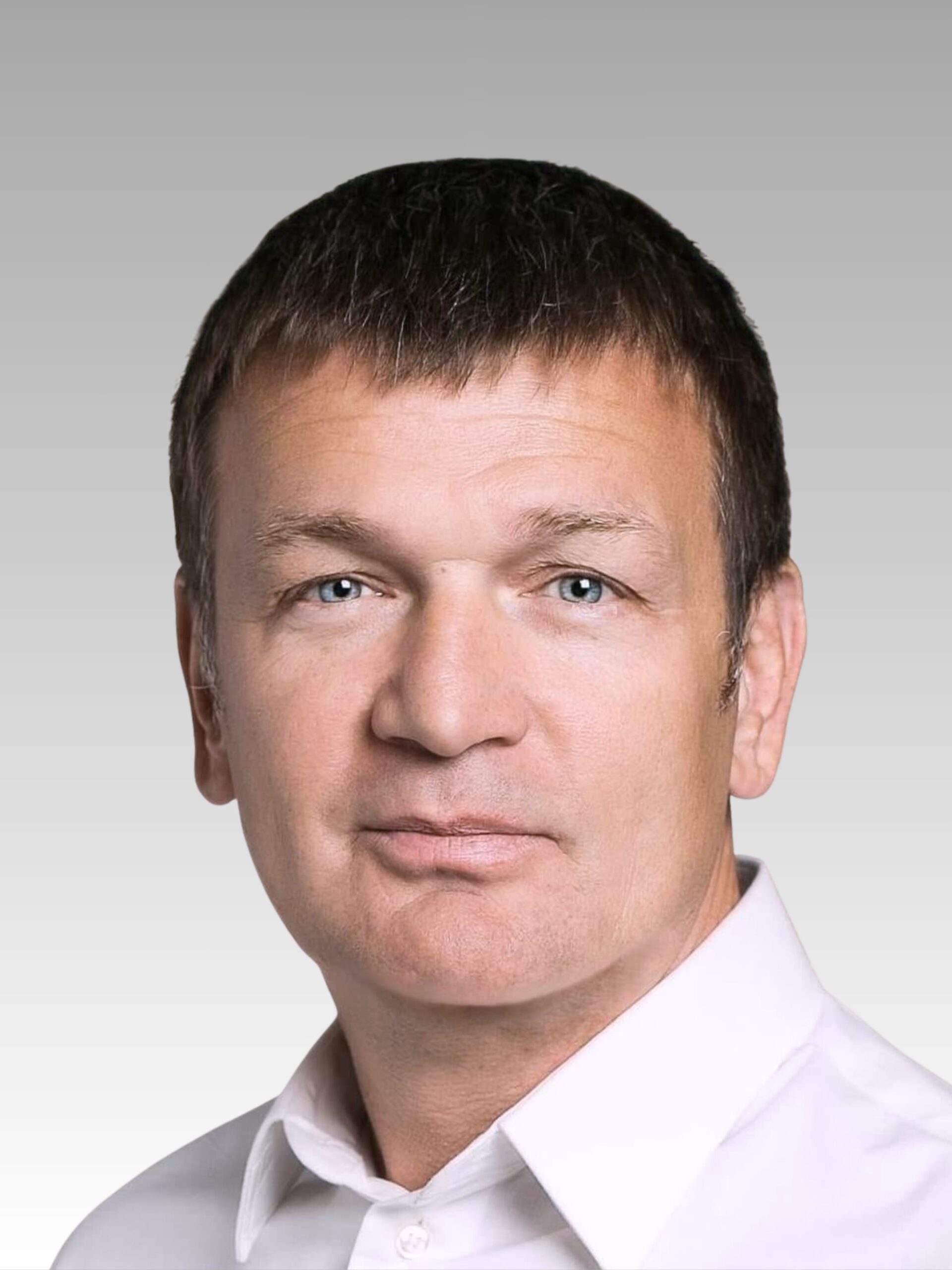
Robert Horvat
Депутатська група "ДОВІРА"
Region
Закарпатська область


Green: voted for beneficial and against harmful bills, red: voted against beneficial and for harmful bills. Yellow: abstained. Dark grey: present but did not vote, or absent.
Green: voted for beneficial and against harmful bills, red: voted against beneficial and for harmful bills. Yellow: abstained. Dark grey: present but did not vote, or absent.
Biography
Robert Horvat became a Member of the Verkhovna Rada of the IX convocation as a non-partisan independent candidate (district #68, the cities of Uzhhorod and Chop, and Uzhhorod district of the Zakarpattia region). He joined the “Dovira” (Trust) parliamentary group. The politician was elected Chairman of the Subcommittee on Legal Support of Customs Authorities of the Committee on Finance, Tax and Customs Policy.
In parliament, he supported the controversial “On Zakarpattia” project, which allowed land to be seized from residents of the region. When the vote on the Emerald Network bill took place, the politician asked his colleagues from “Dovira” not to support the project, arguing that it would block the construction of ski resorts.
Media outlets consider Horvat a close associate of MP Viktor Baloha, the “master of Zakarpattia.” Previously, he was elected as a People’s Deputy of the Verkhovna Rada of the VIII convocation from the “Petro Poroshenko Bloc” in the same district. He was nominated at the time under the quota of the “UDAR” party. After the election, the politician became a member of a similar committee and later headed the Subcommittee on Personal Income Tax and Insurance Contributions to the Payroll.
Together with three other deputies from Zakarpattia—Valeriy Lunchenko, Vasyl Petiovka, and Vladyslav Poliak, who also joined “Dovira”—Horvat created the political party “Ridne Zakarpattia” (Native Zakarpattia). The party participated in the 2020 local elections; as a result, it won over 350 deputy mandates in various councils of Zakarpattia. This was the best result in the Zakarpattia region.
The National Anti-Corruption Bureau of Ukraine (NABU) and the Specialized Anti-Corruption Prosecutor’s Office (SAPO) notified Horvat of suspicion regarding the illegal seizure of land in Zakarpattia with a total area of 323 hectares, which caused 123 million UAH in damages to the state. The investigation established that the MP had developed a scheme whereby the director of a Zakarpattia state enterprise was to renounce the use of the land and submit a corresponding application to the State Geocadastre. After the right of use was terminated, the head of the regional State Geocadastre issued these land plots to pre-determined individuals. The latter subsequently sold the land to a company controlled by the organiser of the scheme. The High Anti-Corruption Court of Ukraine ordered the deputy to wear an electronic tag, surrender his foreign passports, and released him on bail in the amount of 26.8 million UAH. Subsequently, NABU and SAPO sent to court the case accusing the MP and 4 others of land seizure in Zakarpattia.
The Onokivtsi Village Council in Zakarpattia, without using the electronic procurement system, concluded contracts worth nearly 781,000 UAH with the “Dastor-Uzhhorod” company, which is part of the Horvat family’s business group. Under these agreements, the community purchased a wide range of products, and journalists noted that some of the products appeared to be more expensive compared to retail and wholesale market prices. It was also reported that the firm had received a total of more than 2.9 million UAH in budget contracts, all through non-competitive procurement.
The politician was a figure in an anti-corruption investigation related to abuse of power for the non-target use of budget funds. At that time, MPs of the VIII convocation allocated 18 million UAH from the state budget for a road near Koncha-Zaspa so that officials could drive to an equestrian sports club not through the village, but directly through a National Park.
In 2015, the Parliamentary Committee on Prevention and Counteraction to Corruption identified corruption-prone elements in four of the MP’s bills. Furthermore, the politician did not disclose in his document a share in the “Dastor-Uzhhorod” trading firm, which he transferred to his daughter, Agnessa Horvat, after receiving his deputy mandate.
The CHESNO Movement caught Horvat engaging in “button-pushing” (illegal voting for other MPs) 5 times.
Timeline of Key Events
2026
He voted in the first reading for the scandalous draft of the Civil Code (#15150), submitted by the Chairman of the Verkhovna Rada, Ruslan Stefanchuk. The project, which is 803 pages long and which even the Ministry of Justice did not have time to review within three weeks of its registration, was brought to parliament in “turbo mode.” The legislative initiative contained provisions allowing for the plunder of state and communal property—forests, coastlines, and subsoil. In addition, the project poses risks to freedom of speech. After the Verkhovna Rada vote, street protests took place in a number of regions. In particular, protesters were outraged by proposals from lawmakers that infringed on the rights of women and the LGBT community. A petition addressed to President Volodymyr Zelenskyy demanding a veto on the bill gathered over 25,000 votes on the very first day of its registration. Judges of the Supreme Court also had fundamental objections to the project. The draft Civil Code, which did not undergo proper discussion, essentially destroyed the judicial practice that the third branch of government had developed since the adoption of the current Civil Code—over 20 years ago.
2025
He voted for the liquidation of the independence of anti-corruption bodies—the National Anti-Corruption Bureau of Ukraine and the Specialized Anti-Corruption Prosecutor’s Office (project #12414). After the law was passed, a protest began near Bankova Street, but Volodymyr Zelenskyy signed the law the same day. Subsequently, the President submitted a project that restored the independence of the anti-corruption bodies. By the end of July, as a result of public pressure and pressure from international partners, the parliamentary majority voted for project #13533, which returned powers to the anti-corruption bodies.
In the same year, the National Anti-Corruption Bureau of Ukraine and the Specialized Anti-Corruption Prosecutor’s Office sent to court the case accusing the MP and 4 others of land seizure in Zakarpattia.
He supported the project regarding a special procedure for the compulsory alienation of land in the Uzhhorod district of the Zakarpattia region (#9549). The initiative contained a number of scandalous provisions that create risks for both deforestation and the development of a corruption scheme for the purchase of real estate from “necessary” people at the expense of the budget at prices 3–3.6 times higher than the market rate. The specified norms violated a number of provisions of the Constitution, so the President exercised his veto. Despite this, the deputies ignored most of the remarks during the revision. Among other things, during the revision for the second reading, norms were added to the law that legalize until the beginning of 2028 a corruption scheme of local self-government bodies to develop detailed plans contrary to the provisions of the master plans of settlements.
In the same year, he voted for the so-called “Ihor Mazepa Law” (project #12089). This is a legislative initiative that essentially reflected the demands of unscrupulous business. The law provides for the “resetting” of claims against those who grabbed forest and coastal strips if 10 years have passed since the grab occurred and they fell into private hands. This means that all such grabs that occurred over the last decade can be legalized. If the 10-year term for the grab has not yet passed, then before filing a lawsuit to save the property, the value of the property desired to be returned must be placed on deposit from the state or local budget. Despite the fact that a petition demanding a veto on the law gathered over 25,000 signatures, President Volodymyr Zelenskyy signed the document. The first victim of the “Ihor Mazepa Law” was the case concerning Protasiv Yar, which was defended by the late scout and Kyiv resident Roman Ratushnyi.
He supported the scandalous project by Speaker Ruslan Stefanchuk, which abolished the Commercial Code of Ukraine (#6013). The initiators of this law declared an expansion of economic freedoms, but the Law abolished the fundamental norms of state-business interaction and the principles of managing economic activity in the state and communal sectors of the economy. A number of civic organizations emphasized that this law carries risks for national security and that its adoption would result in a large-scale redistribution of the country, given that the Verkhovna Rada had not approved a list of property exempt from privatization.
2024
He did not vote for bill #10242 on pressure on journalists and their sources. This bill created serious risks for freedom of speech, the activities of journalists, and the protection of their sources and whistleblowers. Under the guise of combating “data abuse,” it was proposed to amend the Criminal Code, providing for increased penalties for disclosing information from state registers during martial law—up to 8 years in prison, with no exceptions for journalists or whistleblowers.
The politician was absent during the vote on bill #8371, which provided for a ban on the activities in Ukraine of religious organizations that have a governing centre in a state carrying out armed aggression against Ukraine. Although the MP voted on other agenda items for the session.
In the same year, law enforcement officers completed the investigation against Horvat regarding the seizure of state lands. They determined that his actions caused over 120 million UAH in damages to the state.
2023
He supported project #7457 “On the Legalization of Medical Cannabis,” which allowed the production of medical cannabis in Ukraine for the rehabilitation of wounded military personnel, including for the treatment of PTSD. The adoption of the law was advocated by the “Patients of Ukraine” civic organization.
The National Anti-Corruption Bureau of Ukraine and the Specialized Anti-Corruption Prosecutor’s Office notified Horvat of suspicion regarding the illegal seizure of land in Zakarpattia with a total area of 323 hectares, which caused over 120 million UAH in damages to the state. The investigation established that the MP had developed a scheme whereby the director of a Zakarpattia state enterprise was to renounce the use of the land and submit a corresponding application to the State Geocadastre. After the right of use was terminated, the head of the regional State Geocadastre issued these land plots to pre-determined individuals. The latter subsequently sold the land to a company controlled by the organizer of the scheme. Subsequently, the High Anti-Corruption Court of Ukraine ordered the deputy to wear an electronic tag, surrender his foreign passports, and released him on bail in the amount of 26.8 million UAH.
In the same year, he did not vote for bill #9296-d on strengthening the financial monitoring of PEPs (politically exposed persons). A key change provided for by the bill was the introduction of a lifelong PEP status for top officials instead of the current three-year limit after leaving office. Furthermore, the document strengthened the liability of primary financial monitoring entities (such as banks) for unjustified refusal to provide financial services.
He did not vote for the immediate opening of electronic declarations during martial law.
Nashi Hroshi wrote that the Onokivtsi Village Council in Zakarpattia, without using the electronic procurement system, concluded contracts worth nearly 781,000 UAH with the “Dastor-Uzhhorod” company, which is part of the Horvat family’s business group—his daughter, Agnessa, is a beneficiary of the company. Under these agreements, the community purchased a wide range of products for mobilization needs, including sweets, water, meat products, dairy products, and other goods. Journalists noted that it is difficult to estimate prices for certain items due to the lack of detailed data in “Prozorro,” but some of the products appeared to be more expensive compared to retail and wholesale market prices. It was also reported that the “Dastor-Uzhhorod” firm received a total of more than 2.9 million UAH in budget contracts, all through non-competitive procurement.
2022
He supported the law #2693-d “On Media,” which provided for the relaxation of restrictions on Russian content and performers, the introduction of regulation for online media, the activities of bloggers, and various web platforms. The document also provided for the expansion of the powers of the regulator—the National Council of Television and Radio Broadcasting. The adoption of this was one of the conditions for starting negotiations on Ukraine’s accession to the EU. At the same time, journalistic, media, and civic organizations, media outlets, and social media users appealed to the authorities regarding this bill. The appeal stated that the law violated the right to freedom of expression guaranteed by the Constitution of Ukraine and the Convention for the Protection of Human Rights and Fundamental Freedoms.
He voted for the urban planning “reform” #5655, authored by the head of the “Servant of the People” party, Olena Shuliak. The civic sector and media criticized this legislative initiative; the Royal Institute Chatham House (UK) emphasized that with such rules of the game, there are every chance for the emergence of construction cartels. The European Parliament warned President Zelenskyy against signing this law, and the European Commission also provided its critical remarks.
2021
A photo of correspondence from the “Dovira” group chat leaked online. It shows a message from Horvat in which he asks his colleagues not to vote for a bill that protects the ecology and nature of Ukraine and prohibits the construction of recreation centers in the mountains on the territory of the Emerald Network.
2020
Together with four other deputies from Zakarpattia—Valeriy Lunchenko, Vasyl Petiovka, and Vladyslav Poliak—he created the political party “Ridne Zakarpattia.” The political force had been registered back in 2018, and for some time the party was known as “Kyiv Community,” but was subsequently renamed.
In the same year, the party announced that it would participate in the local elections. According to an opinion poll by the “Rating” group, as of 2020, more than half of Zakarpattia residents intended to support this particular regional party in the elections. As a result of the local elections, the party won over 350 deputy mandates in various councils of Zakarpattia, achieving the highest result in the Zakarpattia region.
The party also spent over 4,400 USD on Facebook advertising during the year. In the party’s financial report for the third quarter of 2020, there were no such expenses.
Horvat voted for the “anti-Kolomoiskyi law” (project #2571-d), which provided for the prohibition of returning insolvent banks removed from the market to their former owners.
2019
He did not vote for bill #1031 on restoring punishment for illicit enrichment and establishing civil confiscation of unjustified assets.
The politician was elected to the Verkhovna Rada of the IX convocation as a non-partisan independent candidate (district #68, cities of Uzhhorod and Chop, Uzhhorod district of Zakarpattia region). He became a member of the “Dovira” deputy group; previously, he was non-factional. Elected Chairman of the Subcommittee on Legal Support of Customs Authorities of the Committee of the Verkhovna Rada of Ukraine on Finance, Tax and Customs Policy.
2017
He was one of the figures in an anti-corruption investigation related to abuse of power for the non-target use of budget funds. As journalists noted, MPs of the VIII convocation allocated 18 million UAH from the state budget for a road near Koncha-Zaspa so that the Ukrainian elite and officials could drive to an equestrian sports club not through the village, but directly through a National Park.
2015
The Parliamentary Committee on Prevention and Counteraction to Corruption identified corruption-prone elements in four of the MP’s bills.
He became the main initiator of the adopted bill #3251, which lowered the import tax on used cars. Thanks to this, motorists were able to buy used cars abroad, paying affordable amounts for customs clearance, which previously cost at least twice as much as the car itself.
2014
He was elected a People’s Deputy of the Verkhovna Rada of the VIII convocation from the “Petro Poroshenko Bloc” (district #68, Zakarpattia region). He became a member of the Committee on Tax and Customs Policy, and later Chairman of the Subcommittee on Personal Income Tax and Insurance Contributions to the Payroll. He was nominated under the “UDAR” party quota. He was caught 5 times engaging in “button-pushing.”
At the time of his election, he was the General Director of the “Nova Sprava Uzhhorod” company and director of the “A.V.P.” and “Dastor-Uzhhorod” companies.
He was included in the list of MPs who, according to the “Nashi Hroshi” project, did not declare their business. He did not indicate in the document a share in the “Dastor-Uzhhorod” trading firm, which he transferred to his daughter, Agnessa Horvat, after receiving his deputy mandate.
2012-2014
He was an assistant to MP Valeriy Patskan in the Verkhovna Rada of the VII convocation, who was elected from Vitali Klitschko’s “UDAR” party.
2006
He ran for the Uzhhorod City Council of the V convocation as an independent candidate.
The “Kod 21” organization participated in the creation of the profile.
If, in your opinion, this profile contains inaccurate information, please contact us in writing at ngo.holka@gmail.com. The team of the Holka civic initiative will review your submission and provide a response.
Voting record
For
- Fake Abolition of Parliamentary Immunity (2237)
- Recognition of the Revolution of Dignity as a Key Moment of State-Building (2739)
- Condemnation of Protests on Bankova Street (5295)
- On the Judiciary and the Status of Judges (3711-д)
- The Emerald Network (4461)
- Reduction of Industrial Emissions (4167)
- Restoration of Financial Reporting for Political Parties (Amendment No. 93) (5253-1)
- Denunciation of Certain Agreements under CIS Treaties (0101)
 Did not vote
- Pressure on Journalistic Activity Through the Disclosure of Publicly Important Information from Registers (10242)
- On strengthening national memory and national identity (13273)
- Requirement to deposit budget funds with the court when prosecutors seek to return forests or coastal areas (amendment #899) (14000)
 Absent