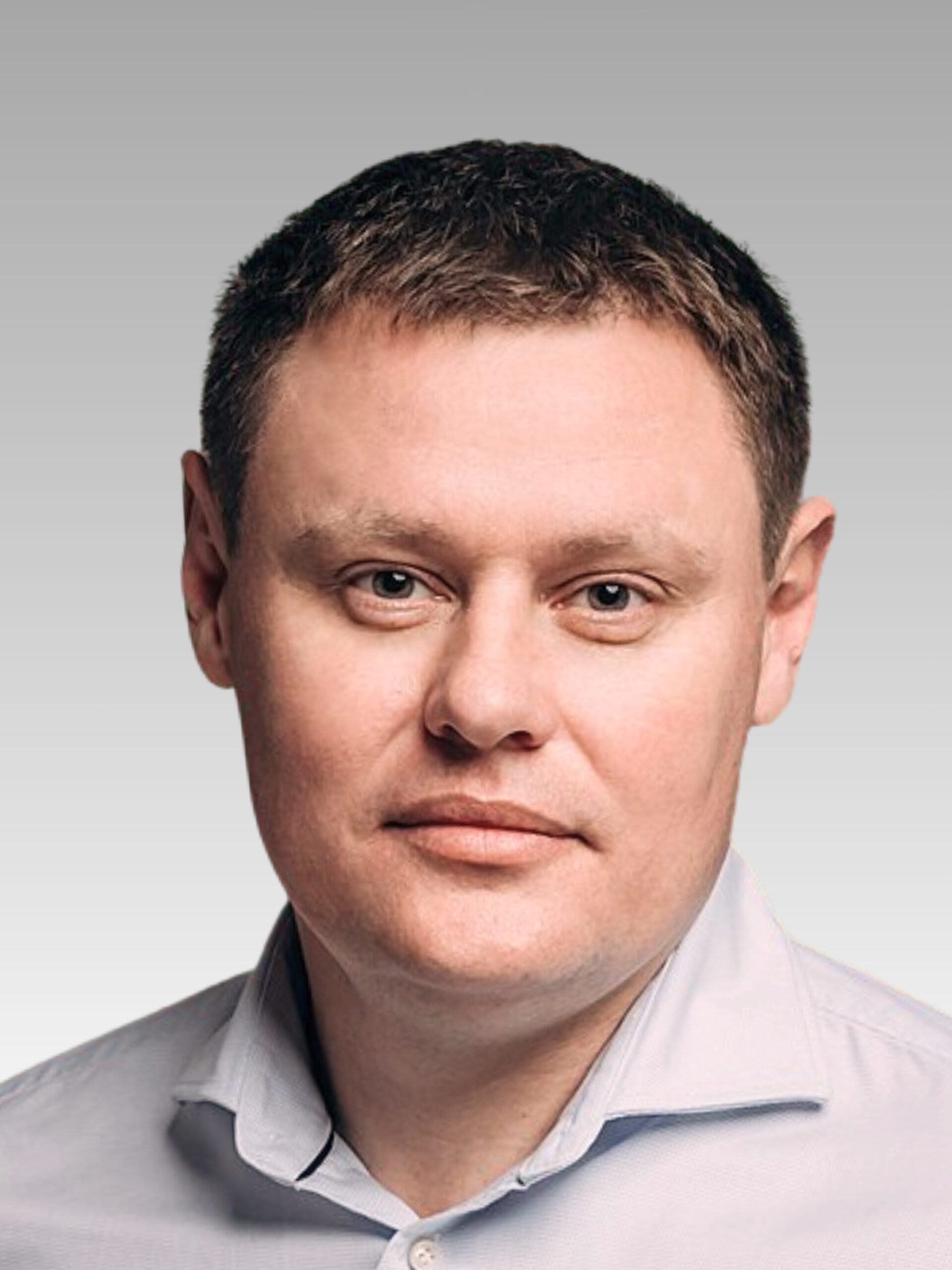
Maksym Huzenko
Фракція політичної партії "СЛУГА НАРОДУ"
Region
Сумська область


Green: voted for beneficial and against harmful bills, red: voted against beneficial and for harmful bills. Yellow: abstained. Dark grey: present but did not vote, or absent.
Green: voted for beneficial and against harmful bills, red: voted against beneficial and for harmful bills. Yellow: abstained. Dark grey: present but did not vote, or absent.
Biography
Maksym Huzenko became a People’s Deputy of the IX convocation (district #161, city of Romny, as well as Buryn, Lypova Dolyna, Nedryhailiv, and Romny districts, and part of the Konotop district—Sumy region) from the “Servant of the People” party as a non-partisan candidate. He joined the corresponding faction and was elected a member of the Committee on Agrarian and Land Policy. Later, he became the chairman of the subcommittee on innovation and infrastructure in the agro-industrial complex of the Verkhovna Rada Committee on Agrarian and Land Policy. He entered the top 10 deputies of the Verkhovna Rada who declared the largest number of land plots.
Despite his public image as a “defender of farmers” in parliament, Huzenko was in conflict with the farming community at the local level, as their interests ran counter to the business model of his associates. Conflicts also arose with one of the heads of communities in the Sumy region, where Huzenko had business interests. The mayor of Buryn, who stood in Huzenko’s way and held a pro-Ukrainian position, was accused of collaborating with the occupiers, although, as reported by the media, the prosecutor’s office did not provide any evidence.
Previously, Huzenko attempted twice to get into the Sumy City Council—in 2010 and 2015—running from “Samopomich” and the “Ukrainian Agrarian Party,” respectively.
Timeline of Key Events
2026
He voted in the first reading for the scandalous draft of the Civil Code (#15150), submitted by the Chairman of the Verkhovna Rada, Ruslan Stefanchuk. The project, which is 803 pages long and which even the Ministry of Justice did not have time to review within three weeks of its registration, was brought to parliament in “turbo mode.” The legislative initiative contained provisions allowing for the plunder of state and communal property—forests, coastlines, and subsoil. In addition, the project poses risks to freedom of speech. After the Verkhovna Rada vote, street protests took place in a number of regions. In particular, protesters were outraged by proposals from lawmakers that infringed on the rights of women and the LGBT community. A petition addressed to President Volodymyr Zelenskyy demanding a veto on the bill gathered over 25,000 votes on the very first day of its registration. Judges of the Supreme Court also had fundamental objections to the project. The draft Civil Code, which did not undergo proper discussion, essentially destroyed the judicial practice that the third branch of government had developed since the adoption of the current Civil Code—over 20 years ago.
2025
He voted for the liquidation of the independence of anti-corruption bodies—the National Anti-Corruption Bureau of Ukraine (NABU) and the Specialized Anti-Corruption Prosecutor’s Office (project #12414). After the law was passed, a protest began near Bankova Street, but Volodymyr Zelenskyy signed the law the same day. Subsequently, the President submitted a project that restored the independence of the anti-corruption bodies. By the end of July, as a result of public pressure and pressure from international partners, the parliamentary majority voted for project #13533, which returned powers to the anti-corruption bodies.
The deputy also supported the project regarding a special procedure for the compulsory alienation of land in the Uzhhorod district of the Zakarpattia region (#9549). The initiative contained a number of scandalous provisions that create risks for both deforestation and the development of a corruption scheme for the purchase of real estate from “necessary” people at the expense of the budget at prices 3–3.6 times higher than the market rate. The specified norms violated a number of provisions of the Constitution, so the President exercised his veto. Despite this, the deputies ignored most of the remarks during the revision. Among other things, during the revision for the second reading, norms were added to the law that legalize until the beginning of 2028 a corruption scheme of local self-government bodies to develop detailed plans contrary to the provisions of the master plans of settlements.
In the same year, he voted for the so-called “Ihor Mazepa Law” (project #12089). This is a legislative initiative that essentially reflected the demands of unscrupulous business. The law provides for the “resetting” of claims against those who grabbed forest and coastal strips if 10 years have passed since the grab occurred and they fell into private hands. This means that all such grabs that occurred over the last decade can be legalized. If the 10-year term for the grab has not yet passed, then before filing a lawsuit to save the property, the value of the property desired to be returned must be placed on deposit from the state or local budget. Despite the fact that a petition demanding a veto on the law gathered over 25,000 signatures, President Volodymyr Zelenskyy signed the document. The first victim of the “Ihor Mazepa Law” was the case concerning Protasiv Yar, which was defended by the late scout and Kyiv resident Roman Ratushnyi.
In the same year, he supported the scandalous project by Speaker Ruslan Stefanchuk, which abolished the Commercial Code of Ukraine (#6013). The initiators of this law declared an expansion of economic freedoms, but the Law abolished the fundamental norms of state-business interaction and the principles of managing economic activity in the state and communal sectors of the economy. A number of civic organizations emphasized that this law carries risks for national security and that its adoption would result in a large-scale redistribution of the country, given that the Verkhovna Rada had not approved a list of property exempt from privatization.
2024
The deputy became one of 212 MPs who voted for bill #10242 on pressure on journalists and their sources. This bill created serious risks for freedom of speech, the activities of journalists, and the protection of their sources and whistleblowers. Under the guise of combating “data abuse,” it was proposed to amend the Criminal Code, providing for increased penalties for disclosing information from state registers during martial law—up to 8 years in prison, with no exceptions for journalists or whistleblowers.
He voted for bill #8371, which provided for a ban on the activities in Ukraine of religious organizations that have a governing centre in a state carrying out armed aggression against Ukraine.
2023
He supported project #7457 “On the Legalization of Medical Cannabis,” which allowed the production of medical cannabis in Ukraine for the rehabilitation of wounded military personnel, including for the treatment of PTSD. The adoption of the law was advocated by the “Patients of Ukraine” civic organization.
In the same year, he voted for bill #9296-d on strengthening the financial monitoring of PEPs (politically exposed persons). A key change provided for by the bill was the introduction of a lifelong PEP status for top officials instead of the current three-year limit after leaving office. Furthermore, the document strengthened the liability of primary financial monitoring entities (such as banks) for unjustified refusal to provide financial services.
2022
He supported the law #2693-d “On Media,” which provided for the relaxation of restrictions on Russian content and performers, the introduction of regulation for online media, the activities of bloggers, and various web platforms. The document also provided for the expansion of the powers of the regulator—the National Council of Television and Radio Broadcasting. The adoption of this was one of the conditions for starting negotiations on Ukraine’s accession to the EU. At the same time, journalistic, media, and civic organizations, media outlets, and social media users appealed to the authorities regarding this bill. The appeal stated that the law violated the right to freedom of expression guaranteed by the Constitution of Ukraine and the Convention for the Protection of Human Rights and Fundamental Freedoms.
He voted for the urban planning “reform” #5655, authored by the head of the “Servant of the People” party, Olena Shuliak. The civic sector and media criticized this legislative initiative; the Royal Institute Chatham House (UK) emphasized that with such rules of the game, there are every chance for the emergence of construction cartels. The European Parliament warned President Zelenskyy against signing this law, and the European Commission also provided its critical remarks.
He became the chairman of the subcommittee on innovation and infrastructure in the agro-industrial complex of the Verkhovna Rada Committee on Agrarian and Land Policy.
On the eve of the full-scale Russian invasion, he did not support including the issue of increasing funding for the Armed Forces of Ukraine on the agenda of the Verkhovna Rada session.
2021
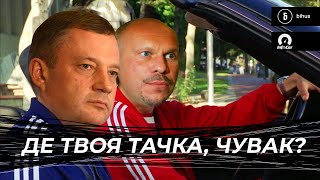
Bihus.Info journalists wrote that the People’s Deputy uses a BMW X5, which is registered to the Huzenko family’s agricultural firm, “Agrokhim-Partner.”
2020
He supported resolution #4104, by which parliament approved its representatives to the competition commission for selecting the leadership of the Specialized Anti-Corruption Prosecutor’s Office. The composition of this commission drew large-scale criticism from civil society, the EU delegation, and G7 countries, as it included individuals whose independence and integrity were in doubt.
He entered the top 10 deputies of the Verkhovna Rada who declared the largest number of land plots.
He voted for the “anti-Kolomoiskyi law” (project #2571-d), which provided for the prohibition of returning insolvent banks removed from the market to their former owners.
In the MP’s declaration for this year, as a result of an audit by the National Agency on Corruption Prevention, incomplete information regarding property was discovered: in particular, an apartment and a residential house in the city of Sumy were not declared. The deputy himself explained these circumstances by stating that he did not have the relevant documents for the apartment and was convinced that it belonged to his ex-wife. The National Agency also drew attention to the fact that initially, the value of a number of vehicles was not indicated, and later it turned out that they were declared at a lower price. Similar discrepancies in information are classified as an administrative offense.
The NACP also drew up a protocol regarding the MP receiving a gift that exceeded the limits permitted by law. That year, the private company “Euralis Semences Ukraine” paid for Huzenko’s accommodation, airfare, food, participation in a conference, excursion and transport services, as well as insurance—in total, almost 120,000 UAH. The Pecherskyi Court did not recognize this as a serious violation and qualified the deputy’s actions only as an administrative offense. Subsequently, the judge closed the proceedings, arguing that such a gift was supposedly not related to Huzenko’s professional activities.
Huzenko was linked to companies that processed about 1,400 hectares of land in the Buryn community, which was de facto used by the Konotop correctional colony and rented out at minimal rates. The MP received significant profits with insignificant contributions to the local budget. Attempts by the mayor of Buryn, Viktor Ladukha, to change this practice and implement mandatory land auctions, which would inevitably increase the rent, met with active resistance from the deputy. As a result, after the 2020 local elections, when a predominantly farmer majority got into the city council, a conflict broke out between them and Ladukha. The local farmer majority demanded fair land auctions and more equitable budget revenues, while the group associated with Maksym Huzenko was for continuing land use at reduced rates. According to Ladukha, it was Huzenko who coordinated the resistance to prevent changes that would reduce the income of his business circle.
The situation led to an attempt to remove Ladukha from his post through court decisions and the actions of city deputies, but in the end, the Supreme Court overturned the previous rulings and left Ladukha in office.
The 2022 Russian invasion again brought to the fore the conflict over land relations in Buryn. After the retreat of the occupation forces, Ladukha was accused of collaborationism, despite the fact that there were no Russian units in the city and he himself had repeatedly demonstrated a pro-Ukrainian position. The Security Service of Ukraine arrested him, but he was released as early as May 2022. Ladukha himself publicly stated that the initiator of his arrest was People’s Deputy Maksym Huzenko, interested in changing the city’s leadership in order to further control the distribution of the community’s land resources.
2019
He was elected a People’s Deputy of the IX convocation (district #161, Zhytomyr region) from the “Servant of the People” party as a non-partisan candidate. He joined the corresponding faction and the Committee on Agrarian and Land Policy.
2018
The Russian Federation included Huzenko in a list of 27 agrarian deputies subject to economic sanctions.
2015
He ran for the Sumy City Council from “Samopomich” in district #22 as a non-partisan candidate.
2010
He ran for the Sumy City Council in district #33 from the “Ukrainian People’s Party.”
He was engaged in agricultural business—he was the director and owner of the company “Agrokhim-Partner,” the farming enterprise “Naton,” and founder of LLC “Agro Kontur” and several other agricultural enterprises.
He was the head of the separate unit of the Public Union “All-Ukrainian Association of Distributors of Seeds and Plant Protection Products in the Sumy region.”
If, in your opinion, this profile contains inaccurate information, please contact us in writing at ngo.holka@gmail.com. The team of the Holka civic initiative will review your submission and provide a response.
Voting record
For
- Fake Abolition of Parliamentary Immunity (2237)
- Criminalization of “Button-Press Voting” (2148)
- Recognition of the Revolution of Dignity as a Key Moment of State-Building (2739)
- Condemnation of Protests on Bankova Street (5295)
- On the Judiciary and the Status of Judges (3711-д)
- Restoration of Financial Reporting for Political Parties (Amendment No. 93) (5253-1)
- Ban on Pro-Russian Political Parties (7172-1)
- Ratification of the Istanbul Convention (0157)
 Did not vote
 Відео