
Three problems of Ukrainian lobbying: weak fines, grey schemes, and “new-old” players

In September, the “On Lobbying” Law came into force, which had been a demand of Ukraine’s Western partners. In the U.S., lobbying was historically regulated to limit the influence of propagandists from Nazi Germany. Later, when Russia tried to influence U.S. election outcomes, senators emphasized that lobbying legislation had become more relevant than ever for the country.
For Ukraine, national security is also a critical concern. However, lobbying regulation is not only about strengthening security. Now, as Ukraine receives substantial funds for reconstruction, the new law is supposed to change the rules of interaction between business and government and transform the concept of “lobbying”—currently seen as shadowy deals and behind-the-scenes influence of oligarchic clans—into a civilized, transparent, and accountable mechanism.
Dishonest businesses can pay politicians under the table if Members of Parliament regularly serve their interests and submit favorable amendments. Media have repeatedly reported on influence groups in parliament, such as the “Kolomoisky group,” the “Akhtemov group,” the “Pavliuk group,” and others. These groups lobby on behalf of millionaire businessmen, while fines for failing to register as a lobbyist are extremely low—less than 2,000 UAH. If a lobbyist violates the rules, the fine may reach 34,000 UAH, making non-registration cheaper.
The public initiative “Holka” analyzed the first hundred registered lobbyists and the new law to determine whether it truly addresses the issue of shadow lobbying.

It would seem that large developers, who have repeatedly tried to lobby for rules favorable to themselves through parliament—particularly via the influence of the “Kolomoisky group” and former representatives of OPZZh—should have been among the first to appear in the Transparency Register, the official list of lobbyists controlled by the National Agency on Corruption Prevention (NACP).
However, they are currently not listed. Nor are the lobbyists of the Moscow Patriarchate, despite conducting subversive activities in the Verkhovna Rada. Meanwhile, the civil sector has already noted that some of the first to register were lawyers representing controversial politicians—Yanukovych and Kyva. They are actively developing this field, having created the Higher School of Lobbying and a separate committee within the National Association of Advocates of Ukraine, which will further increase their influence on the political system. These same lawyers lobbied last summer for the harmful bill 12320, which threatened freedom of speech (the roll-call voting results can be viewed in the “Recharge the Country – You Can Do It” tool).
Currently, the lobbyist register reflects 94 lobbying entities. The most popular lobbying areas are economic development, legal, financial, tax, and customs policies.
Those not in the register are prohibited from lobbying.
Official lobbyists now include large retail chains such as “Avrora” and “Metro,” the state-owned “Oschadbank,” and representatives from the agricultural and energy sectors. The register also lists major tobacco lobbyists—“Philip Morris Ukraine” and “British American Tobacco Sales & Marketing Ukraine.” Previously, civil society organizations advocating for a healthy lifestyle had fought for years against their shadow attempts to influence legislation.
The register also now includes the “Ukrainian Wind Energy Association.” Currently, parliament is actively promoting amendments to the law that would allow wind turbines to be built in the Carpathians without conducting an Environmental Impact Assessment (here are the roll-call voting results for the relevant amendment).

Construction of wind turbines

The ideology of the Ukrainian law is based on the European model, where lobbying is viewed not as something negative, but as a legitimate tool of democracy. Abroad, lobbyists work for businesses and conduct public campaigns to advocate for changes in the law. Everyone understands that they are paid by businesses for this, and it is a transparent activity.
According to the authors’ intent, the law should create a level playing field for businesses by providing a legal channel of communication with authorities not only for large, but also for medium-sized players. In an ideal world, this should improve the quality of legislation itself, as laws would be adopted taking into account the positions and expertise of stakeholders.
Currently, under the law, a business that wants to lobby for its interests must conclude an agreement with a lobbyist. The lobbyist enters information about themselves and their clients into the registry and records their meetings and calls with officials. Every six months, they submit reports on their activities, sources and amounts of funding, and results. If the conditions are not met, fines are imposed, which can reach up to UAH 34,000.
The amount of the fine depends on the violation:
-
Lobbying without registration — a fine from UAH 850 to 1,700;
-
Failure to submit or late submission of a lobbying report to the Transparency Register — a fine from UAH 850 to 1,700;
-
Repeat violation (within a year) — prohibition on lobbying for up to one year, and a fine from UAH 3,400 to 8,500;
-
Failure to provide information about circumstances that exclude the possibility of being a lobbying subject — a fine from UAH 8,500 to 17,000;
-
Violation of restrictions regarding the subject of lobbying, beneficiaries, or financing lobbying from illegal sources — a fine from UAH 17,000 to 34,000.
Among all the fines, the most attention should be paid to lobbying without registration. Considering the burden of obligations and the risk of sanctions from NACP that “official” lobbyists face, those who still want to operate in the gray zone will not be sufficiently motivated to register as lobbyists and give up shadow (corrupt) influence. This was emphasized by the Main Scientific-Expert Department of the Office of the Verkhovna Rada.
Moreover, the same level of fines for individuals and legal entities creates an unequal situation, as large corporations have much higher financial capacity. Not every NGO has extra-budgetary funds for such expenses. All this may contribute to creating a separate closed caste of lobbyists, and law-abiding citizens, businesses, and NGOs will have to pay these lobbyists to protect their rights and submit proposals.
The Main Scientific-Expert Department of the Office of the Verkhovna Rada warned about this in its comments on the first draft of bill No. 3059, submitted by MPs from “Batkivshchyna,” Yulia Tymoshenko and Serhiy Vlasenko.
It is also worth noting that before the “Lobbying Law,” Vlasenko proposed an interesting amendment regarding advocacy — a term NGOs use to describe influencing authorities to support or block policies that experts in the civil sector consider socially beneficial or harmful. In this amendment, Vlasenko noted that the term “advocacy” was invented by NGOs to avoid registration in the lobbyist registry. However, this amendment was rejected.
Indeed, NGOs can currently avoid entering the Transparency Register. But then the civil sector conducting advocacy will be in an unequal position compared to lobbyists, whose reports committee members are required to review. To level the playing field, NGOs will have to register and submit reports to NACP.

Although the proposed law was adopted at the request of Western partners, in the two months since its enactment it has had almost no impact on the situation currently unfolding in the parliamentary session hall.
During wartime, developers need to lobby for rules that benefit the reconstruction of their businesses. This creates risks of cartel-like agreements — situations in which players from the same business sector coordinate to create “rules of the game” that allow them to earn excessive profits.
In the newly established registry, one cannot currently see the companies on whose behalf lobbying groups operate, despite repeated media coverage of such groups: the “Kolomoisky group,” which blocked the “anti-Kolomoisky law” through amendment spam, or the representatives of the “king of contraband from Yanukovych’s era” — the “Pavlyuk group.” Likewise, the business partners of the “Akmetov group” are not yet visible, even though their influence on legislative activity is obvious.
A striking example is the urban planning reform (bill 5655) promoted by the chair of the “Servant of the People” party, Olena Shuliak. Equally high-profile is the law “on strengthening the protection of the rights of bona fide acquirers,” dubbed in the media as the “Igor Mazepa Law” (bill 12089). It was criticized by the European Parliament, which sees in it a significant risk of legalizing land stolen from the state. The law was promoted by MP Ihor Fris (“Servant of the People”), and lobbyists spent significant funds on an information campaign, both in anonymous Telegram channels and in media outlets included in the “white list” (media that the civil sector considers trustworthy for the public).
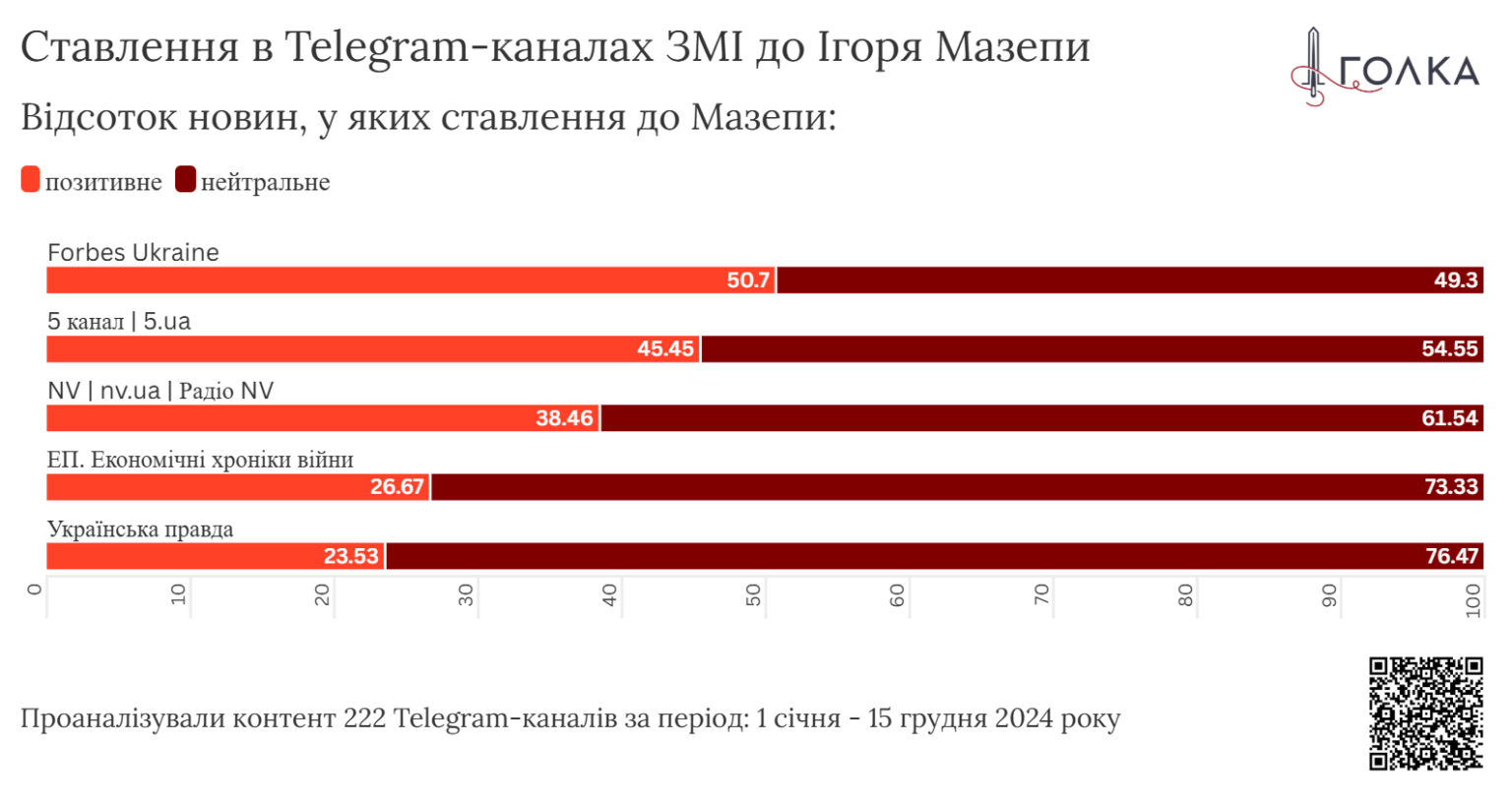
In a number of media outlets, this content was not labeled as advertising, allowing lobbyists to influence public opinion. These media outlets, by the way, are not included in the lobbyist registry, and oligarchs can take advantage of this.
Currently, under the law, no member of parliament can be called a lobbyist because they are not registered. However, many MPs, such as Petro Poroshenko, Vadym Stolar, Hryhoriy Surkis, Oleksandr Feldman, and others, are either business founders or hold shares in companies.
According to the law, MPs are considered objects of lobbying and therefore cannot be lobbyists themselves. In this regard, the law could have been drafted more clearly concerning members of parliament.
It is unclear how MPs should act if a family member or partner owns a business. For example, could time spent with a spouse discussing her business issues, or having dinner with a mother, be considered a “meeting with a potential lobbying subject” that the MP must report?
A similar question arises regarding MPs’ assistants, of which there were over six thousand in 2024. Journalists have also identified relatives of MPs among them.
Monitoring such contacts is the responsibility of the National Agency for Prevention of Corruption (NAPC). However, whether the agency has sufficient institutional capacity to monitor these interactions and hold violators accountable remains an open question.
This is far from the only challenge. The law regulates lobbying only concerning normative legal acts, while local authorities can adopt acts of individual action, creating a loophole for developers.
Therefore, even after a year of the lobbyist registry’s existence, society will see only those who have chosen to play by the rules or want to enter this service market as new players, while shadow players and their agreements will remain behind the scenes for voters.
Specially for Dzerkalo Tyzhnya.