
“Urgent Telegram!” Is vertical indeed preparing for the elections?

The Presidential vertical has begun disseminating instructions indicating preparation for the elections. Official letters directed to communities, particularly in Kyiv region, have landed in the hands of local state (military) administrations under the “Glavkom” directive. The essence of these dispatches is as follows: the central government demands the formation of community political passports. These documents typically serve the political party headquarters, containing information on the loyalty of community leaders to the authorities, schedules in local councils, potential candidates from both government and opposition in the elections. Additionally, they may include information on opinion leaders influencing the information field of a particular territory.
Considering the information requested from local officials during the war, it can be argued that regional and district administrations have begun to perform the functions of political units of the ruling party headquarters.
Recall that the idea of holding any elections during martial law was criticized by 100 civic organizations. They all supported a statement that elections cannot be held until victory is achieved. Furthermore, the President himself, Volodymyr Zelensky, stated on November 6th, “It’s absolutely irresponsible… to so lightly and playfully introduce the topic of elections into society.” However, the topic of elections is being raised by the President’s vertical itself. Essentially, it is currently functioning instead of the “Servant of the People” headquarters.
A letter that was unexpected…
The heads of communities in the Bucha district received a letter from the deputy head of the Bucha district state (military) administration. “In accordance with the oral instructions of the Kyiv regional state (military) administration, the Bucha district state (military) administration requests data on the political situation in the territorial communities of the district, by filling out the attached political passport,” the telegram states, which is available to the publication.
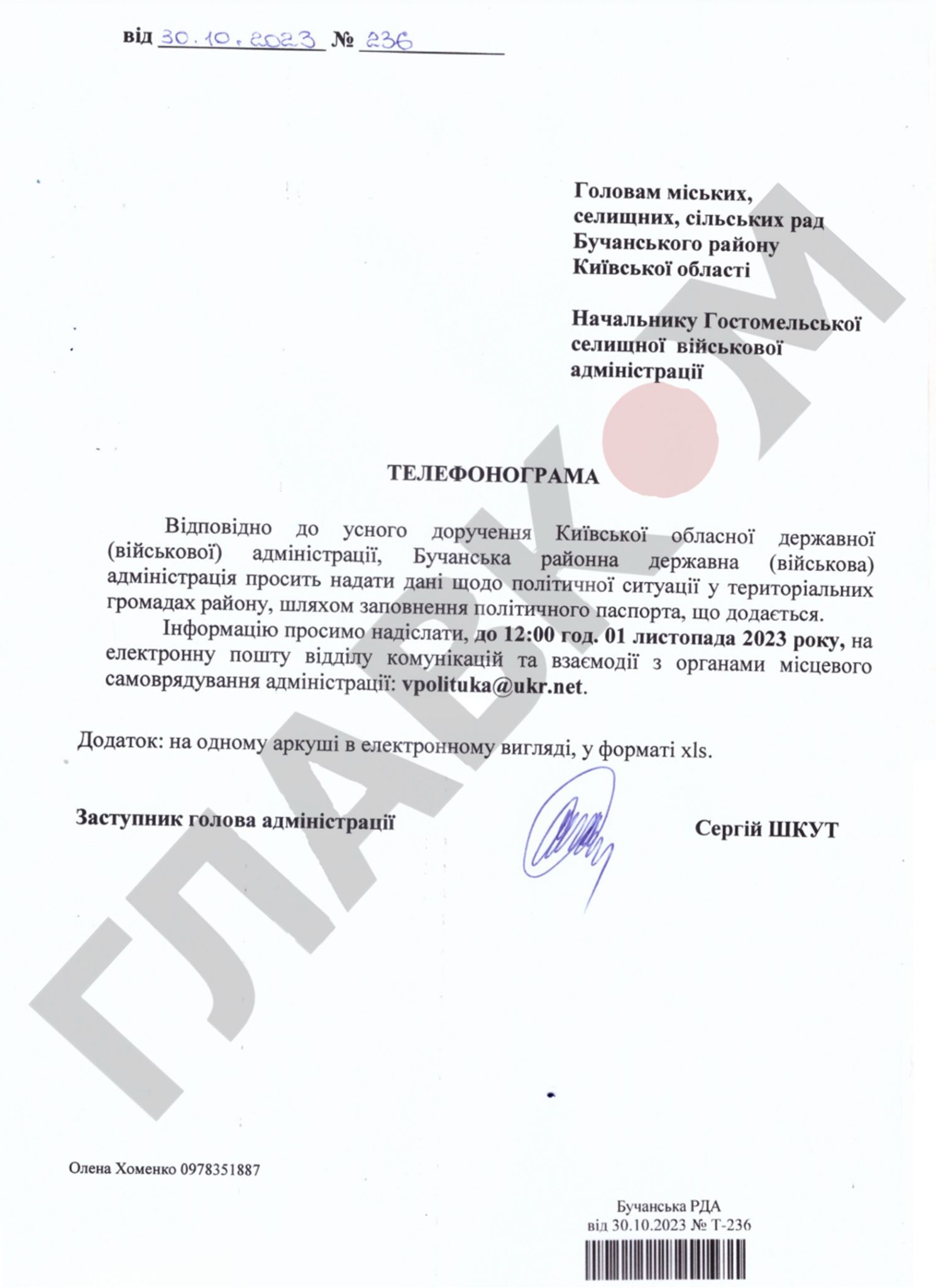
The regional administration issued an “oral directive,” but it’s the district administrations that have subsequently passed it on in writing.
As it later became clear, the liberated Bucha district is not the only one where local administrations have engaged in active political activity during wartime.
As confirmation of this, there is an official letter from the Bila Tserkva district state administration to the heads of territorial communities in the Bila Tserkva district. Officials of the communities are required to “address a number of issues” and report back “within the shortest possible time.” The tasks assigned are quite specific, aligning more with the functions of political technologists rather than civil servants.
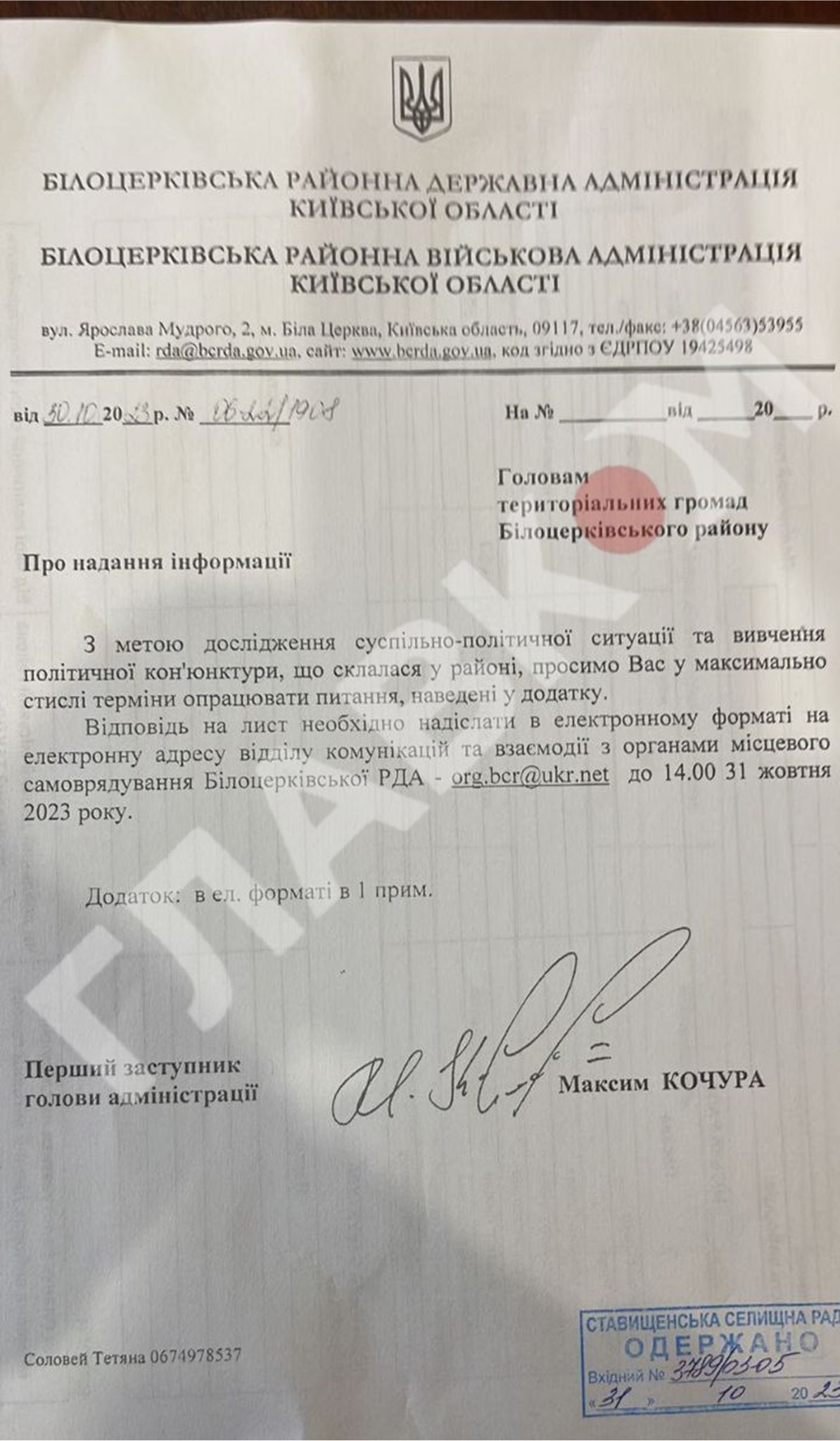
During the war, the Bila Tserkva District State Administration decided to clarify the socio-political situation in the district. What could this be for?
In addition to these letters, for example, there is a table where data related to the head of the community, his plans for the… upcoming elections should be entered. In addition, an assessment of the local leader’s loyalty to the authority, specifically the central authority, is required. It is also necessary to determine the political preferences of the city or village mayor. It’s very interesting to know by what criteria and methodology this task should be carried out. Political intelligence in the community must also be conducted, determining the alignments in both the camps of the government and the opposition. Candidates who are planning to compete for the position of head of the community in the elections, the date of which is still unknown to anyone, should be named.
It is worth noting that all this information is in no way related to military-civil administrations or mayors. All this data needs to be carefully collected, and if available, the results of surveys should be attached.
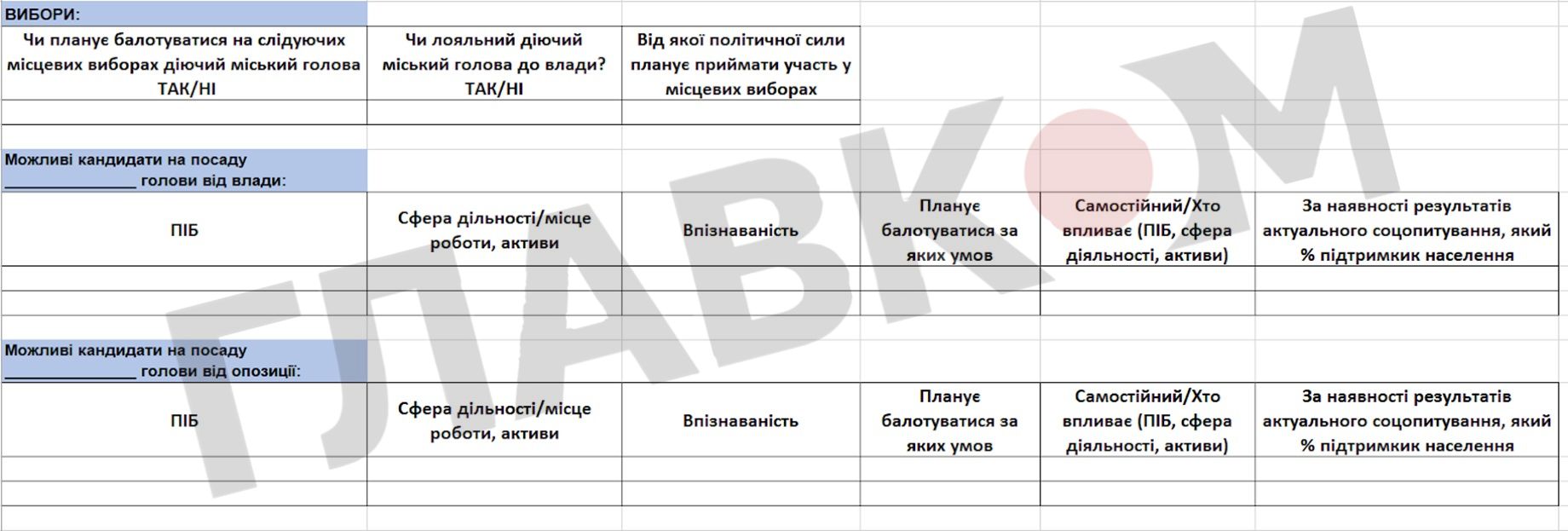
Kyiv wants to know about the political situation on the ground. Officials have developed a form that needs to be filled out. Essentially, at the taxpayers’ expense, municipal and district administration workers are simply expected to perform tasks that would normally fall to sociologists, political technologists, and party staff.
Local councils have confirmed receiving such letters, but officials are afraid to officially comment on the situation. One of them referred to the initiative as “Yanukovych’s era” when speaking off the record.
At the same time, the head of the Kyiv regional military administration, Ruslan Kravchenko, denies everything: “The Kyiv regional military administration did not instruct district administrations to prepare or collect information of this nature.”
However, it should be noted that when making this statement, the regional leader was unaware that journalists already had documentary evidence contradicting his denial.
Then what’s the point of political parties?
It should be noted that the presidential vertical – state administrations – has always been used as an administrative resource in elections. This was the case during the times of Kuchma, Yanukovych, and it was also the case under Poroshenko…
The development of political passports for communities for the current ruling party should have been the responsibility of the “Servant of the People” headquarters. Let’s remind that this political force is led by Olena Shulyak – a member of parliament, the head of the Committee on State Power and Local Self-Government.
“We don’t see Olena Shulyak being as passionate about party building as she is about her scandalous legislative initiatives – the urban planning ‘reform’ 5655 or the development of riverbanks and lakesides (9664). If she were as intensively engaged in party development as in her harmful legislative activity, which has already been ‘recognized’ even by the European Parliament, then the ‘Servant of the People’ centers would be in every village. Then the military administrations, which have completely different tasks, wouldn’t have to carry out the work of political headquarters using our taxes,” says Georgiy Mohylny, an expert on urban planning reform.
It is worth mentioning that the “Servant of the People” party receives funding from the state budget for its development. It manages to promote itself, for example, in the state news agency and announces that taxpayers’ money will go to support the Armed Forces of Ukraine.
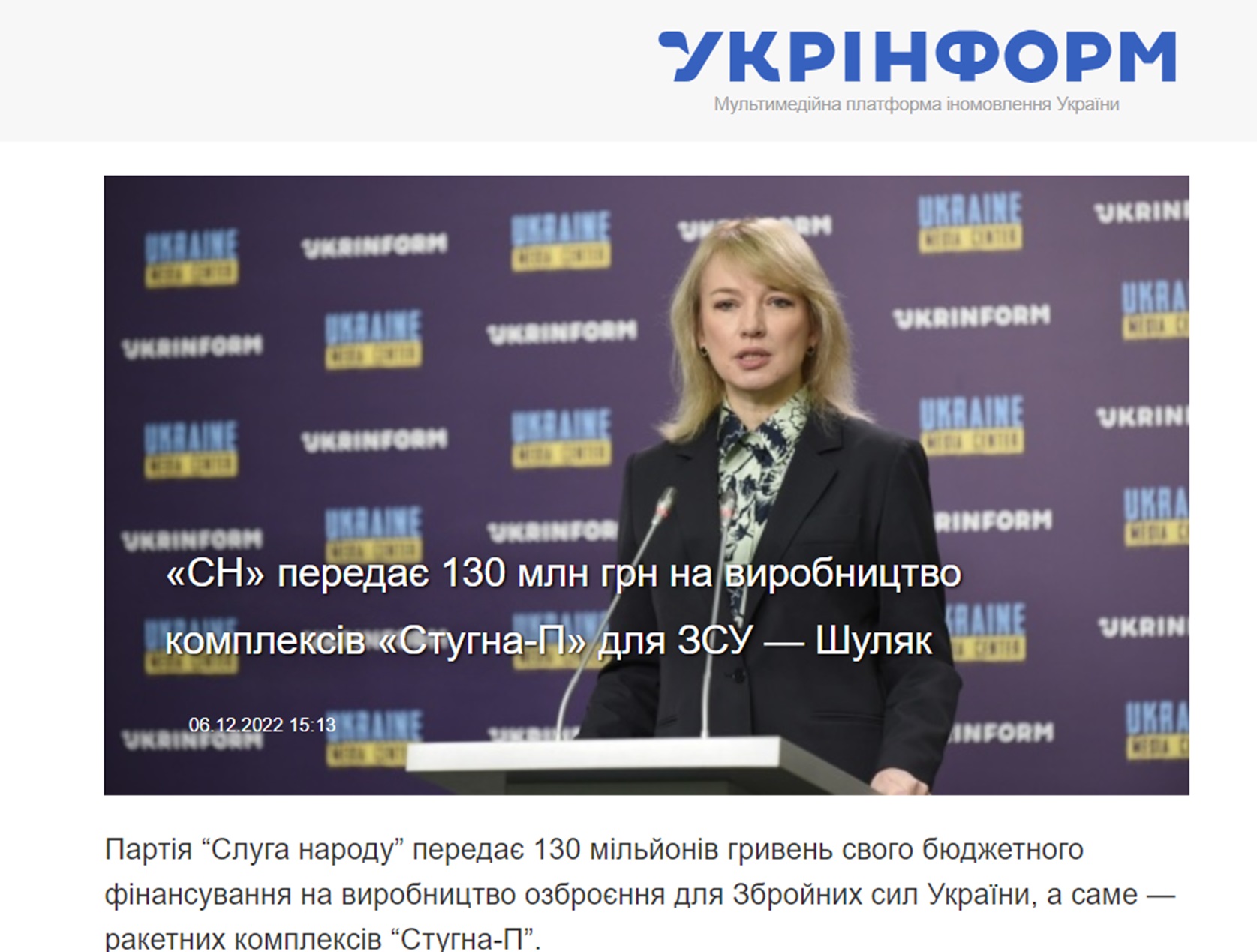
While the presidential vertical is forced to perform the functions of the president’s party, “Servant of the People” is not even able to resist internal challenges. It’s worth reminding that the party, which has a parliamentary majority, has been ignoring for two years the demand from civil society to recall from the local councils of Kyiv region deputies who ran under its brand and are part of the influence group of the U.S.-sanctioned MP Oleksandr Dubinsky.
From the very beginning of his work in the Verkhovna Rada, Dubinsky, together with pro-Russian MP Maksym Buzhansky, worked to destabilize the political system at the central level. Together, they actively participated in the “Honcharukgate” scandal, which led to the resignation of Prime Minister Oleksiy Honcharuk.

Dubinsky and Buzhansky found themselves in parliament under the brand of ‘Servant of the People’ – screenshot from a BBC video report
Both Dubinsky and Buzhansky remain in parliament, supporting pro-Russian narratives, including attempts to block government initiatives aimed at countering the Moscow Church. They maintain a network of deputies in local councils in the Kyiv region, as Dubinsky was the overseer for Kyiv region from “Servant of the People” in the recent local elections. An active advocate for the interests of the Moscow Patriarchate, MP Artem Kultenko (“Servant of the People”), also helped to form this network.
While recalling Dubinsky, Buzhansky, and Kultenko from parliament may be difficult, there is a very simple mechanism for local council deputies. This decision should be made by the political council of “Servant of the People,” but it ignores society’s demand and gives Dubinsky’s team access to the resources of the region and the communities of the Kyiv region for the development of his new political project – “Media Defense”.

Political Council of ‘Servant of the People’: Personal Composition – screenshot from the official website of ‘Servant of the People’.
Attempts to obtain comments on the situation in Kyiv region from the Political Council were unsuccessful, although questions were raised to various members over several months. However, a document was obtained in which the head of the “Servant of the People” branch in Kyiv region, MP Andriy Motovilovets, calls on party members to cooperate with the controversial political project “Novi oblychia” (New Faces)” in the region.
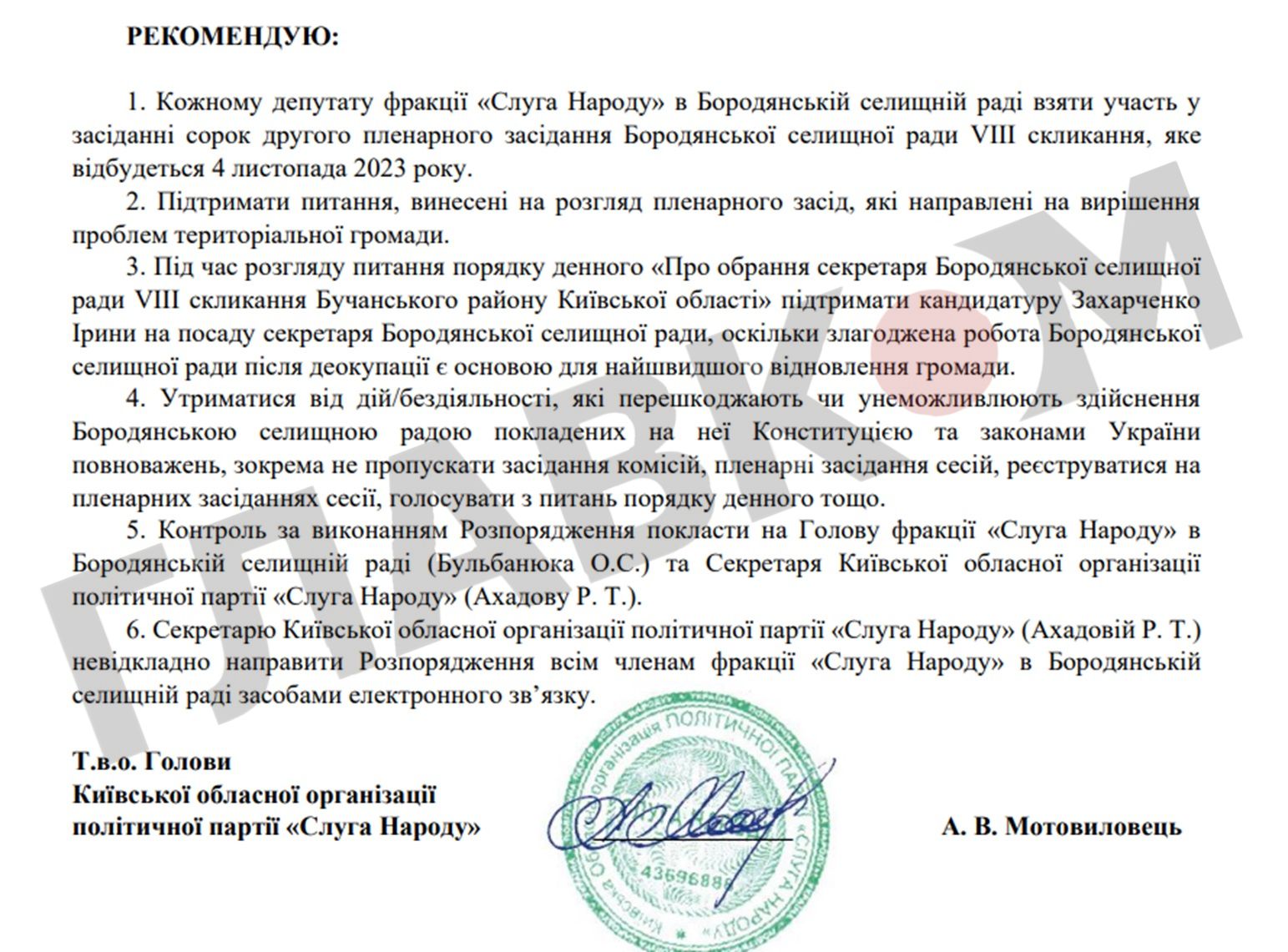
It was precisely with the “Novi oblychia” (New Faces)” that Dubinsky “developed partnerships” during the 2020 elections.
Elections without choice
What goal does the presidential vertical pursue by probing the regions for pre-election readiness? According to recent polls, society does not support holding elections during wartime.
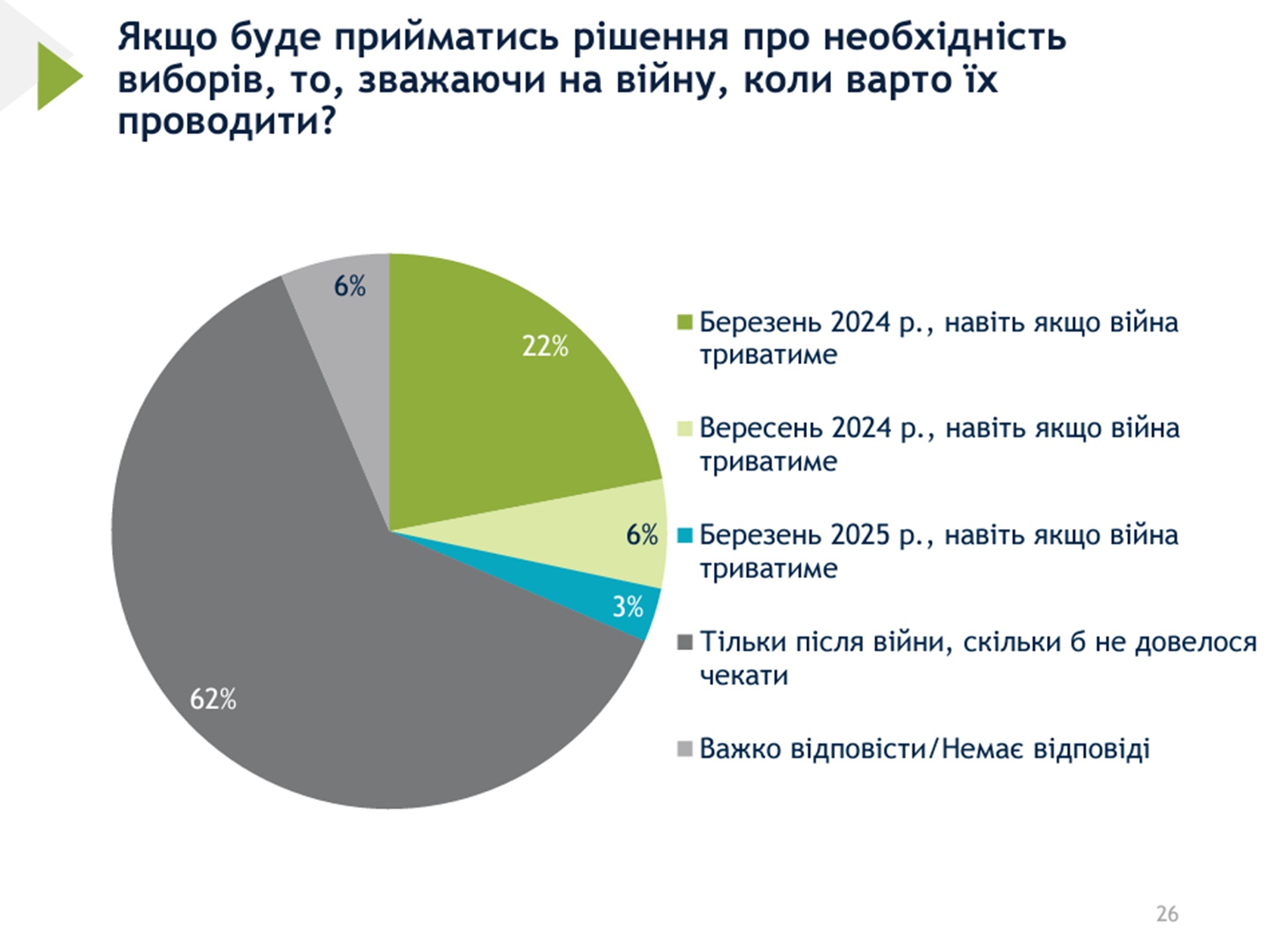
According to the research conducted by “Rating” commissioned by the International Republican Institute (IRI), 62% of citizens believe that elections should only be held after the war, no matter how long it takes to wait.
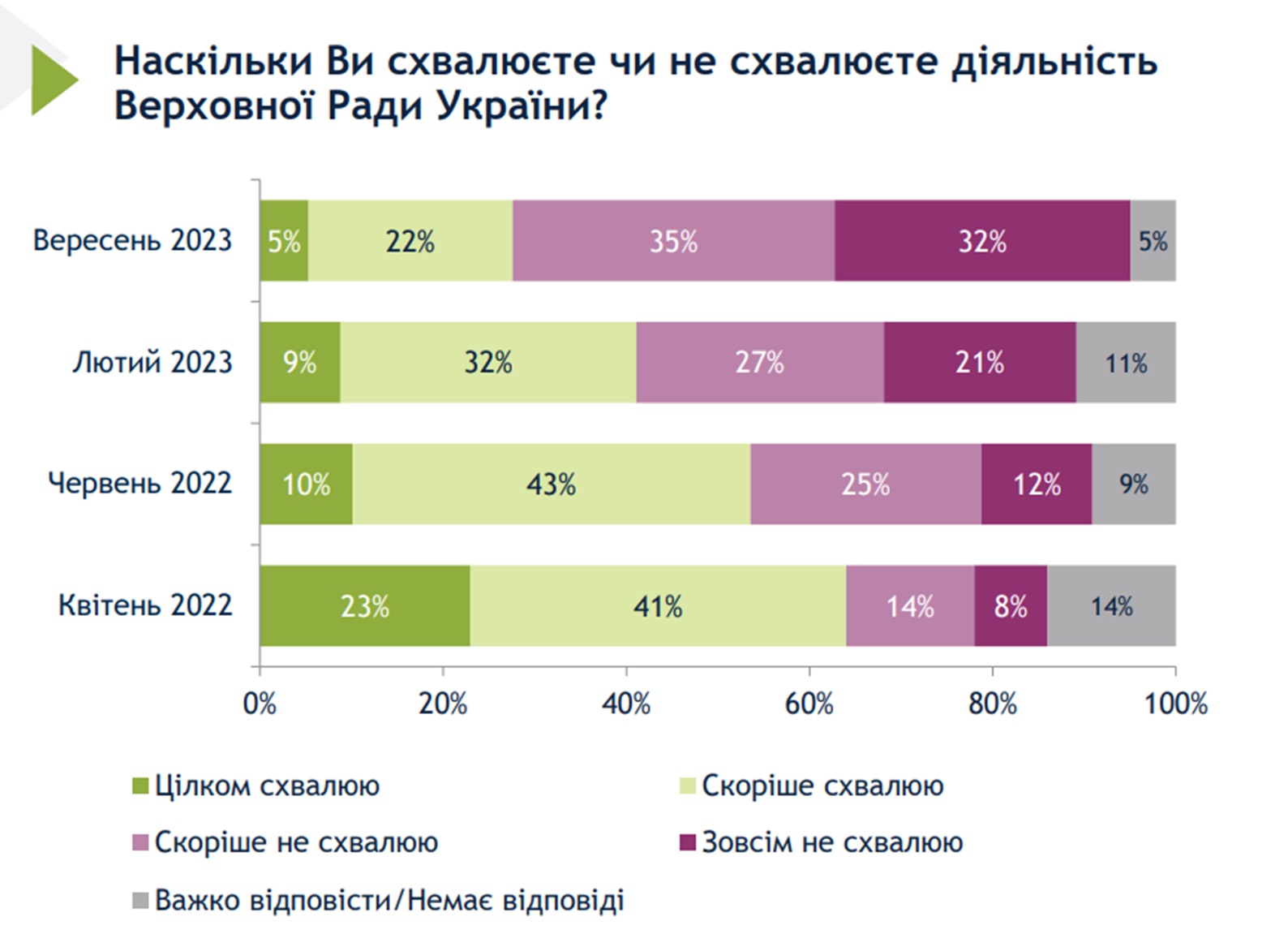
At the same time, trust in the parliament and the government has significantly declined. And if we cannot change the parliament during the war, then we can and should change the government.
“Corruption and incompetence among those who make state decisions on behalf of the president undermine our state machinery’s ability to resist aggression… In conditions where elections cannot be held, there is an opportunity to change the government. And it can and should be a coalition. A coalition government should be formed with the participation of representatives of political forces, but not exclusively from them,” notes journalist Inna Vedernikova. In her opinion, under current conditions, it is possible to depart from established traditions in Ukrainian politics and give a place in the new coalition government not only to politicians but also to experts without an explicit political background.
As for political parties, in the absence of elections, they can cleanse local councils of corrupt and dishonest deputies. An imperative mandate is available for this purpose.
It has long been overdue for parliamentarians to support government bill 7476, which would allow the expulsion of representatives of banned parties from local councils across the country. And this will be the maximum possible renewal of the political system in times of war.
People’s Deputy Oleg Dunda (“Servant of the People”) collected over 150 signatures under an appeal to Speaker Ruslan Stefanchuk back in January of this year. MPs demand consideration of legislative initiatives that could deprive deputies of local councils of their mandates. But for 10 months, the Chairman of the Verkhovna Rada has been ignoring this appeal.
Specially for “Glavkom“