
Tatarov, MPs from OPZZh and “Servant of the People”: Who Is Pressuring Activists and Journalists in Ukraine

In Ukraine’s Parliament, certain MPs and representatives of the President’s Office are exerting pressure on activists and journalists. During an October meeting of the Energy Committee, MP Viktoriya Hryb, elected from the Opposition Platform — For Life (OPZZh) party, claimed that “defenders of the Carpathians work for the enemy.” Meanwhile, Serhii Nahorniak from the Servant of the People faction suggested referring activists’ actions to the Security Service of Ukraine (SBU). Their concern stems from activists demanding that businesses follow the law and conduct environmental impact assessments before installing wind turbines in the Carpathian Mountains.
Journalist Olena Mudra, who covers environmental issues in Zakarpattia, is facing not only information attacks. The company “Wind Parks of Ukraine”, connected to MPs Maksym Yefimov and Eduard Mkrtchan, has filed two SLAPP lawsuits (Strategic Lawsuits Against Public Participation) against her. These are legal actions often used to silence those speaking out on issues of public importance. This is not an isolated case — as noted in a recent report by Human Rights First (USA), Ukrainian activists combating corruption and illegal construction during the country’s reconstruction are increasingly facing judicial and physical pressure.
The campaign to discredit civic activists involves not only MPs but also Oleh Tatarov, Deputy Head of the Presidential Office. During discussions of the so-called “Ihor Mazepa Law”—which effectively nullifies state claims to land illegally privatized over ten years ago—Tatarov urged committee members to support the bill, arguing that it would counter “activists who earn big money.”
The European Parliament, in its Resolution, later described this legislation as the “legalization of stolen property.”

Moreover, Parliament recently passed Bill No. 12320, which bans journalists from naming lawyers who represented state traitors and are themselves politicians. The bill’s key author is OPZZh MP Hryhorii Mamka. Western partners have already warned that, if signed by the President, it will have a “chilling effect” on freedom of speech. Such systemic efforts to intimidate journalists and civil society actors threaten to undermine Ukraine’s EU integration progress.
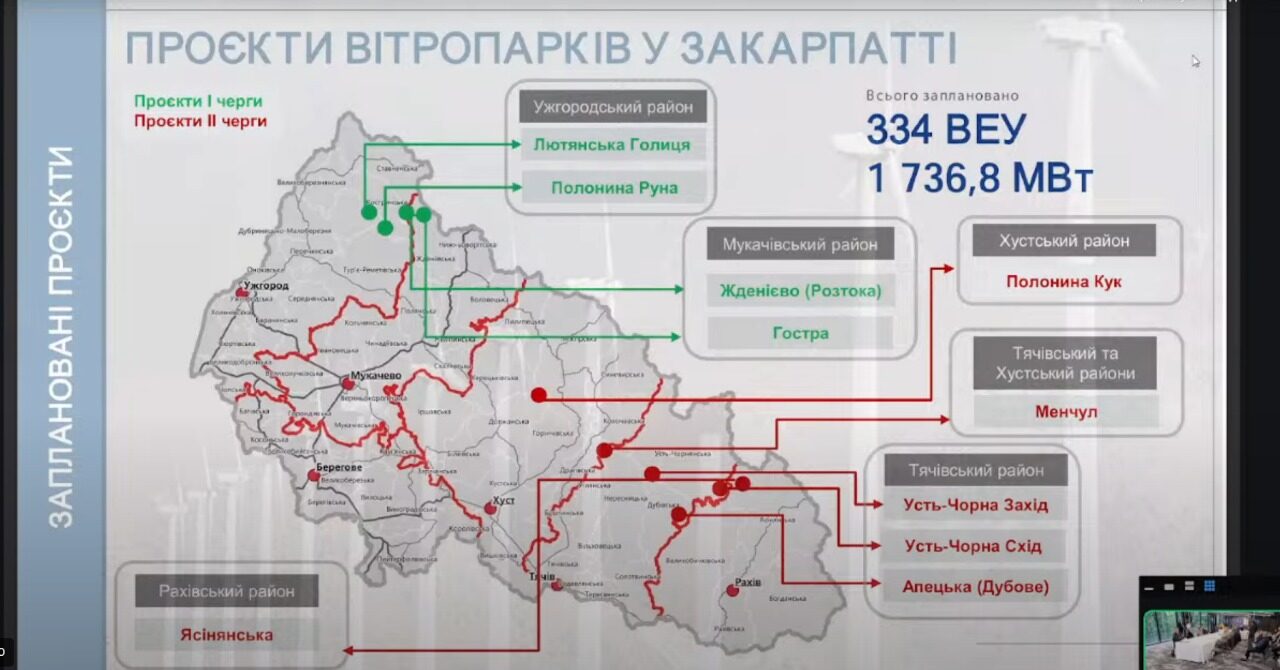
Former OPZZh MP Maksym Yefimov is linked to Wind Parks of Ukraine. Previously, wind farms were built in Kramatorsk, but the business relocated to Zakarpattia after the war began. Construction is now underway on Mount Runa in the Carpathians.

Construction of wind-turbines on the polonina Runa
Yefimov’s political ally Antonina Slavytska promoted an amendment that would legalize the construction of wind farms without environmental impact assessments. The proposal failed to pass (vote results are available via the “ReCharge UA” tool). Soon after, Yefimov organized an off-site meeting of the Energy Committee in the Carpathians, where company representatives announced plans to build wind farms not only on Runa but also on other high-mountain pastures in Zakarpattia.
In late October, MP Serhii Nahorniak (Servant of the People) stated:

It should be noted that Nahorniak received suspicion from the National Anti‑Corruption Bureau of Ukraine (NABU) for an undeclared Lexus, but the case against this politician from the ruling party was closed due to the statute of limitations.
And Nahorniak’s position is the same as his committee colleague Hryb, who said:

Andrii Tupiikov, biologist, PhD in biology, veteran, who upon returning from the front went on a patrol in the Carpathians and discovered illegal logging, says that those who run business and build wind-parks in the Carpathians put pressure on activists so that others wouldn’t even think of joining:

And Tupiikov is not the only one whose words Hryb’s and Nahorniak’s remarks outraged. His position is supported by biologist and serviceman Yehor Hrynyk, as well as veteran, wildlife-photographer and Donetsk resident Dmytro Balkhovitin. He knows very well the consequences of destruction of steppes and unique ecosystems:

Brian Dully, Senior Advisor at Human Rights First, who prepared the report on the situation in Ukraine, explains:

After a visit to Ukraine, Brian Dully for Human Rights First prepared an overview of cases of pressure and attacks on anti-corruption activists and journalists. The document also includes recommendations for the Ukrainian authorities, in which it is stated that the Ukrainian authorities must publicly recognise the importance of anti-corruption activists for the development of democracy.
 Journalist Olena Mudra, who in her publications covers the destruction of the Carpathians, says that pressure and informational attacks are a worrying signal:

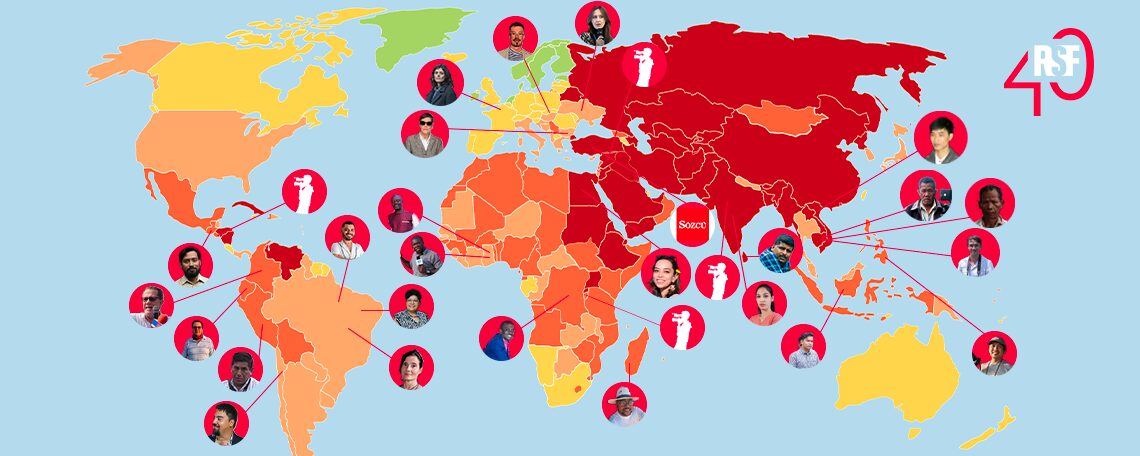
Map of Reporters Without Borders with journalists around the world who write on environmental topics and are under pressure. Journalist Mudra is among the 30 such journalists.
It is worth reminding that MPs of Servant of the People, Ihor Frys and Oleksandr Horobets, sued respectively the media outlet Halka and the head of the civic organisation Holka, Irina Fedoriv, who defends Bilichansky forest from development. The Supreme Court of Ukraine found that these cases of MPs are of minor significance, yet the courts lasted several years.
Vadym Voityk, chief editor of the Ivano-Frankivsk media “Halka”, who serves in the National Guard, says:

Rudolf Machaïm, lawyer and member of the National-Council of Switzerland, in a comment to the civic initiative Holka, explains that Europe pays serious attention to the pressure that is exerted on journalists because it undermines the democratic system:
I have repeatedly spoken in our parliament on this topic and as a lawyer defend several civic organisations and journalists who face threats through SLAPP-lawsuits. It is worth reminding that media perform an extremely important role — they are a counter-weight to power in democracy. Court lawsuits whose goal is to prevent journalists or civic organisations from doing their work represent a threat to democracy itself. The European Union recognised this problem and adopted an anti-SLAPP directive, which provides various tools to combat abuse in court proceedings — including accelerated procedures and fines.
Спеціально для “Detector Media“