
“Putin is the best president for Poles,” “Poland will take Lviv,” and “UPA tattoos are checked at the border.” How propaganda turns Ukrainians against Poles

“Polish partisans blow up their own railways because they are tired of Ukraine,” “Ukrainians are stripped at the border in search of tattoos,” and “Poles see Putin as their president”—these are not the headlines of low-grade tabloids, but targeted information projectiles fired at Ukrainian society in 2025. Propaganda works to incite hostility on both sides of the Ukrainian-Polish border.
In Poland, Russian disinformation agents and Polish right-wing radicals spin conspiracy theories about Ukraine taking over Poland, the cult of Bandera, manipulate historical topics, and scare Ukrainians. The public initiative “Holka” compiled the top 10 fakes in a previous article. Here, we will break down the massive fake attacks that disinformation agents are directing at Ukraine and the new manipulations they invented in 2025. It’s all designed to convince Ukrainians that behind Poland’s sincere help lie imperial appetites, that enemies are everywhere, and that every gesture of solidarity comes with a hidden “price tag.”

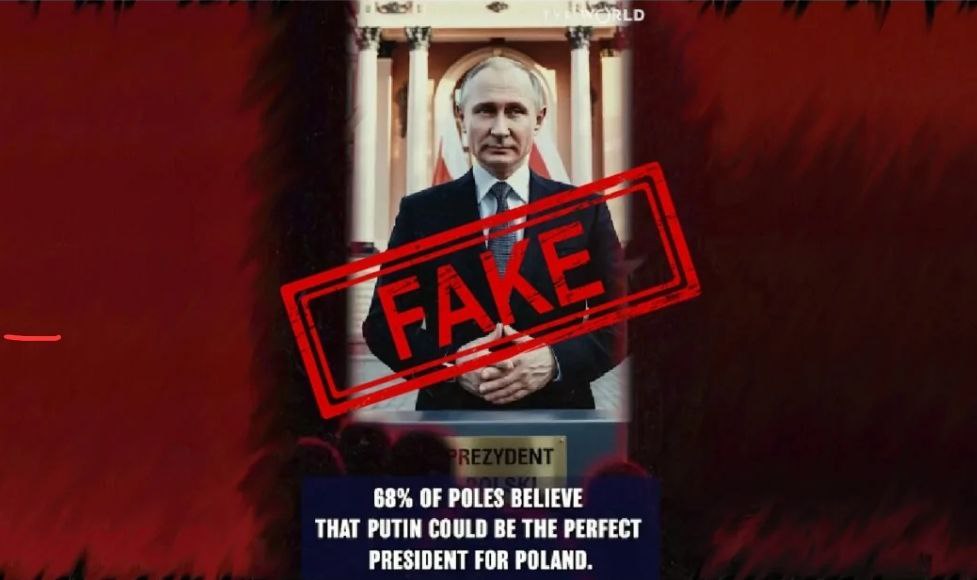
“That’s a bold claim!”—this was probably the logic used in the Russian bot farm when they invented this fake. Ahead of the presidential elections in Poland, a video with the logo of the Polish TV channel TVP World appeared in pro-Russian Telegram channels like “Medved,” “Shkvarka 2.0,” and others. The video claimed that, according to polls, the majority of Poles are disappointed in Ukraine and consider Putin the “best leader.” The video was created using AI to demoralize Ukrainians, pushing the narrative that even “smart people” there might choose the enemy’s side.

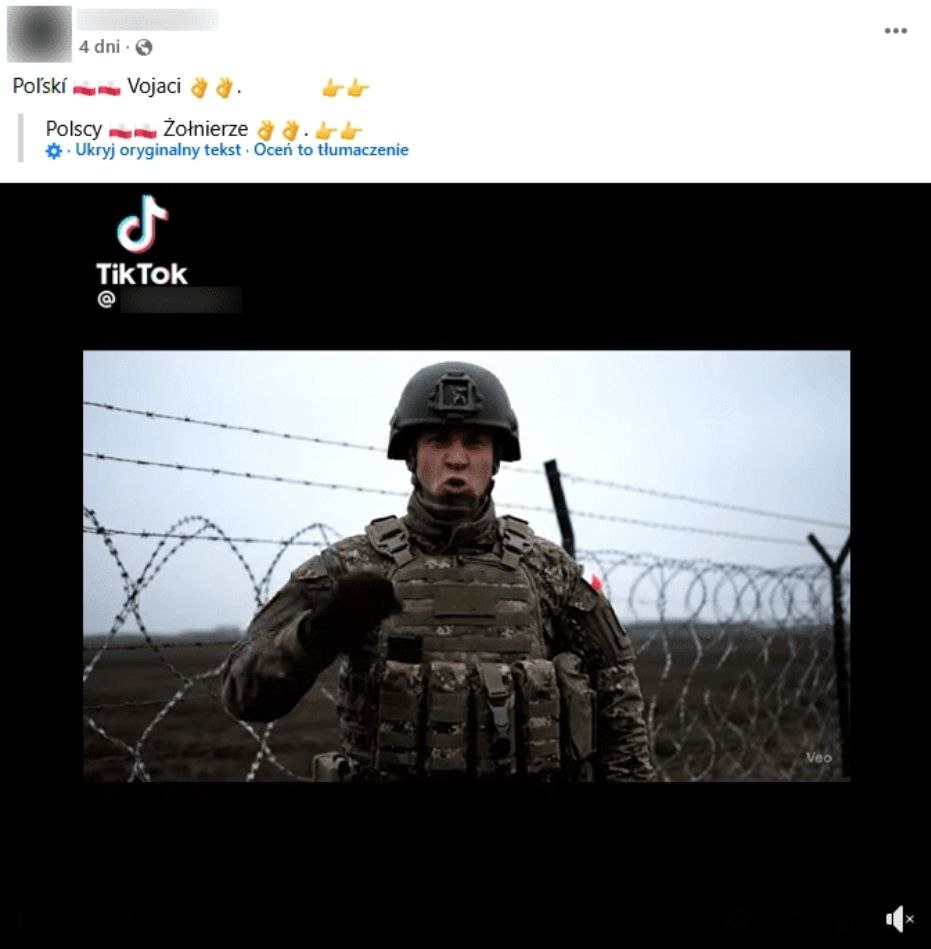
Every Ukrainian who has been to the Independence March in Warsaw on November 11th has seen claims that “Lviv is Polish.” Polish nationalists often write this on their posters. Back in late September 2022, Russia spread a fake that Poland had started a covert mobilization to eventually seize Lviv. A couple of years ago, propagandists forged screenshots of announcements allegedly from the Polish Law and Justice (PiS) party and other political forces, calling to “take Lviv to settle debts for aid.” But now, propagandists have weaponized AI and deepfakes in their “campaign to return Lviv.”
A deepfake spread on TikTok and X (formerly Twitter) featured men in Polish officer uniforms blaming Ukraine for drone attacks and calling to “reconquer” Lviv in retaliation. This false content about events in Poland was also published on Slovak social media accounts.
These blatant injections aim to plant the idea in Ukrainians’ heads that Poland is an aggressor planning to do to Ukraine exactly what Russia is doing.

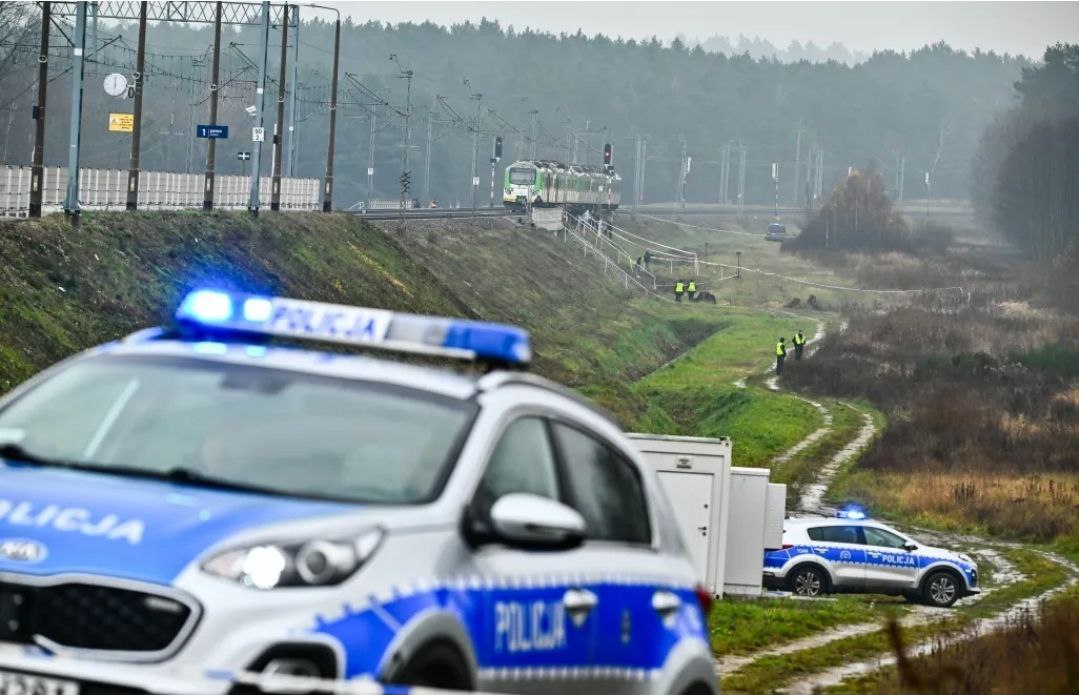
During the waves of railway sabotage in 2025 (including the explosion on the Warsaw–Lublin line in November), Russian channels pushed the narrative that this was done by “ordinary Polish partisans” who hate Ukraine. “Partisans in Poland” allegedly attacked railway routes to disrupt military supplies and signal opposition to Poland’s Western alliances. The narrative claimed Poles were so tired of Ukraine that they started blowing themselves up, having lost hope that the Polish government would stop the aid.
This idea was quickly amplified by various groups, including the far-right Confederation party. They claimed the Polish people had rebelled against supplying weapons to the Ukrainian Armed Forces and were ready to destroy infrastructure to stop supporting Ukraine. Polish intelligence services later proved that these were acts of sabotage orchestrated by Russian special services.

Propagandists actively promote a Polish version of the Russian “we can repeat it” slogan in various iterations to fit different news hooks, either inventing them or generously picking up cues from Polish right-wing politicians.
According to conspiracy theorists, Poland is the “hyena of Europe.” What kind of beast is this?
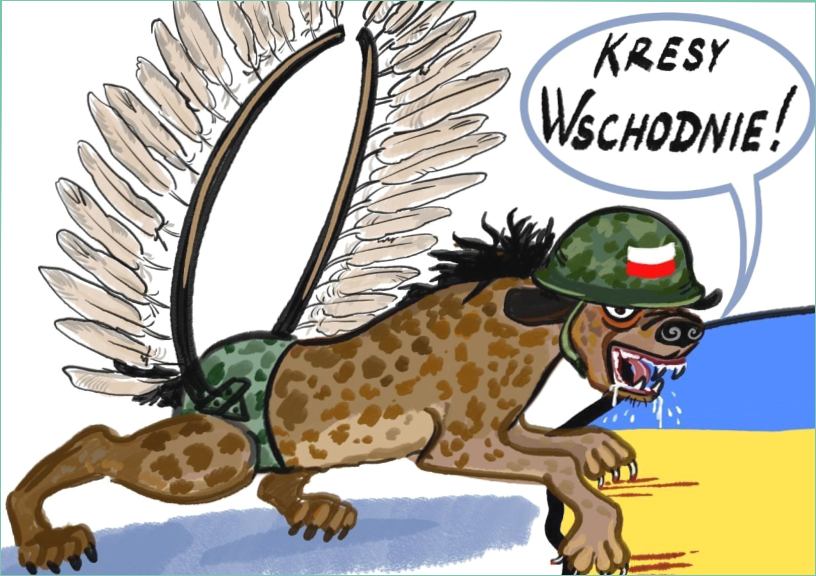
Russian propagandists attribute the phrase “hyena of Europe” to Winston Churchill, who allegedly used it regarding Poland in his War Memoirs following the events of 1938, when Poland participated in the partition of Czechoslovakia by annexing the Cieszyn region. In reality, Churchill’s words were distorted. But for Russian propaganda, it’s a goldmine. Russian media and a network of Telegram channels (like “Resident” and “Legitimniy”) that masquerade as Ukrainian channels promote the thesis that “the hyena has returned.” Supposedly, Poland is helping Ukraine not out of solidarity, but like a hyena waiting for Ukraine to weaken so it can “bite off” the western regions and “reclaim its former territories”—the Eastern Kresy. This narrative is a favorite of the head of Russian intelligence, Sergei Naryshkin. Dmitry Medvedev has also repeatedly called Poland an arrogant hyena that will “play itself” into a fourth partition of its territories.
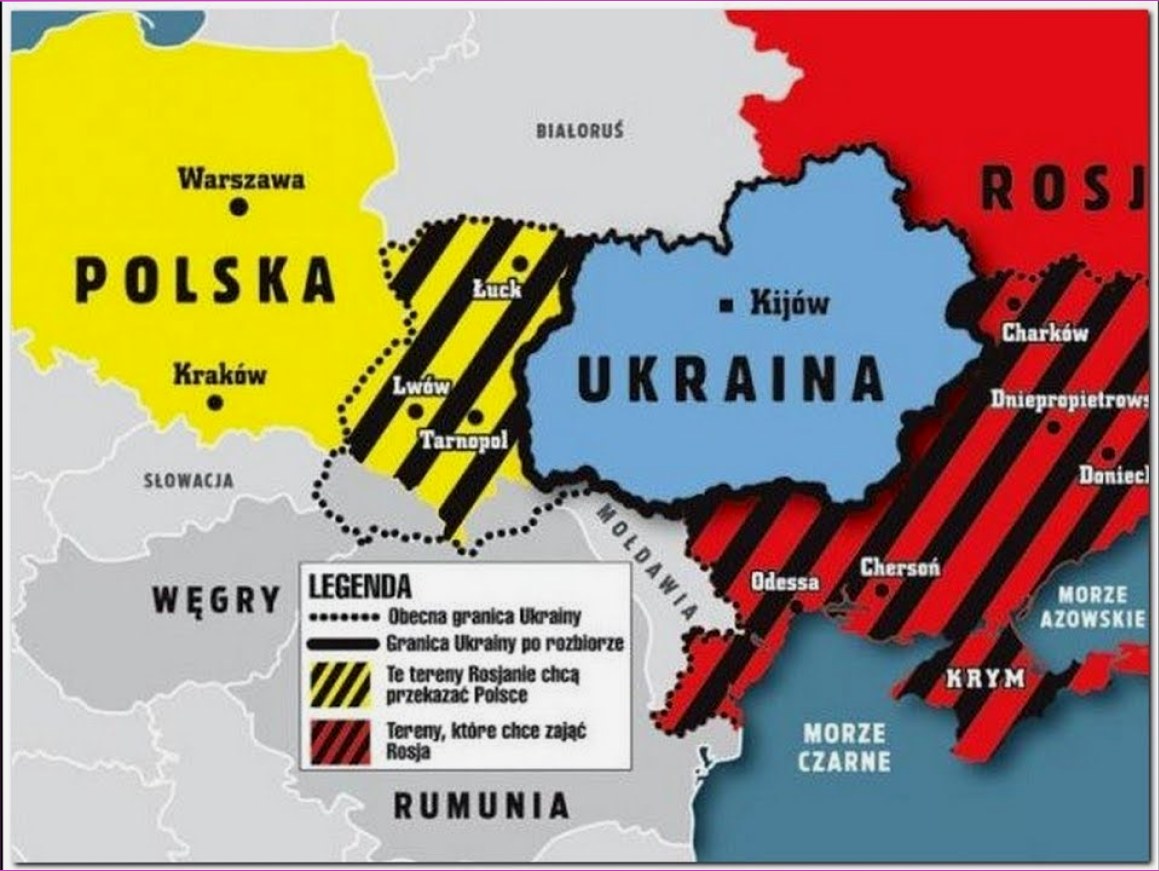
Last year, this narrative went through several waves of activity. On the eve of talks between Putin and Trump in Alaska, a rumor spread that part of the territory would go to Poland and Hungary, and the EU would establish a temporary protectorate over the western regions by sending troops there. This was presented as the only path to peace, allegedly being discussed behind closed doors. Russian propaganda uses a “sandwich” tactic: it takes real news, like the negotiations, and “stuffs” it with disinformation.
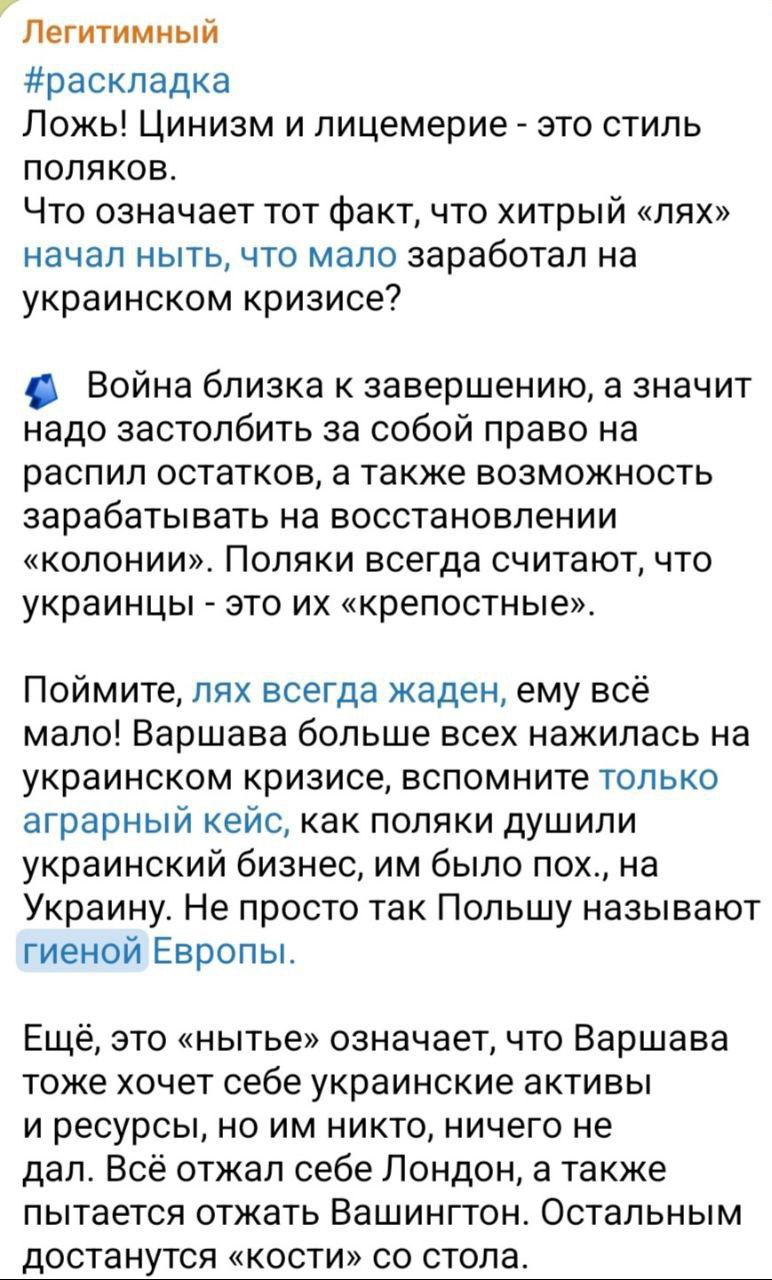
The distribution mechanics work like this: the fake is born across the border in Russia and promoted in Russian Telegram channels and media. The baton is then passed to Russian-speaking “dumpster” Telegram channels that mimic Ukrainian ones, claiming to reveal what “the government is hiding from us.” This is often picked up by regional Telegram channels.
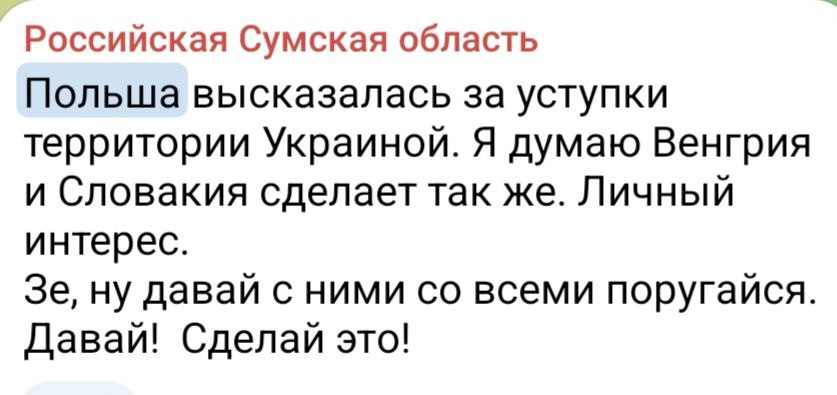
All this is done to sow distrust in Poland as a partner among Ukrainians and to accuse Warsaw of preparing a “stab in the back.”

While Russian disinformation agents and Polish right-wing radicals in Poland sing in unison about the Volyn tragedy and genocide, in Ukraine, they inject disinformation about Poland’s appetite to appropriate Volyn.
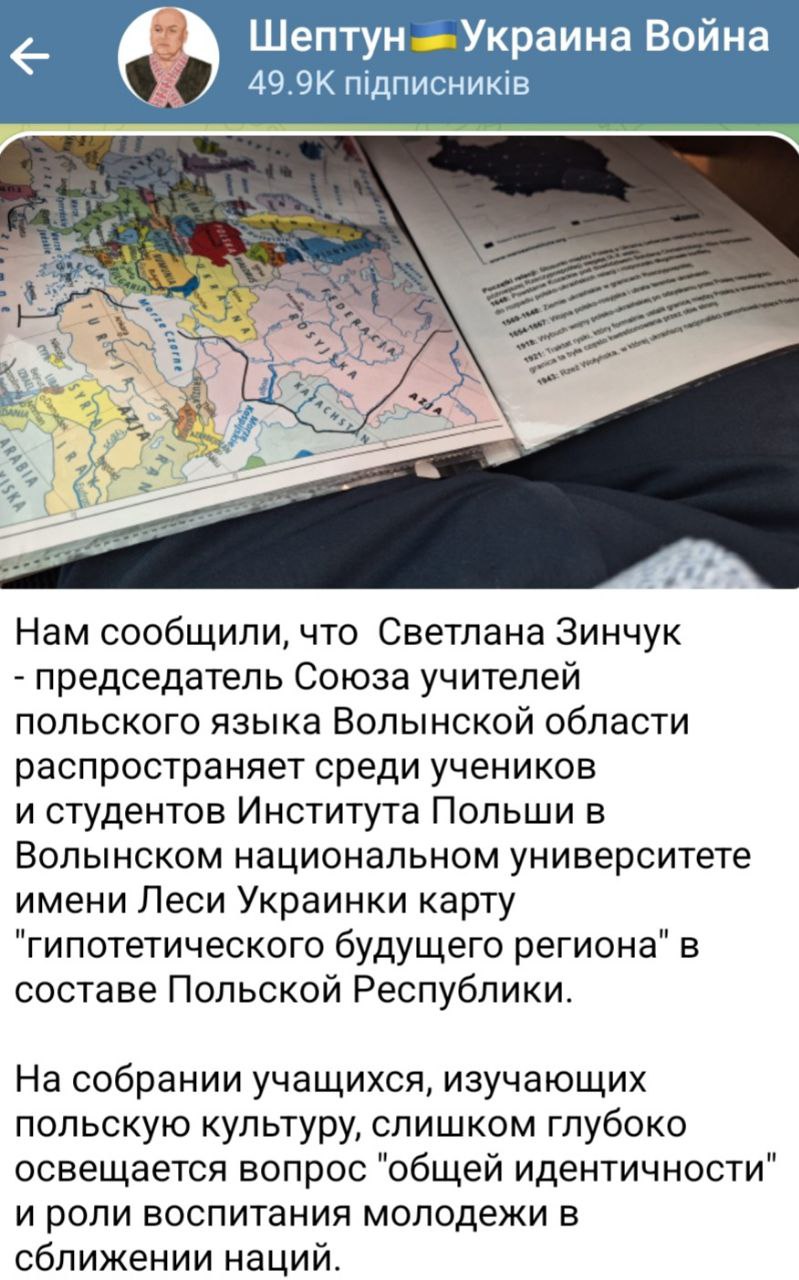
Last year, they rolled out something new: supposedly, a map of a “hypothetical future of the region” is being distributed among pupils and students of the Institute of Poland at the Lesya Ukrainka Volyn National University, showing the Volyn region as part of Poland. As it turned out, the Institute of Poland at the university is not an institution with students, but rather the work of three coordinators of the university’s scientific activities within Ukrainian-Polish research. And they’ve been using the exact same fake partition map for years. If the scheme works, why change it?

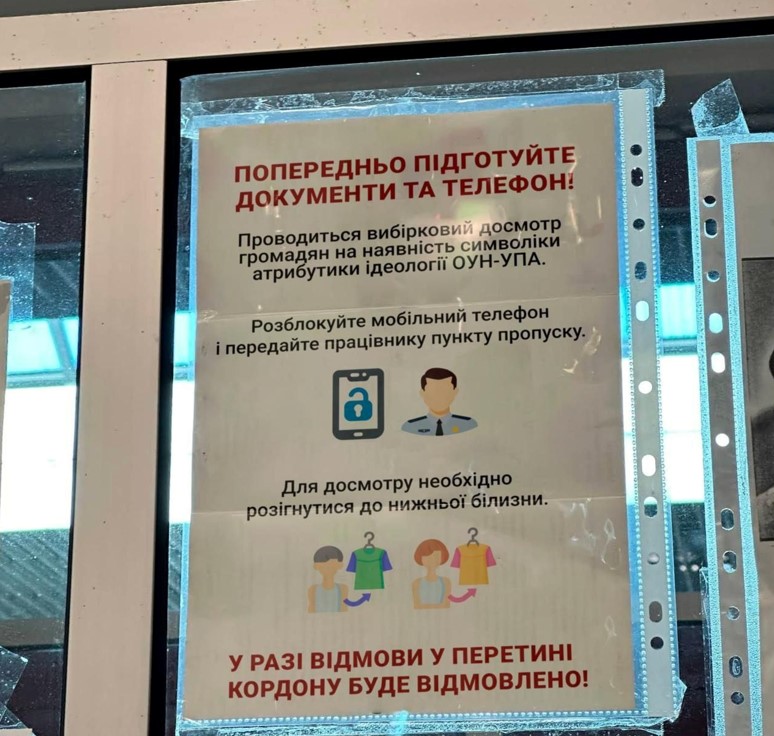
In the summer, a number of Russian Telegram channels tried to scare people with a photo of a notice allegedly hanging at the entrance to a checkpoint on the Polish-Ukrainian border. It stated that before crossing, Ukrainians would be stripped to their underwear to check if they had “Bandera” tattoos, and their phones would be searched for UPA (Ukrainian Insurgent Army) symbols.
As is often the case with Ukrainian texts written by Russians, the propagandists screwed up again. In the fake announcement, instead of the correct Ukrainian word “огляд” (inspection), they used the russicism “досмотр”, and instead of “роздягнутися” (to undress), they wrote “розігнутися” (to unbend/straighten up). No matter how many fakes the Russian bot farm invents, it still hasn’t learned to translate its lies grammatically.
However, this didn’t raise any red flags for a number of Telegram channels from various regions of Ukraine (Kharkiv, Donetsk, Zaporizhzhia), which eagerly picked up this “information.” The Western Regional Directorate of the State Border Guard Service of Ukraine subsequently debunked the fake.

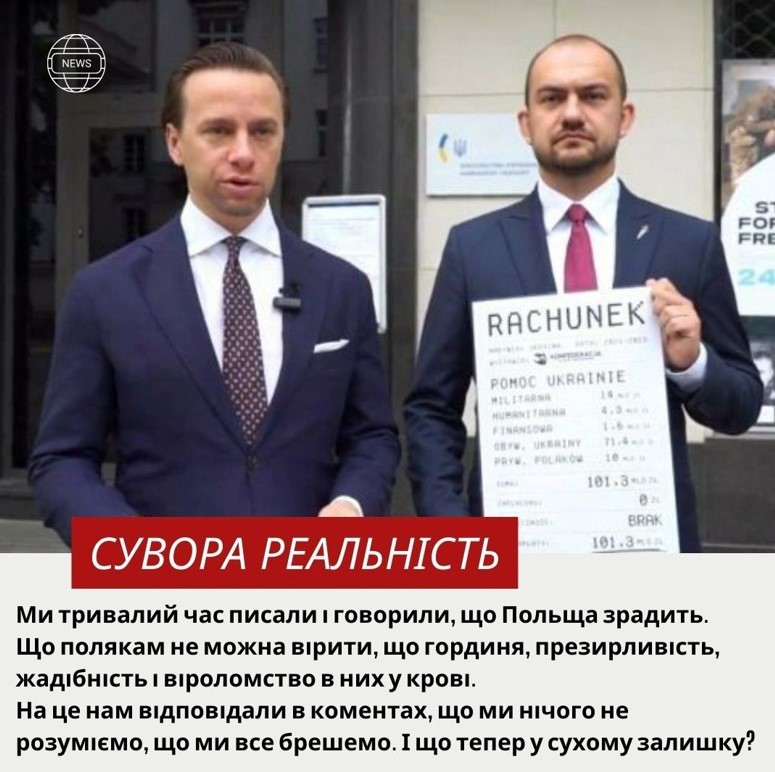
Another border-related manipulation was the alleged cancellation of visa-free travel with Ukraine. Krzysztof Bosak, one of the leaders of the far-right “Confederation” party, made this assumption after Polish authorities announced plans to introduce a full visa regime for citizens of Georgia, Armenia, Venezuela, and Colombia due to rising criminal activity. But on social media, Bosak’s personal opinion—a man who masterfully handles anti-Ukrainian statements and manipulations—was legitimized into an almost official position. Russian disinformation agents have been using this trick frequently lately: a Polish politician births another anti-Ukrainian sentiment, and bots and real people carry it across the Polish segments of TikTok and Facebook as a proven fact. It is then picked up by Russian and pro-Russian Telegram channels in Ukraine, and sometimes, riding the wave of hype and clickbait, this unverified information even reaches entirely respectable Ukrainian media. It’s highly awkward when we spread slander about ourselves.

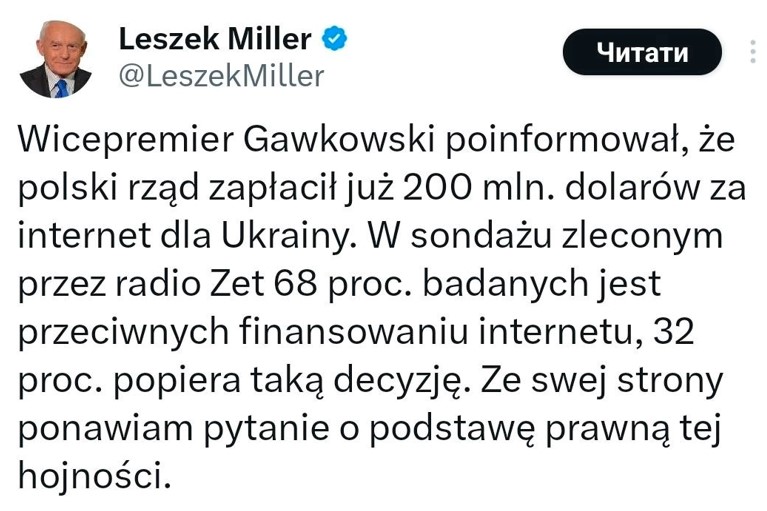
Another Polish politician, former Prime Minister Leszek Miller (2001–2004), decided to extend his political life by riding the “anti-Ukrainian wave,” because hate against Ukrainians sells well on social networks and even translates into electoral points during Polish elections. Today, Mr. Miller functions as one of the loudest mouthpieces of pro-Russian narratives in the country, frequently questioning the facts and data of Polish intelligence. He tries so hard that even Polish media have started asking, “Is Leszek Miller the Kremlin’s spokesperson in the Polish media?”
Last year, for example, he called the Ukrainian president a “Russian footwrap” (a term for a Russian pawn) over a statement that Poland would not be able to save its population in the event of a massive attack. It’s worth noting that Mr. Miller is probably one of the few people in Poland who actually remembers what a footwrap is, given his past as an ex-communist party functionary.
One of his latest manipulative “sins” was claiming that 68% of Poles oppose the Polish government funding Starlink terminals for Ukraine. But the ex-communist Miller manipulated the facts, presenting a non-representative online vote during a broadcast on the Radio Zet website as a “sociological poll.” Such a poll does not reflect real public opinion, as anyone could vote, and do so multiple times. But who wants to dig into definitions and statistics?
When a Polish politician says something like this, a Kremlin propagandist somewhere happily rubs their hands together. This message fits perfectly into the “Poles are tired of helping Ukraine” narrative. Ukrainians are supposed to get upset and shrug their shoulders, thinking, “God gave us awful neighbors.” The narrative about the Poles’ fatigue with the war in Ukraine is delivered “from Russia with love.”
Meanwhile, an actual study conducted by the IBRiS agency, commissioned by the Stand With Ukraine foundation and the Defence24 portal in June 2025, showed that 35% of Poles believe the volume of aid to Ukraine should remain unchanged, 5% believe it should be increased, 26% are in favor of reducing it, and only 1 in 5 respondents wants it stopped.
Does Miller realize that he isn’t just poking Ukrainians, but actively undermining Poland’s information security with his statements? The question remains open. Or maybe the man is just nostalgic for his youth in communist Poland, complete with deficits, long lines, and a Russian tank parked beneath the Palace of Culture and Science gifted by Stalin. Who knows. The Russians can certainly “repeat” that.

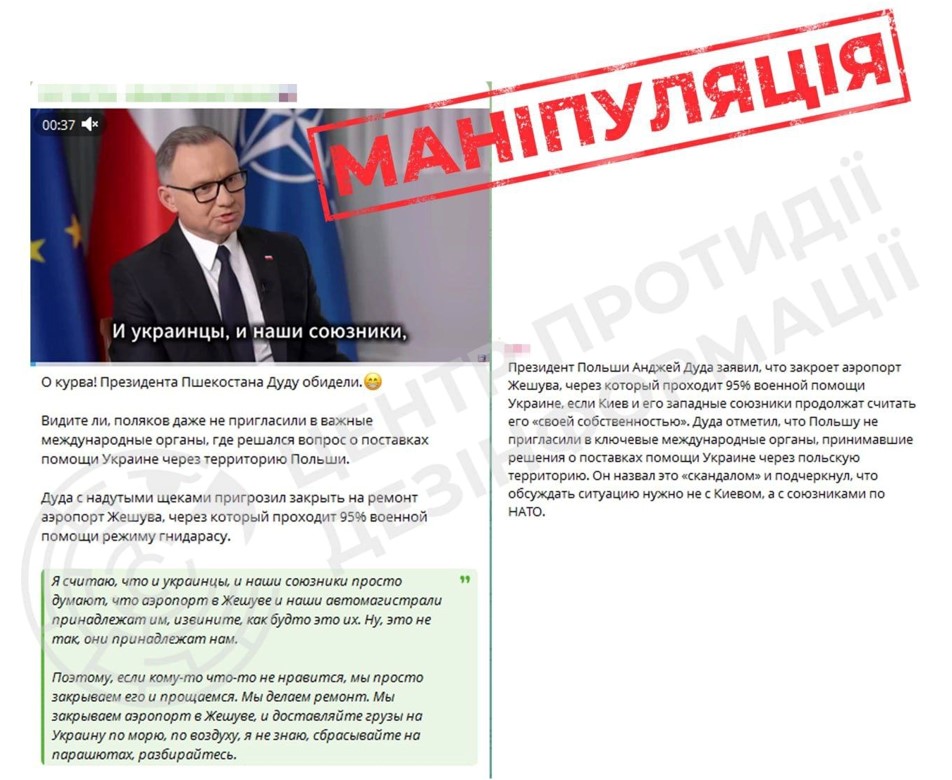
The Russian propaganda machine has run over Andrzej Duda like a steamroller multiple times. And last year, they didn’t spare the now-former president either. A fake was spread that Warsaw planned to close the airport in Rzeszow, through which the majority of Western aid to Ukraine passes. Some reports even mentioned “threats to stop helping Ukraine.” In reality, Duda had no intention of closing anything; in an interview, he merely mentioned hypothetical possibilities that could be used to demonstrate Poland’s critical importance as a transit country. But the Kremlin narrative that the Poles are tired of helping us isn’t going to spin itself

In August 2025, just before the school year, Russian Telegram channels and Facebook bots began massively circulating the message: “Poland is closing free schools for Ukrainians” or “From September, Ukrainians will pay for tuition like non-EU foreigners.” In reality, the Polish government passed a law stating that the “800+” social benefit (a payout for every child in a family in Poland) would now only be provided to Ukrainian children who actually attend Polish schools. Propaganda twisted this into: “If you don’t go to a Polish school, your education will become paid,” implying that Poland no longer wants to teach Ukrainians for free. This was meant to invoke a sense of discrimination among Ukrainians.
Disinformation campaigns in Ukraine last year were designed to make us believe that “enemies are everywhere” and that even Poland, which whole-heartedly took in millions of Ukrainian refugees, was holding a knife behind its back.
Instead, in the first month of 2026, the Poles once again proved to Ukrainians that they can unite to help. In just two weeks, Poles and Ukrainians in Poland raised almost 9 million zlotys (over 100 million UAH). These aren’t bots on social media; these are 67,000 real people from different parts of Poland who chipped in for generators for Kyiv. They were adorned with stickers reading: “Warmth from Poland.”
As Ukraine’s closest rear and logistical hub, Poland will remain a primary target for such attacks as long as the war continues. Similarly, Ukraine will be destabilized by Russian disinformation agents and short-sighted Polish politicians spewing anti-Polish rhetoric and anti-Ukrainian hate. Keeping the warmth between our countries is becoming increasingly difficult. But it is worth remembering on both sides of the border that it is better to survive and win together than to perish together, as we once did in Sandarmokh, Katyn, or in our hometowns.
The materials of “Bridges of Ukraine” are published as part of a partnership project between “Holka” and “Glavcom”. “Bridges of Ukraine” is a project designed to build bridges between Ukrainians who remain in Ukraine and those citizens of our state who, for various reasons, have left and can help the state during the war and in post-war reconstruction. Millions of Ukrainians abroad can do far more than a single ambassador, acting as ambassadors of Ukraine’s interests: advocating for the needs of our state at the local and national levels in their current countries of residence, promoting Ukrainian culture and language globally, and countering hostile disinformation in the information space.