
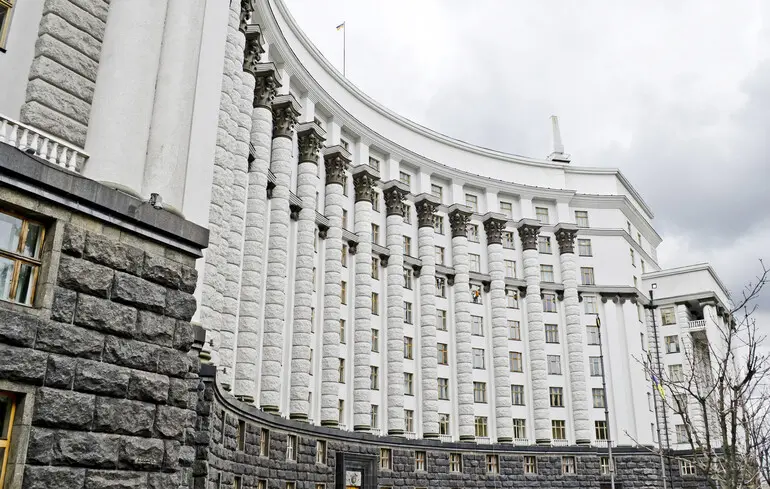
The Cabinet of Ministers must submit its comments on the NACP strategy by January 19 inclusive, as part of the approved procedure. The National Agency on Corruption Prevention (NACP) has forwarded the draft Anti-Corruption Strategy for 2026–2030 to the Government Office for Coordination of European Integration for approval and expert review.
The current draft, prepared by the working group, still contains a number of unaddressed concerns raised by the expert community and civil society regarding risks in the construction sector. The public initiative “Holka” has sent an appeal to the Cabinet of Ministers, requesting the prompt submission of comments to the NACP that were ignored during the drafting process.
In this context, ministries must send their conclusions to the NACP by Monday, January 19 inclusive. Currently, this is practically the only tool available at this stage that allows the NACP to reconsider the integrity and feasibility of specific provisions of the Strategy in the construction sector,
– the appeal states.
Experts emphasize that the approaches to construction regulation proposed in the draft require immediate revision due to the threat of violating the principles of the European Charter of Local Self-Government and the foundations of decentralization. Specifically, the introduction of extraterritorial permit issuance and the possibility of concluding control agreements with the authorities of other territorial communities contradict the principle of subsidiarity. Furthermore, there are serious concerns about provisions that undermine the primacy of the functional designation of territories—a key tool for protecting the public good—in favor of private interests.
A particular danger, according to “Holka” experts, is the planned shift of responsibility for issuing permits from officials of state architectural and construction control bodies to private experts and architects.
This approach significantly increases corruption risks, complicates accountability for violations in permitting procedures, and effectively removes these offenses from the oversight of specialized anti-corruption agencies. Combined with the diminished role of the functional designation of territories, this creates additional incentives for abuse in future land allocations and changes in the designated purpose of land plots,
– the activists emphasize.
The public initiative “Holka” calls on the government and ministries to react promptly to the situation and submit their comments to the NACP within the established timeframe.

– wrote Iryna Fedoriv on Facebook.
As a reminder, over the past three years, experts from various organizations (including the Ukrainian National Bar Association and the Association of Ukrainian Cities), as well as Members of Parliament working on drafting the Urban Planning Code, have repeatedly highlighted the existing risks in the construction sector and the vital importance of eliminating them for the sector’s sustainable development and post-war reconstruction.


